
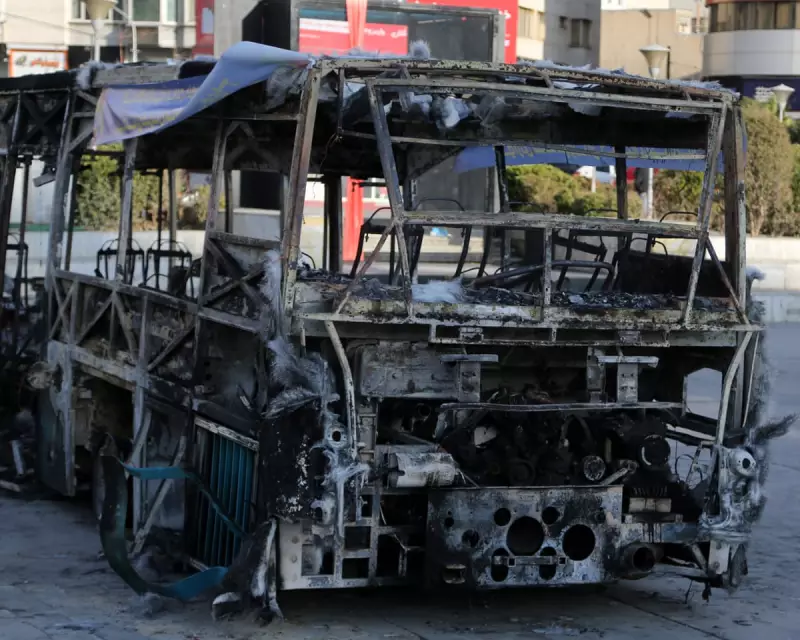
Iran's nationwide protest movement showed signs of slowing on Thursday, seemingly buckling under the weight of a severe and violent state crackdown that has reportedly left thousands dead and tens of thousands imprisoned.
A Lull in the Streets of Tehran
Residents in the capital, Tehran, reported a relative calm, with the sounds of gunfire receding and fires being extinguished. This marked a stark contrast to the preceding weeks, which were characterised by large crowds of protesters confronting security forces across the country.
This apparent slowdown came just two days after US President Donald Trump publicly urged Iranians to "keep protesting – take over your institutions", promising that "help is on its way." Intelligence assessments had suggested the US was preparing to strike Iran, a move Trump had threatened if the Iranian government killed protesters.
However, on Wednesday night, President Trump appeared to step back from the brink of military intervention. He told reporters that Iranian authorities were halting executions, stating, "We’ve been told that the killing in Iran is stopping – it’s stopped – it’s stopping. And there’s no plan for executions... so I’ve been told that on good authority."
The Human Cost and International Response
According to the US-based Human Rights Activists News Agency, at least 2,637 people have been killed in the unrest. Among the dead was an Iranian Red Crescent staffer, killed in northern Iran on Saturday, with five others wounded. The incident prompted the International Federation of Red Cross and Red Crescent Societies to call for the protection of humanitarian workers.
It is understood that while Trump reviewed options for striking Iran, he was unconvinced any single action would force decisive change. His administration has been strenuously lobbied by Middle Eastern leaders to avoid strikes that would likely trigger Iranian counter-attacks on US bases in the region.
On Thursday, the UN Security Council scheduled an emergency meeting on the protests at the US's request. Furthermore, foreign ministers from the G7 stated they were "prepared to impose additional restrictive measures" on Iran over its violent handling of the demonstrations.
Internal Repression and Economic Grievances
Despite Trump's comments, Iranian authorities have continued their campaign against dissent. State media has broadcast what rights groups fear are forced confessions from detainees. In one instance, hardline chief justice Gholamhossein Mohseni Ejei—sanctioned by the US and EU—was shown personally interrogating arrested women.
The nationwide internet shutdown entered its seventh day, surpassing previous blackouts. Authorities also cracked down on Starlink satellite dishes, seizing shipments to block one of the few remaining communication channels with the outside world.
The protests, which began on 28 December after a sudden currency devaluation, rapidly expanded into demands for political reform. They represent the most serious challenge to the government in decades. Iranian President Masoud Pezeshkian said the government was trying to address the economic issues that sparked the unrest, vowing to target corruption and price gouging.
The economic backdrop is dire: Iran’s national currency has lost two-thirds of its value over three years, while food prices have soared by 72% since last year. While analysts say the protests point to deep systemic issues for the regime, state collapse is currently seen as unlikely.




