Greenwich Council Faces Protests Over LTN Consultation Data Transparency
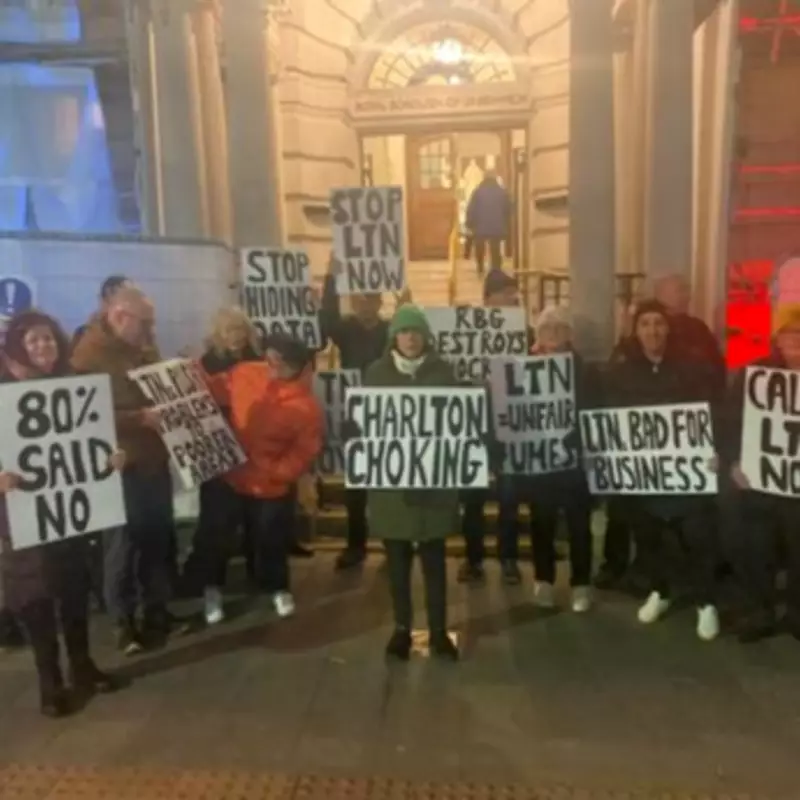
Protesters gathered outside a Greenwich Council meeting in South London, demanding the immediate release of comprehensive data from the controversial Low Traffic Neighbourhood (LTN) consultation process. The demonstration occurred just one week after the council rejected a final attempt to overturn the newly approved traffic management schemes.
Council Defends Consultation Process and Environmental Benefits
Greenwich Council has staunchly defended its West and East Greenwich Neighbourhood Management Scheme, asserting that the initiative has already produced measurable environmental improvements. Council representatives reported that air quality has shown significant enhancement in the designated areas, while traffic volumes have decreased substantially during peak commuting hours.
The South London authority emphasized its extensive public engagement efforts, stating it went "above and beyond" standard consultation requirements by conducting fifteen separate public meetings with Greenwich residents. The council maintains that these sessions allowed for meaningful community input that directly influenced the final scheme design.
Resident Concerns and Protest Demands
Protesters outside Woolwich Town Hall chanted "Where is the data?" as council members arrived for a budget meeting. Residents expressed frustration that they believe the council has selectively presented consultation results, potentially omitting evidence of public opposition to the LTN implementation.
John Tierney, a resident of Eastcombe Avenue in Charlton, reported that his boundary road has transformed into a "rat-run" since the LTN introduction, with increased traffic volumes and deteriorating air quality in his immediate neighborhood. Meanwhile, Gary Dark from Charlton Village argued that the scheme merely displaces traffic problems from more affluent areas to economically disadvantaged communities within the borough.
CLEAR Group Challenges Consultation Integrity
The Coalition for Liveable, Equitable and Accessible Roads (CLEAR), a resident organization opposed to the LTNs, claims that approximately eighty percent of Greenwich residents share their opposition to the traffic management scheme. The group has been campaigning vigorously for full transparency regarding all consultation data.
CLEAR representatives sent an open letter to Greenwich Council Chief Executive Debbie Warren, challenging what they describe as "data discrepancies and dissembling communications" in the consultation process. The group specifically highlighted the failure to account for certain road closures, including Hyde Vale—a crucial north-south route in West Greenwich—in the consultation analysis.
Council's Response and Constitutional Constraints
In response to CLEAR's demands, a Greenwich Council spokesperson stated: "The results of the consultation on the Neighbourhood Management Scheme in West and East Greenwich showed support for reducing traffic and cleaning up the air we breathe."
The council provided specific data points to support their position:
- Some roads within the LTN areas have experienced up to 66% reductions in traffic volume
- Areas outside the trial zones have seen traffic reductions of up to 32%
- Air quality measurements indicate improvement or stabilization in most monitored locations
Regarding the request for additional scrutiny, the council noted that the LTN scheme has already undergone two previous call-in processes and that a third would violate constitutional procedures governing their decision-making framework. The authority maintains that their approval decision was both "lawful and robust" according to established governance standards.
Broader Implications for Local Democracy
CLEAR representatives expressed concern that the council's handling of the LTN consultation process represents more than just a transportation policy disagreement. They warned that such actions could undermine public confidence in local governance structures, particularly at a time when trust in public services faces broader challenges across the United Kingdom.
As the controversy continues, protesters have called for renewed dialogue between council representatives and community stakeholders before upcoming May elections, seeking solutions that address the needs of all borough residents rather than specific geographic or demographic segments.