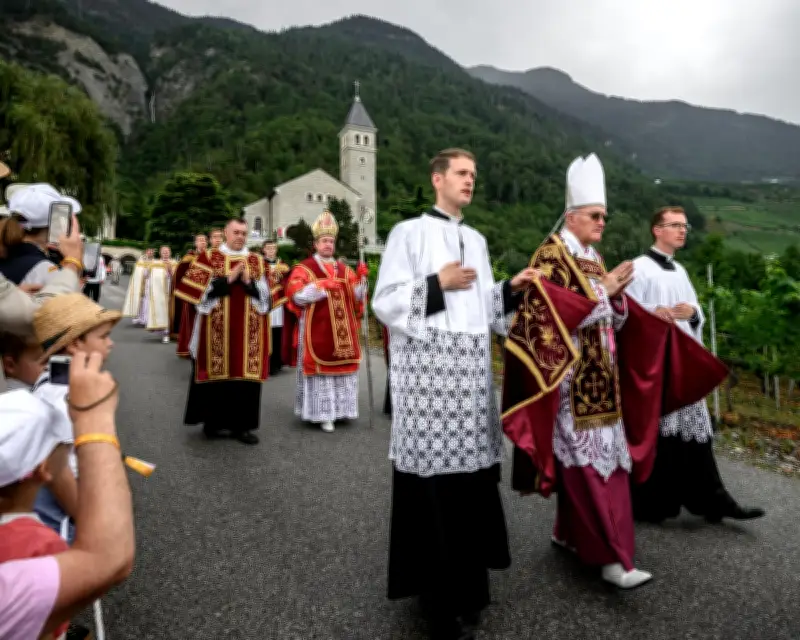
The Vatican has excommunicated all members of the ultra-conservative Society of Saint Pius X (SSPX) after the group ordained four bishops without Pope Leo's consent, marking the first major crisis of his papacy. In a statement on Thursday, Cardinal Víctor Manuel Fernández, head of the Dicastery for the Doctrine of the Faith, declared that the SSPX had committed a schismatic act, resulting in automatic excommunication under canon law.
Scope of excommunication and reversal of concessions
The Vatican went further than expected, ruling that all SSPX priests and Catholics who formally adhere to the group are in schism and excommunicated. It also reversed concessions on sacraments granted by the late Pope Francis, meaning confessions and marriages performed by SSPX priests are now considered invalid.
Andrea Vreede, Vatican correspondent for NOS, said: “The Vatican hopes that by being harsh on the bishops, the priests and faithful, maybe some of them will repent and turn back to mother church. Because it’s not nice to be excommunicated.”

Pope Leo's last-ditch effort fails
Pope Leo had made a final attempt to prevent the ordinations, calling them a “schismatic act” and a “sin of extreme gravity.” However, the SSPX insisted that ordaining bishops “entirely faithful” to Catholic tradition was a “sacred duty.” The ceremony on Wednesday drew an estimated 16,500 people in Écône, Switzerland, including members of the Italian neofascist party New Force and the far-right group National Future.
SSPX's global reach and rejection of Vatican II
Despite being a splinter group, the SSPX has nearly 1,500 priests, seminarians, and other vocational members, with an estimated 150,000 to 200,000 followers worldwide, particularly in the US, France, and Argentina. The society rejects key changes from the Second Vatican Council (1962–1965), including the use of local languages in Mass and dialogue with other religions.
Vreede noted: “It’s a very minor group but they are very loud and very ultra-right.”
Motivations behind the ordinations
According to Vreede, the SSPX pursued ordinations for three reasons: the need for new bishops as only two ageing ones remained; a miscalculation that Pope Leo would be more tolerant than Francis due to his traditionalist gestures; and hope to gain traction from the global far-right resurgence. “The world is so much turning towards extremism, and they think they might flourish with that,” she added.
Historical context and impact
The clash is the first between the Vatican and SSPX since 1988, when founder Archbishop Marcel Lefebvre and four bishops he ordained without Pope John Paul II's permission were excommunicated. In 2009, Pope Benedict lifted those excommunications. Vreede said Pope Leo likely views the schism as inevitable but not damaging. Marco Politi, a Vatican journalist, noted that with 1.4 billion Catholics worldwide, the SSPX's small following means the schism will not have a dramatic impact. “Everyone saw that Leo tried to find an agreement with them, and the reaction shows his firm stance,” he said.