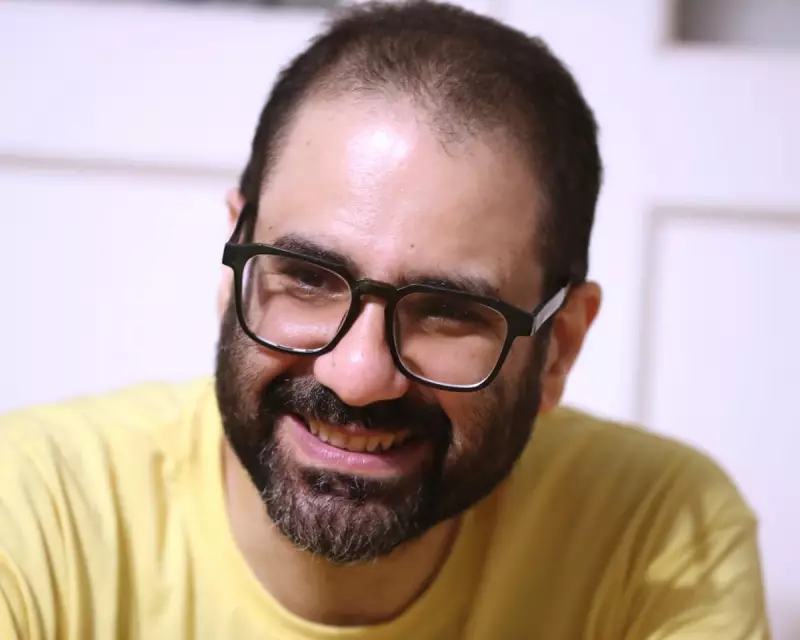
Successive British governments are under intense scrutiny for their high-profile campaign to secure the release and repatriation of British-Egyptian democracy activist Alaa Abd el-Fattah, following the emergence of his past violent and offensive social media posts.
Controversial Posts Spark Widespread Backlash
The dissident's return to the UK on Friday from detention in Egypt has been overshadowed by a growing controversy. Historical remarks attributed to el-Fattah, in which he appeared to advocate for violence against "Zionists" and police officers, have provoked a widespread backlash. These posts, which cost him a nomination for the European Parliament's Sakharov human rights prize in 2014, were in the public domain at the time UK authorities were advocating for him.
Prime Minister Keir Starmer is facing criticism after initially welcoming el-Fattah's return, stating his release had been a "top priority" for the government. It is understood that Starmer was not aware of the online posts at the time of his statement. In response to the disclosure, the UK Foreign Office condemned what it called the "abhorrent" remarks made by the dual national.

Cross-Party Campaign and Citizenship Grant Questioned
Jewish organisations have led the criticism, describing the government's "effusive" response as inappropriate. They argue that the years-long, cross-party campaign to secure the activist's freedom demonstrated a "lack of due diligence" by the authorities. The Board of Deputies of British Jews stated the campaign for "such a person" showed a "broken system."
El-Fattah was granted British citizenship in 2021 under Boris Johnson's Conservative government, a decision that would have been made by the then Home Secretary Priti Patel, advised by the Foreign Office under Liz Truss. Successive Tory prime ministers, including Rishi Sunak, had called for his release. After taking power, Starmer continued this lobbying, making three calls to the Egyptian president regarding the case.
The activist, a leading voice in Egypt's 2011 Arab Spring uprising, was sentenced in 2021 to five years in prison for "spreading false news." His imprisonment was labelled a breach of international law by UN investigators. He was eventually pardoned by President Abdel Fattah el-Sisi and arrived in London last Friday after Egypt lifted a travel ban.
Political Regret and Calls for Action
The revelation has prompted significant political regret. Shadow Justice Secretary Robert Jenrick called for el-Fattah to be stripped of his dual citizenship and deported. Several Tory politicians who lobbied for his release, including former party leader Iain Duncan Smith and MP Alicia Kearns, have publicly stated they now regret their campaign.
Duncan Smith urged police to investigate el-Fattah's comments, while Kearns said she felt "deeply let down, and frankly betrayed." She called for el-Fattah to "unequivocally apologise" for views she described as "wholly incompatible with British values."
The Jewish Leadership Council expressed being "appalled by the effusive welcome" el-Fattah received, noting the prime minister's recent pledge to root out antisemitism. The Board of Deputies has raised concerns directly with the government, stating there is an "urgent need" to ascertain whether el-Fattah still holds the extremist views expressed in his past online rhetoric.