The presidency of Donald Trump has ushered in a unique era where the lines between international diplomacy and private business interests have become profoundly blurred. As the former president navigates conflicts from Gaza to Ukraine, critics warn that a deal-making approach centred on leverage and loyalty risks trading long-term stability for short-term gains, with potential consequences for both global order and American democracy.
The Two Faces of Trump: Peacemaker or Power Broker?
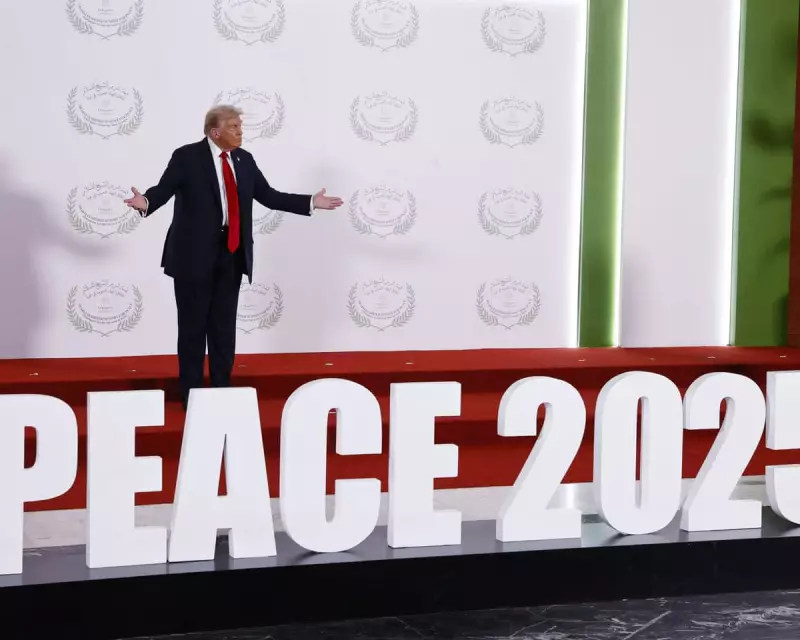
During his campaign for a second term, Donald Trump positioned himself as a champion of peace, promising to end the wars in Gaza and Ukraine "on day one". Upon taking office in January 2025, he initially took credit for pushing Israel and Hamas towards a ceasefire. However, this narrative quickly unravelled. He faced widespread criticism for allowing Israeli Prime Minister Benjamin Netanyahu to abandon that agreement and restart the war in Gaza for a further seven months.
Simultaneously, President Trump authorised US bombings in Yemen and Iran, threatened war with Venezuela, and demanded concessions from Ukraine that shocked European allies. This contrast between the candidate's rhetoric and the president's actions raises a central question: is Trump a genuine peacemaker whose unconventional tactics break deadlocks, or a leader who talks of peace while pursuing power and profit?

A Family Business Entwined with Statecraft
According to Professor Mohamad Bazzi, director of New York University's Hagop Kevorkian Center for Near Eastern Studies, the issue is not that Trump separates business and diplomacy, but that the two have dangerously fused. "It's difficult to keep up with all the ways that Trump and his family have been profiting from the presidency," Bazzi states. He argues that international players have learned that "one quick way to please Donald Trump is by enriching his family business."
Unlike every president since the 1970s, Trump has not placed his assets in a blind trust. He maintains that he is not directly involved because his children manage the Trump Organization, despite profits flowing back to him. The business has seen a significant increase in real estate deals with companies in Arab nations, including Saudi Arabia, Qatar, and the UAE. These entities often have ties to sovereign wealth funds or royal families.
These are frequently branding deals where the Trump Organization licenses its name. For example, Saudi developer Dar Al Arkan paid $21.9 million (£16.4m) in license fees in 2024 for projects in Dubai and Oman. The family has also profited from speculative ventures like the "Trump meme coin" launched just before his second inauguration.
Kushner's Dual Role: Diplomat and Deal-Maker
The blending of private and public roles is epitomised by Trump's son-in-law, Jared Kushner. After pledging to focus on his private equity firm, Affinity Partners, Kushner has reemerged as a central figure in Gaza ceasefire talks and Russia-Ukraine negotiations. "He's a private citizen who is negotiating some of the most important foreign policy agreements on behalf of the US government," Bazzi notes. "Yet at the same time, his diplomatic work overlaps with his business dealings."
This creates stark conflicts of interest. The framework for Gaza's postwar redevelopment will likely be funded by Saudi Arabia, Qatar, and the UAE—the very states that provide almost all the capital for Kushner's private equity firm. The inability to separate his diplomatic role from his business interests represents a blurring of lines "almost never seen before in the US."
Transactional Alliances and the Price of Friendship
This deal-making ethos extends to state relations. When Saudi Crown Prince Mohammed bin Salman visited the White House in November 2025, Trump rolled out the red carpet. Following Trump's re-election, the Prince pledged $600 billion (£449bn) in US investments, later increasing the promise to $1 trillion during the visit.

In return, Gulf nations have received guaranteed defence pacts and promises of advanced US weaponry. However, Bazzi points out a strategic tension: these countries now view Israel under Netanyahu as a greater threat than Iran, yet US policy remains firmly tilted towards Israel. The investments continue, seemingly to "stay in Trump's good graces" and prove they are dependable allies who keep money flowing to both the US economy and the Trump family business.
Ultimately, Bazzi suggests Trump's deal-making instinct is tempered by a desire to align with perceived strength, a trait exploited by leaders like Vladimir Putin and Benjamin Netanyahu. While the transactional approach promised a break from hawkish foreign policy, actions like the direct US attack on three major Iranian nuclear facilities reveal a more complex and volatile reality. The fusion of profit, power, and diplomacy under Trump continues to redefine American statecraft, with uncertain consequences for global stability.