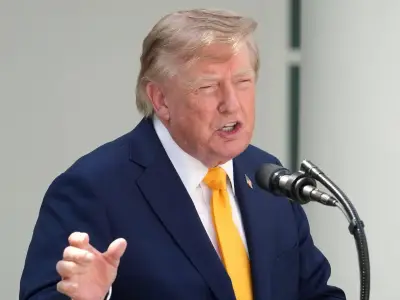
The Trump administration quietly declared frozen embryos to be children last week, marking a significant escalation in the pursuit of fetal personhood. In a call for grant applications related to a nearly 20-year-old program meant to raise awareness about frozen embryo adoption, the Department of Health and Human Services referred to frozen embryos using the terms 'child' and 'children', calling for screening standards for frozen embryo purchasers to be raised to those applied to parents seeking to adopt actual children. The document refers to frozen embryos as 'children who already exist and are in need of a family'.
Background of the Embryo Adoption Program
The program, called the Embryo Adoption Awareness and Services grant, was created in 2002 as part of an anti-abortion drive by the George W. Bush administration. It offers funding to organizations that help facilitate the adoption and implantation of surplus embryos created in IVF procedures, which would often otherwise be destroyed. The initial idea was to help couples struggling to conceive to become parents, while also appealing to anti-abortion groups that oppose the destruction of embryos. In discussing stem cell research, George W. Bush once said: 'Each of these human embryos is a unique human life.' But the designation of such items as 'children' represents a further escalation of embryonic personhood language than anything that has been seen before at the federal level.
Impact on Fetal Personhood Doctrine
The move represents a dramatic escalation of the Trump administration's pursuit of fetal personhood, the doctrine that anti-abortion forces aspire to enshrine in law whereby fertilized eggs are granted constitutional rights as persons – a regime that would ban all abortion and many kinds of birth control and miscarriage management, would curtail the basic freedoms of women of child-bearing age, and would reclassify many fertility treatments as murder. According to Moira Donegan, a Guardian US columnist, 'The language lends ammunition to anti-choice groups that have sought recognition of fetal and embryonic personhood in the courts, and who can now claim that embryos are already persons under the law as evidenced by the fact that they are treated as such in federal policy.'

Previous Legal Precedent
Recent history suggests that the elevation of frozen embryos has vast, unanticipated and wildly politically unpopular consequences. In a bizarre 2024 case involving the accidental destruction of human embryos that were removed from a hospital freezer, the Alabama state supreme court declared frozen embryos persons under state law, calling them by the uncanny coinage 'extrauterine children' and designating freezers as 'cryogenic nurseries'. The results were immediate and far-reaching. Understanding that a fundamental practice of their care was now legally defined as murder, fertility clinics in Alabama halted IVF. Those with frozen embryos stored in the state scrambled to move them, at great expense, uncertain of what obligations these 'children' would accrue to them. Abortion was already almost totally banned in the state, but gynecological practices became even more fraught. The public outcry was swift and extreme: people hated this ruling – not only because it insulted the dignity of human life by creating a false equivalence with frozen embryos, but because it curtailed IVF access. The Alabama state legislature, as extreme as it is in its anti-choice commitments, quickly assembled to protect IVF practices.

Potential Future Actions
The new Trump administration language is likely not to have such immediate effects. But it does signal that the Trump administration, which has been relatively slow to pursue its most maximalist anti-abortion priorities over the past two years, may accelerate its anti-choice efforts after the midterms. The FDA has a new acting chief, one who has reportedly sought to reassure anti-choice campaigners that he backs their cause; a 'safety review' of the abortion pill mifepristone, widely understood to be a pretext for restricting or banning the drug, is now under way. The supreme court has so far punted on the issue, but justices have signaled that they're open to challenges to shield laws that protect providers and efforts to stop the mailing of abortion drugs under the Comstock Act. Fetal personhood, of the sort imagined in the Trump administration's new document, would be among the most expansive and consequential means of banning abortion nationwide. Implementing it in law might be a long shot – but that doesn't mean that they won't try.