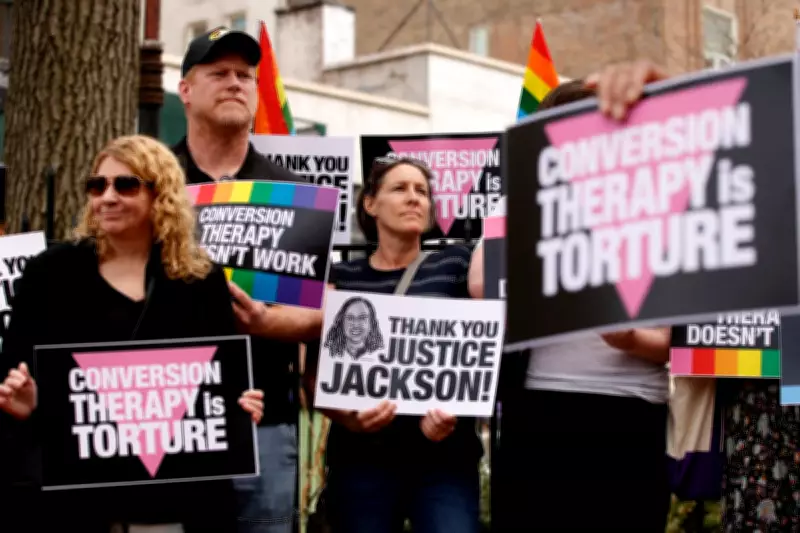
Supreme Court Strikes Down Colorado's Conversion Therapy Ban in Landmark Ruling
The US Supreme Court has delivered a pivotal 8-1 decision this week, rejecting Colorado's 2019 law that prohibited licensed clinicians from engaging in "conversion therapy" for patients under 18. This ruling, centered on the case Chiles v Salazar, asserts that the ban infringes on free speech rights, potentially setting a precedent that could undermine similar restrictions across 23 states. The court argued that Colorado's legislation censored the speech of counselor Kaley Chiles, who claimed it violated her ability to discuss faith and beliefs on "biological sex" with youth. The case has been remanded to a lower court for stricter scrutiny, leaving the law temporarily in effect but facing likely invalidation.
Implications for LGBTQ+ Youth and State Bans Nationwide
For LGBTQ+ individuals in Colorado, the immediate impact is mixed; the ban remains active pending further judicial review, but experts predict it will fail under the heightened "strict scrutiny" standard. Carl Charles, counsel at Lambda Legal, emphasized that while protections persist for now, the ruling casts doubt on their longevity. Beyond Colorado, the decision threatens to unravel bans in states like California, where conversion therapy restrictions have been in place for over a decade. Elana Redfield of UCLA's Williams Institute warned that many state laws mirror Colorado's approach and could be overturned or rendered unenforceable, echoing past scenarios where outdated statutes lingered despite supreme court rulings.
Healthcare and Legal Ramifications Beyond Conversion Practices
The dissent by Justice Ketanji Brown Jackson highlighted broader concerns, arguing that the ruling "opens a dangerous can of worms" by limiting states' ability to regulate medical professionals' speech. She cautioned that this could impair healthcare standards and expose patients to harmful practices. Conversely, advocates like Shayna Medley of Advocates for Trans Equality noted that the court's strong free speech language might be leveraged to defend other healthcare providers, such as those offering trans or reproductive care. The ruling also shifts accountability; if bans are struck down, survivors must pursue malpractice or fraud claims individually, a challenging path given the documented psychological harms linked to conversion therapy, including increased depression and suicide risks.

Political Dynamics and Liberal Justices' Alignment
In a surprising twist, liberal justices Elena Kagan and Sonia Sotomayor joined the conservative majority, concurring that Colorado's law constituted "viewpoint discrimination." Kagan's opinion suggested that a "viewpoint-neutral" law might pass constitutional muster, but experts question its feasibility. Charles speculated that the justices may have been motivated by fears of broader speech suppression in other contexts. Jackson, as the sole dissenter, focused on the real-world harm to youth, underscoring that conversion therapy lacks evidence and causes lasting damage. As states explore alternative regulatory measures, such as California's proposed civil liability bill, the battle over conversion therapy continues to evolve, with profound implications for LGBTQ+ rights and medical ethics in America.