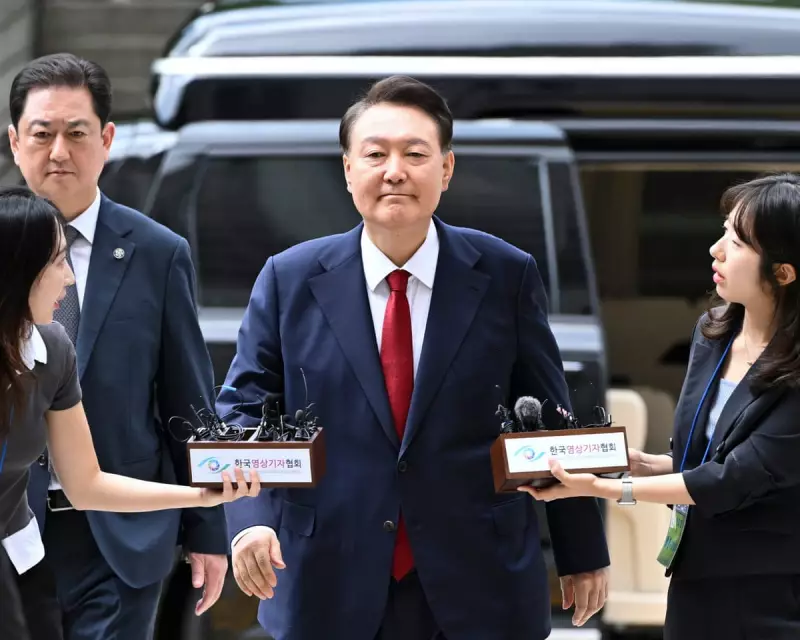
A court in South Korea has delivered a landmark verdict, sentencing former President Yoon Suk Yeol to five years in prison for abusing his authority and mobilising presidential security forces to obstruct his own arrest. This ruling marks the first judicial decision connected to the dramatic events surrounding his failed declaration of martial law in December 2024.
Court Condemns Abuse of Power and Obstruction
The Seoul Central District Court found Yoon guilty on Friday of special obstruction of official duties, abuse of power, and falsifying documents. Presiding Judge Baek Dae-hyun stated that the former leader had "disregarded the constitution" and shown no remorse for his actions, declaring that he "deserves condemnation".
The charges stem from an incident weeks after the collapse of his martial law decree. When investigators from the country's corruption office arrived to arrest him on insurrection-related charges, Yoon barricaded himself inside his residence. He then deployed hundreds of presidential security service officers to block the court-issued warrant, sealing the compound with vehicle barricades and human chains.

"The defendant abused his tremendous influence as president to obstruct lawful warrant execution, effectively privatising security officials sworn to serve the Republic of Korea into his personal troops," Judge Baek said in a televised ruling. "His crimes are extremely serious in nature."
The Prelude to Martial Law and Separate Death Penalty Case
This conviction is directly linked to the chaotic events of 3 December 2024, when Yoon stunned the nation by declaring martial law and dispatching police and armed troops to the National Assembly. Lawmakers rushed to override the decree, with some climbing over fences to reach the chamber before voting to lift the order, which lasted only six hours before Yoon backed down.
The court also criticised Yoon's conduct in the run-up to this declaration. He selectively summoned only loyal cabinet members to a late-night meeting, excluding nine others to rubber-stamp the decision without proper deliberation. He later signed backdated documents to create a false appearance of proper cabinet approval.
This five-year sentence is separate from Yoon's main insurrection trial, where prosecutors earlier this week sought the death penalty. In that case, they allege he attempted to use military force to paralyse the legislature, arrest political opponents, and seize control of the national election commission. A verdict in that trial is scheduled for 20 February.
A Historic Reckoning and Wider Legal Web
Friday's conviction is the opening act in an unprecedented legal reckoning in South Korea's democratic history. Yoon faces seven additional criminal trials, including the capital insurrection case. Other allegations, brought by separate special prosecutors, include claims he ordered drone incursions into North Korean airspace to provoke a response that could justify martial law.
The legal net extends to Yoon's inner circle and family. His wife, Kim Keon Hee, faces a separate verdict on 28 January on stock manipulation and bribery charges, with prosecutors demanding 15 years' imprisonment. Former Prime Minister Han Duck-soo is due to receive a verdict on 21 January for charges of aiding insurrection.
Yoon's legal team has stated they will appeal against Friday's ruling. The coming weeks are set to determine the full scale of legal consequences for the former president and his associates.