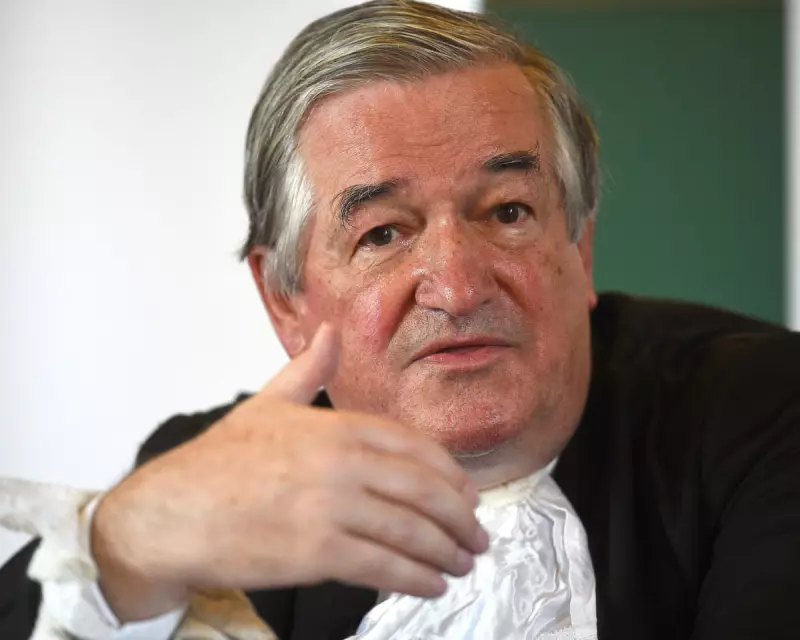
Sir James Munby: The Outspoken Judge Who Championed Justice Reform
Sir James Munby, the former president of the family division of the high court, has died at the age of 77 following a heart attack. An energetic and reform-minded judge, Munby was renowned for his direct challenges to government policies that he believed undermined justice, particularly regarding legal aid cuts and NHS service failures.
A Judicial Voice Against Injustice
Throughout his tenure, Munby became skilled at embedding powerful rebukes within his judgments that often embarrassed government ministers into action. He dared to test constitutional boundaries over control of public funds, proposing in several cases that HM Courts and Tribunals Service should pay for lawyers despite Ministry of Justice restrictions.
In one particularly poignant hearing where parents faced having their child permanently removed without representation, Munby asked what could be worse for a parent. He observed that "the state has simply washed its hands of the problem", declaring it "a denial of justice" and noting that "the child is also entitled to a fair trial."

After effectively pressuring authorities into granting legal aid, Munby later described the situation as an "unedifying story" of parents fighting "to obtain from a grudging state the assistance which was essential if justice was to be done."
Championing Vulnerable Individuals
In a separate 2017 case concerning mental health facilities, Munby warned that the nation would have "blood on its hands" if an NHS hospital bed could not be found for a teenage girl at risk of suicide. He exposed what he called the "disgraceful and utterly shaming lack of proper provision" of clinical and support services, lamenting that despite efforts to find specialist care, "I might as well have been talking to myself in the middle of the Sahara."
Kirsty Brimelow KC, chair of the Bar Council, praised Munby's judicial career as distinguished by "moral clarity and compassion for the vulnerable." She noted that "his judgments often were likened to the writings of Charles Dickens as he railed against and sought to remedy social injustice. And he did just that, one case at a time."
Early Life and Career Path
Born in Oxford in 1948, James was the eldest of five children to Mary and Denys Munby. His mother worked as a researcher in the university's psychiatry department, while his father was a reader in transport economics at Oxford who had been a conscientious objector during the Second World War.
After education in Scotland and at Magdalen College School in Oxford, Munby spent a year working as a labourer and pursuing his passion for steam trains, including working on the footplate shovelling coal. He graduated from Wadham College, Oxford in 1970 with a first in law, winning the university's prestigious Eldon law scholarship.
Called to the bar in 1971, he joined New Square Chambers, practising in the chancery division while specialising in family cases. He married fellow barrister Jennifer Beckhough in 1977. Made a silk in 1988, he was regularly employed by the official solicitor to apply his persuasive advocacy to medical treatment and consent cases, including appearing in the House of Lords in the landmark case of Anthony Bland, who had been left in a permanent vegetative state by the Hillsborough disaster.
Judicial Leadership and Reforms
Appointed a high court judge in 2000 and assigned to the family division, Munby was promoted to the court of appeal in 2009 and became chairman of the Law Commission, the body responsible for recommending legislative reforms.
As a champion of greater transparency in family courts, he dismissed the application for a blanket ban on reporting the divorce proceedings between Earl Spencer and his former wife Caroline. In 2013, when made president of the family division, he published guidance opening up reporting of the court of protection to improve "public understanding" and confidence in the legal system for those lacking mental capacity.

His energetic leadership drove through significant reforms, including reducing waiting times in care cases. Known for his impatience with what he considered nonsense, he was once described as giving "an impression of a volcano about to explode." He advocated for separating divorce proceedings from protracted disputes over asset division and called for legal rights for unmarried, cohabiting couples to protect them from injustice upon separation.
Later Years and Legacy
Munby stood down in 2018 upon reaching the compulsory judicial retirement age of 70. At his valedictory speech, he explained with characteristic wit that neither his wife nor daughter could attend because "the interests of the child are paramount" – a legal in-joke that drew applause from colleagues.
To mark the occasion, fellow judges and court staff took Munby, who never learned to drive, to the Romney, Hythe and Dymchurch miniature steam railway in Kent, where an engine was renamed "The Flying Munby" for the day in tribute to his lifelong passion for railways.
He remained active in retirement, chairing the Nuffield Family Justice Observatory until 2023, which monitors family courts. In a Guardian article the following year, he criticised the shortage of places in secure children's homes for youngsters with mental health needs and raised concerns about legal safeguards in proposed assisted dying legislation.
Sir James Munby is survived by his wife Jennifer, their two children Thomas (a barrister) and Charlotte, and four grandchildren. His legacy as a reformer who fearlessly challenged injustice within the legal system continues to resonate throughout British jurisprudence.