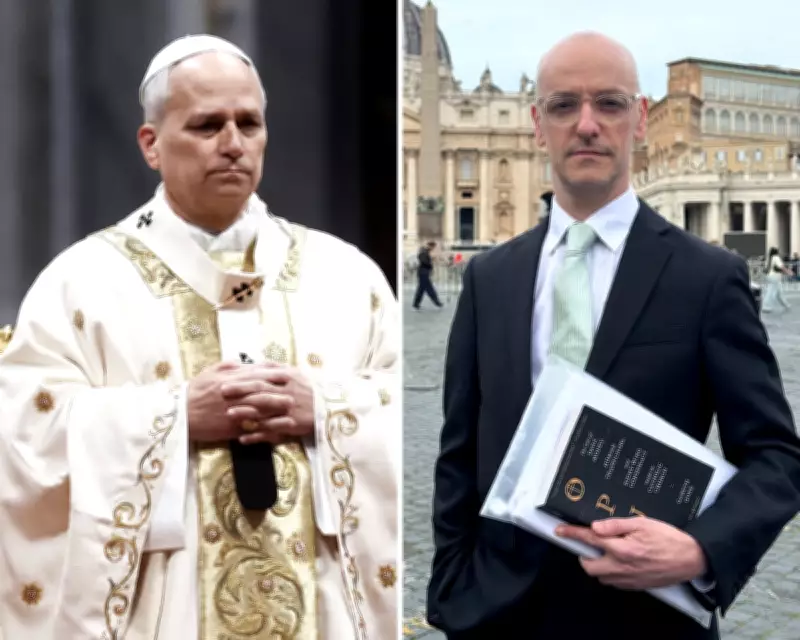
Pope Leo's Unexpected Invitation to Opus Dei Critic Gareth Gore
In a remarkable turn of events, Gareth Gore, the author behind the explosive 2024 book Opus, was granted a one-on-one audience with Pope Leo at the Vatican earlier this year. This meeting occurred two years after Gore's publication, which meticulously details decades of alleged manipulation and abuse by Opus Dei, a highly secretive Catholic organization founded in the 1920s by Spanish priest Josemaría Escrivá.
The Investigation That Sparked Vatican Interest
Gore's book, Opus, presents a gripping account based on years of research, alleging that Opus Dei is at the center of a vast conspiracy involving child grooming, human trafficking, and psychological control. Former members have described practices such as private confessions used as leverage, drugging of individuals, and severe physical disciplines like self-flagellation. Opus Dei has categorically denied all these claims, maintaining its mission to help people "love God and serve others through work well done."
Gore's investigation began almost by accident while he was reporting as a financial journalist on the collapse of Banco Popular in 2017. He uncovered that Opus Dei had allegedly hijacked the bank since the 1940s, using it as a "personal cash machine" to fund global expansion. This financial network, according to Gore, supported the creation of recruitment programs targeting children and vulnerable teenagers, leading to the establishment of Opus Dei centers worldwide and significant political influence, particularly in the United States.

The Vatican Meeting: A Signal of Scrutiny
Gore was stunned when he received a call from the Vatican arranging the audience with Pope Leo. During their meeting, which lasted longer than scheduled, Gore presented internal documents and firsthand accounts from hundreds of former members. He emphasized that Opus Dei's founder, Escrivá, claimed divine inspiration for the group's rules, making reform challenging due to his sainthood status granted by the Vatican in 2002.
Pope Leo responded with incisive questions and allowed cameras to document the meeting, a move Gore interprets as a clear signal to Opus Dei that the allegations are being taken seriously. Gore believes the Vatican's historical complicity, including granting Opus Dei special status as a "personal prelature" under Pope John Paul II, has enabled the group to operate with minimal oversight.
Global Repercussions and Calls for Action
Beyond the Vatican, prosecutors in Argentina are investigating Opus Dei for human trafficking and labor offenses, with similar allegations emerging in Ireland, Mexico, France, and Spain. Gore advocates for a full independent investigation into all abuse claims and questions the safeguarding practices at Opus Dei's approximately 300 private schools globally, including in the UK and US.
He also highlights the group's political influence, noting ties to high-ranking figures in the MAGA Republican movement and projects like Project 2025. Gore argues that Opus Dei uses religion as a veneer for political and financial gain, targeting elites to advance conservative agendas.
This audience with Pope Leo marks a pivotal moment, suggesting potential shifts in how the Catholic Church addresses longstanding controversies surrounding Opus Dei.