North Korean leader Kim Jong-un has publicly dismissed a senior official, scapegoating him for significant failures in a major industrial project as the regime prepares for a crucial political gathering.
A Public Humiliation and Dismissal
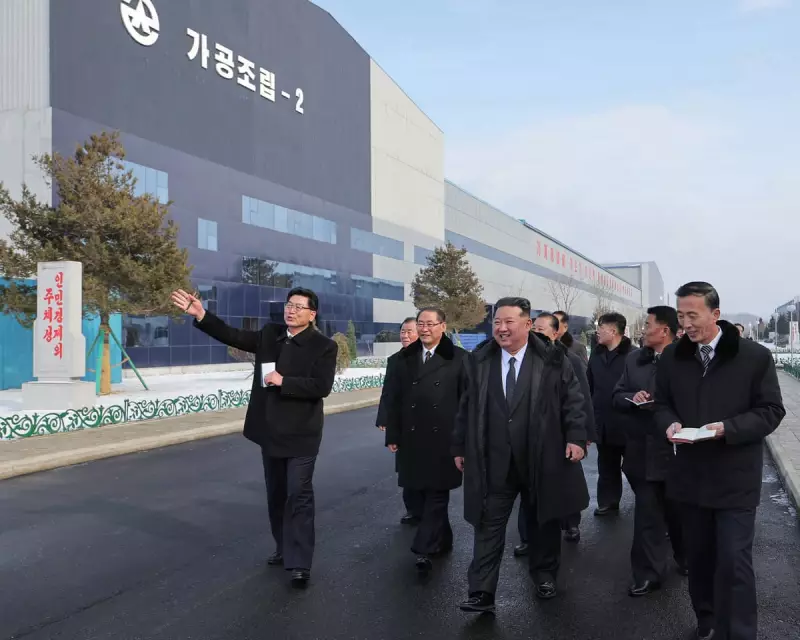
The Korean Central News Agency (KCNA) reported that Kim Jong-un has fired Vice-Premier Yang Sung-ho, who was responsible for the machine-building industry. The dismissal came after an inspection of the Ryongsong Machine Complex in South Hamgyong province, where the first phase of a modernisation plan has been completed.
In a speech on Monday, Kim blamed Yang for causing what he termed "unnecessary man-made confusion" in the works, leading to substantial economic losses. The leader revealed he had previously criticised Yang during a party meeting in December but saw no improvement in his performance or sense of responsibility.

Using vivid, derogatory language, Kim likened the official to "a goat yoked to an ox cart," questioning the logic of expecting a goat to perform an ox's labour. He framed the incident as a mistake in personnel management.
Pre-Congress Pressure and Broader Economic Woes
Analysts see this public rebuke as a calculated move by Kim to tighten discipline ahead of the ruling Workers' party congress, the first in five years. This major propaganda event, expected to open in late January or February, will review past projects and set new political and economic priorities.
"By doing so, Kim probably aimed to 'create extreme tensions among senior officials' and pressure them to produce better results before the party congress," said Kwak Gil-sup of the One Korea Center.
However, experts argue the factory's troubles are symptomatic of deeper, systemic issues. Moon Seong-mook of the Korea Research Institute for National Strategy suggested the problems stem from North Korea's fundamental structural flaws, including the diversion of scarce resources to nuclear and missile programmes, rather than the failings of a single official.
"Kim Jong-un has gone all-in on nuclear and missile programmes but he's mismanaged the economy. He's just passing the blame for his fault to a subordinate," Moon stated.
Economic Stagnation and Future Directions
North Korea's economy, which suffered major setbacks during the Covid-19 pandemic, remains strained. While South Korea's central bank estimated 3.7% growth in 2024, observers note that excessive focus on weapons, an inefficient centralised economy, and international sanctions hinder rapid, meaningful development.
Kwak noted that any limited economic growth largely benefits the ruling elite and weapons sector, not the general public, exacerbating inequality.
Looking ahead, the party congress is expected to reinforce policies of cooperation with allies like Russia and China to spur gradual economic development. Outside experts are also watching for any signals about restarting diplomacy with the US, with some suggesting Donald Trump's planned visit to Beijing in April could increase prospects for renewed talks.
Furthermore, Moon predicted Kim would likely use the congress to formally cement his policy of simultaneously advancing nuclear and conventional weapons programmes, underscoring the regime's continued prioritisation of military might over comprehensive economic reform.