Mexican President Claudia Sheinbaum has issued a stark warning that former US President Donald Trump's new policy to impose tariffs on countries exporting oil to Cuba could precipitate a severe humanitarian crisis on the island. This development comes as Cuba grapples with acute fuel shortages, with reports indicating reserves may only last 15 to 20 days, leading to widespread 12-hour daily blackouts that are disrupting essential services.
Escalating Tensions Over Cuban Oil Supplies
Trump signed an executive order on Thursday, declaring a national emergency and establishing the framework for tariffs aimed at nations supplying oil to Cuba. The White House justified this move by citing Cuba's alleged connections with Russia, Hamas, and Hezbollah. Although Mexico was not explicitly named in the statement, it has emerged as Cuba's primary oil supplier since 2025, surpassing traditional allies like Russia and Venezuela.
Sheinbaum responded on Friday, stating that her government would seek clarification from the US State Department regarding the tariffs while exploring alternative methods to deliver humanitarian aid to the Cuban populace. "We will seek a way, without putting Mexico at risk, of course, but always seeking solidarity with the Cuban people," she affirmed during a press briefing.

Immediate Impacts on Cuban Society
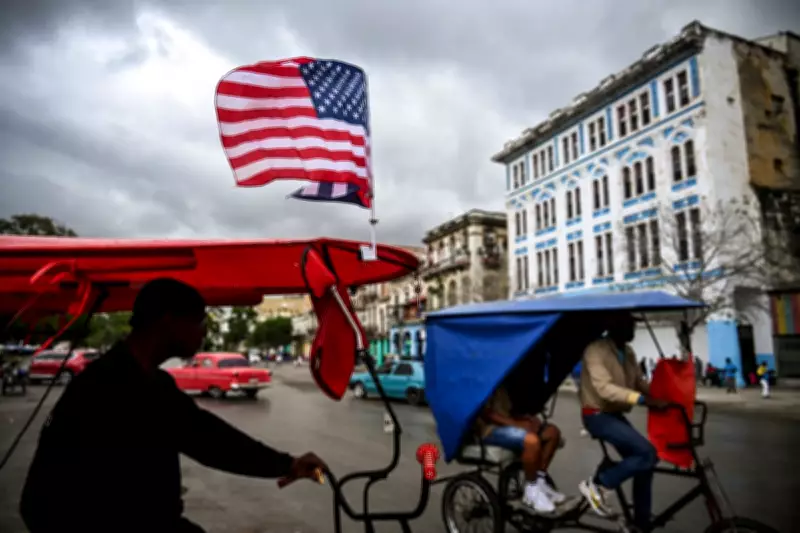
The potential tariffs threaten to exacerbate Cuba's already dire energy situation. Sheinbaum emphasised that these measures could "directly affect hospitals, food supplies, and other basic services for the Cuban people." In Havana, prolonged blackouts have become routine, forcing many families to resort to cooking over charcoal due to shortages of gas canisters, thereby compounding daily hardships.
Cuban President Miguel Díaz-Canel Bermúdez condemned Trump's actions in a social media post, accusing him of attempting to "suffocate" the island's economy and labelling the policy as revealing a "fascist, criminal, and genocidal nature."
Broader Geopolitical Context
The situation has intensified following the US capture and transfer of Nicolás Maduro, a key Cuban ally from Venezuela, earlier this year. Subsequently, Trump declared on Truth Social, "THERE WILL BE NO MORE OIL OR MONEY GOING TO CUBA – ZERO!" underscoring his administration's hardline stance.
According to a Financial Times report, Cuba's oil reserves are critically low, potentially necessitating sharp rationing soon. This precarious state is further complicated by US officials hinting at deploying gunboats near Cuba and seeking Cuban ministers willing to collaborate with Washington.
Mexico's Diplomatic Balancing Act
For President Sheinbaum, the issue of oil shipments to Cuba presents a significant diplomatic challenge. She must navigate demonstrating Mexico's cooperation with the Trump administration on trade and security matters, particularly as both nations renegotiate the USMCA free trade agreement, without alienating the left-wing faction of her Morena party. This delicate balance is set against a backdrop of repeated US threats of military strikes against drug cartels in Mexico.
Jorge Piñon, a University of Texas expert on Cuba's energy sector, warned of escalating severity, noting, "If we do not see any crude oil or fuel deliveries within the next six to eight weeks, then the government will have a major crisis on their hands."
The unfolding scenario highlights the intricate interplay between international diplomacy, energy security, and humanitarian concerns, with Mexico positioned at a critical juncture in mediating support for Cuba amidst mounting US pressure.