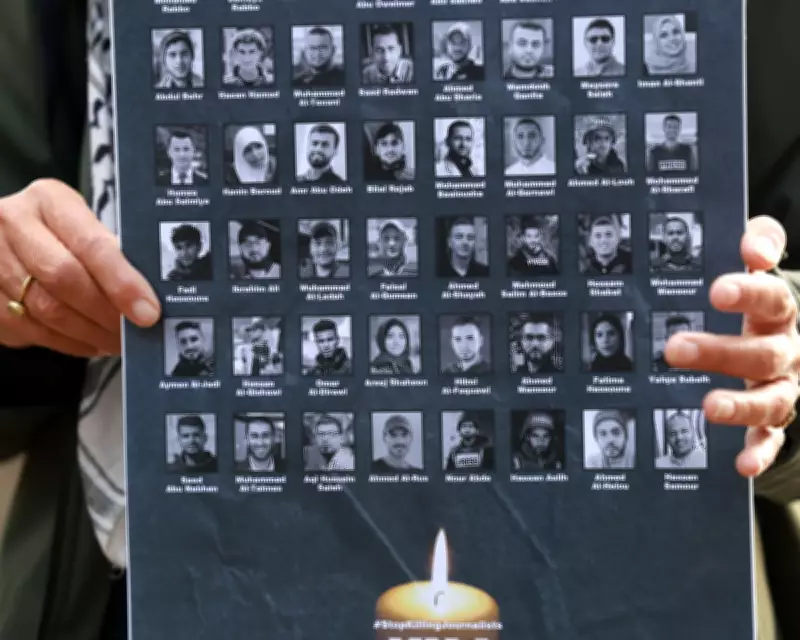
The Committee to Protect Journalists (CPJ) has released a devastating annual report documenting a record-breaking 129 journalists and media workers killed while performing their duties in 2025. According to the New York-based independent organization, Israel was responsible for a staggering two-thirds of these fatalities, marking the second consecutive year of such grim statistics.
Unprecedented Toll on Press Freedom
The CPJ's comprehensive analysis reveals that Israeli military actions resulted in 86 journalist deaths during 2025. The majority of these victims were Palestinian reporters covering the Gaza conflict, but the toll also includes 31 media workers killed in a September attack on a Houthi media center in Yemen. This Yemen incident represents the second-deadliest single attack on journalists ever recorded by the CPJ since it began collecting data over thirty years ago.
Targeted Killings and Access Restrictions
Perhaps most alarming is the CPJ's finding that Israel was responsible for 81% of the 47 killings classified as intentionally targeted or "murder." The organization cautions that the actual number of targeted killings is likely higher due to severe access restrictions in Gaza that complicate verification efforts. The report states unequivocally that "the Israeli military has now committed more targeted killings of the press than any other government's military on record."

Israel maintains a policy of not permitting foreign journalists to enter Gaza, meaning all media workers killed there were Palestinian. The Israeli military has consistently stated that its forces target only combatants in Gaza, acknowledging the inherent risks of operating in combat zones. Regarding the Yemen media center attack, Israel acknowledged the strike, describing the facility as a propaganda arm of the Houthi movement.
International Context and Notable Cases
The CPJ report places the Gaza conflict within a broader global context of journalist endangerment. At least 104 of the 129 journalists killed in 2025 died in connection with various conflicts worldwide. Beyond Gaza and Yemen, the deadliest countries for journalists included Sudan with nine fatalities, Mexico with six deaths, and the Philippines with three journalist killings. Additionally, four Ukrainian journalists were killed by Russian forces during the year.
Among the most prominent cases documented was the killing of Reuters journalist Hussam al-Masri in August. He died from Israeli fire while operating a live video feed at Gaza's Nasser Hospital. The attack, which killed four other journalists, was described by Israeli Prime Minister Benjamin Netanyahu as a "tragic mishap." While the Israeli military initially claimed it targeted a Hamas camera, a subsequent Reuters investigation confirmed the device belonged to their news organization.
Controversial Allegations and International Response
The report addresses Israel's repeated allegations that some journalists killed in Gaza had links to Hamas, claims that international news organizations have strongly denied. The CPJ characterizes these accusations as "deadly smears" that endanger journalists' lives. Russia, mentioned in the report for killing four Ukrainian journalists, has consistently denied deliberately targeting media workers and has accused Ukraine of targeting Russian reporters, which Kyiv denies.
The CPJ's findings highlight a disturbing global trend of increasing violence against journalists, with the 2025 death toll setting consecutive annual records. The organization's data reveals that conflict zones remain exceptionally dangerous for media workers, with governments and military forces bearing significant responsibility for the safety crisis facing journalists worldwide.