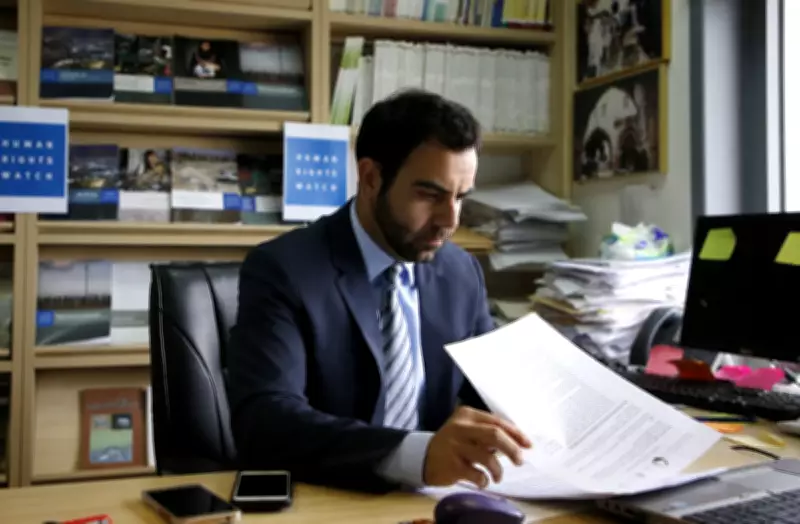
Human Rights Watch Faces Internal Crisis as Key Staff Resign Over Blocked Report
In a significant development that has shaken one of the world's leading human rights organisations, two members of Human Rights Watch's (HRW) Israel and Palestine team have resigned following the blocking of a controversial report. The report, which concluded that Israel's denial of the Palestinian right of return constitutes a crime against humanity, was halted by HRW leadership, leading to accusations of political interference and a departure from principled advocacy.
Resignations Amidst Leadership Transition
Omar Shakir, the director of HRW's Israel and Palestine division for nearly a decade, and Milena Ansari, an assistant researcher, submitted separate resignation letters obtained by media outlets. They cited the decision to pull the report as a breach of the organisation's standard approval processes, suggesting that fear of political backlash had overridden a commitment to international law. Shakir expressed a loss of faith in HRW's integrity, stating he could no longer represent the group. These resignations coincide with the start of Philippe Bolopion's tenure as HRW's new executive director, adding to the internal upheaval.
HRW's Response and Internal Disputes
HRW issued a statement explaining that the report raised complex issues requiring further analysis and research, leading to its pause. The organisation emphasised its support for the right of return but claimed the report needed strengthening to meet its high standards. However, internal emails reveal concerns among senior staff about the report's scope and potential reputational damage. Bruno Stagno Ugarte, chief advocacy officer, worried it could be misread as a call to undermine Israel's Jewish character, while Tom Porteous, acting program director, questioned its impact on HRW's credibility as a neutral monitor.

Details of the Blocked Report
The unpublished report, titled 'Our Souls Are in the Homes We Left: Israel's Denial of Palestinians' Right to Return and Crimes Against Humanity', was drafted in August 2025. It documented experiences of Palestinians displaced from Gaza and the West Bank, as well as refugees in Lebanon, Jordan, and Syria since 1948 and 1967. The authors argued that denying the right of return qualifies as "other inhumane acts" under the Rome Statute, a legal designation for grave abuses. This conclusion was based on precedents like the ICC's findings on Rohingya refugees, aiming to bring academic arguments into human rights advocacy.
Broader Implications and Staff Backlash
The controversy has sparked a letter of protest signed by over 200 HRW employees, warning that blocking the report could undermine trust in the organisation's review processes. Kenneth Roth, former HRW executive director, defended the decision as necessary to prevent an indefensible report, though he acknowledged leadership transition issues. Shakir countered that the report had undergone rigorous vetting and was ready for publication, arguing that limiting its scope to recent displacements would ignore decades of suffering. He highlighted the plight of refugees, stressing their stories deserve to be told without compromise.