The Rise and Fall of Cambodia's Prince Group
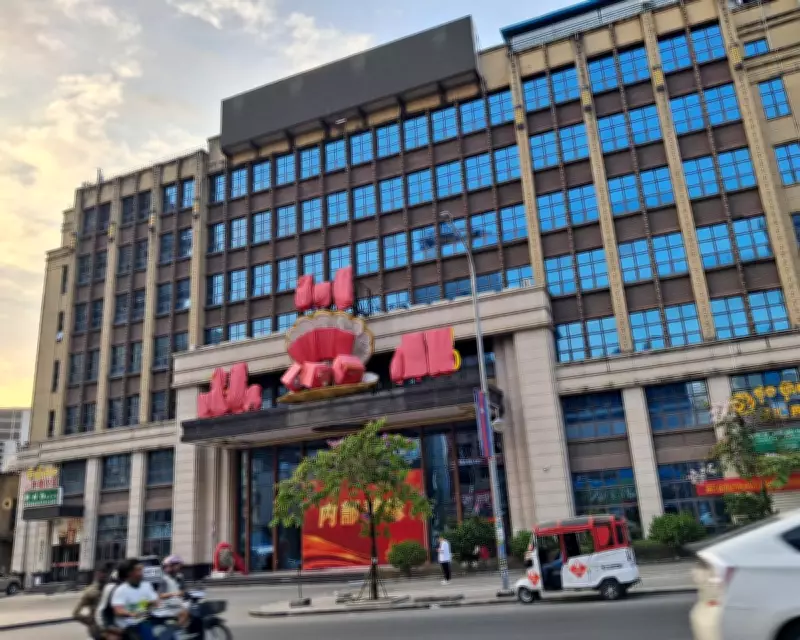
The once-glittering Jin Bei casino in Sihanoukville now stands as a hollow symbol of Cambodia's dramatic boom and bust. Where a giant golden clam shell facade once glowed with neon lights, playing cards, and red dice, now only covered signage and a Chinese "under renovation" notice remain. This casino's closure represents far more than a business failure—it marks the spectacular downfall of Prince Group and its founder Chen Zhi, whose October indictment by US prosecutors alleged the conglomerate was one of Asia's largest transnational criminal organizations.
From Real Estate Empire to Alleged Criminal Network
Chen Zhi, a 38-year-old Chinese-born businessman who became a Cambodian citizen in 2014, founded Prince Group in 2015. He arrived in Cambodia approximately fifteen years ago from Fujian province and capitalized on Sihanoukville's transformation from sleepy coastal town to casino-studded metropolis fueled by Chinese investment. While the real estate market crashed in 2019 following Cambodia's online gambling ban, Prince Group continued expanding, unveiling luxury apartments, retail complexes, and even commencing work on a $16 billion eco-city called the Bay of Lights.
Behind this legitimate facade, US prosecutors allege Prince Group operated a vast network of illegal scam compounds in Sihanoukville between 2015 and 2025. These compounds allegedly engaged in human trafficking, forced labor, and violence while generating enormous illicit profits that funded Chen's extravagant lifestyle—including designer watches, yachts, private jets, rare artwork like a Picasso painting, and multiple high-end London properties later seized by British authorities.

Political Connections and International Fallout
As Chen's wealth grew, so did his political connections. In 2020, he was appointed an official adviser to then-Prime Minister Hun Sen and later to Hun Sen's son, current Prime Minister Hun Manet. That same year, Cambodia's king bestowed upon Chen the honorific "Neak Oknha" (similar to nobleman) at Hun Sen's request—a title granted to citizens who donate at least $500,000 to the government.
"Chen Zhi and his Prince Group seem to have systematically co-opted the entire system," alleged Jason Tower, senior expert at the Global Initiative Against Transnational Organized Crime. Meanwhile, Prince Group's philanthropic arm, the Prince Foundation, donated care packages to flood victims, created scholarships, and contributed $3 million for COVID-19 vaccines—earning public appreciation from Hun Sen himself.
The international crackdown began in October when Washington and London sanctioned Prince Group. The US Justice Department seized $15 billion in bitcoin linked to Chen—the largest forfeiture in its history—while Singapore seized approximately $393 million and Taiwan seized about $172 million in assets allegedly connected to the group.
Cambodia's Awkward Reckoning
Chen's arrest in January and subsequent extradition to China has created an uncomfortable situation for Cambodia's government. Prime Minister Hun Manet told AFP in February that the government had been unaware of Chen's illegal activities, describing him as "just a businessman, contributing to the economy" and denying government benefited from scam proceeds. Cambodia revoked Chen's citizenship earlier this year, claiming it had been "irregularly obtained."
The scale of the alleged criminal enterprise is staggering. According to estimates cited by the United States Institute of Peace, the scam industry may account for almost half of Cambodia's formal GDP—potentially a $100 billion annual industry across Southeast Asia that "dwarfs the synthetic drug trade," according to John Wojcik, senior threat researcher at Infoblox.
Human Cost and Ongoing Challenges
Cambodia has promised to eliminate scamming by April, reporting that 200 locations have been shuttered since July 2025. However, the human cost remains visible: thousands of foreign workers released from compounds—including suspected human trafficking victims—have been forced to sleep on streets and outside embassies lacking money or documents to return home.

Observers question whether authorities can truly stamp out an industry so deeply embedded. Amnesty International reported in January that none of 35 interviewees who escaped compounds reported police or military presence during their release. A Ugandan national described chaotic scenes without police intervention when his compound emptied.
Despite government claims of 173 senior crime figures arrested and 11,000 workers deported, no other senior Prince Group figures have been detained, and no government officials face investigation despite frequent allegations of state complicity. Prince Group maintains its innocence, stating it "categorically rejects that it or its founder, Chen Zhi, has engaged in any unlawful activity" and that allegations are "baseless."
As The Guardian witnessed during visits to Sihanoukville and Poipet near the Thai border, while some compounds appear closed, others continue operating. "Even if it's illegal, for local people, it's business," explained one tuk-tuk driver. With such enormous profits at stake, experts warn the crackdown may simply create a vacuum for others to fill—a perpetual game of whack-a-mole with Cambodia's international reputation and thousands of vulnerable workers caught in the middle.