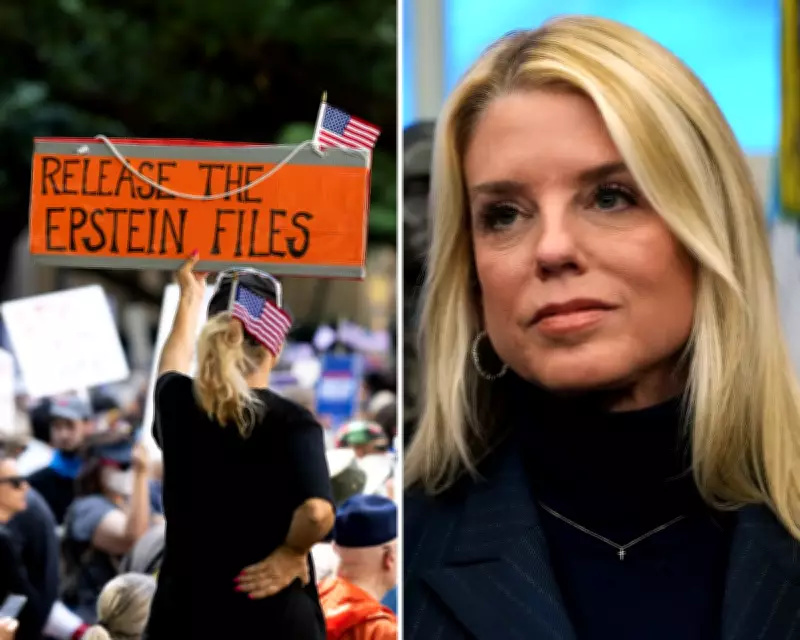
Pam Bondi's Handling of Epstein Files Widely Seen as a Blunder
Pam Bondi's tenure as attorney general has been marked by controversy, with her handling of the Jeffrey Epstein investigative files widely regarded as a significant misstep. As news emerged this week presaging Donald Trump's dismissal of Bondi, one of the key motivations reportedly centered on her botched management of these sensitive documents.
Bondi Out, Blanche In: Implications for the Epstein Investigation
Bondi, who was reportedly ousted due to her flawed approach to the Epstein files, is still scheduled to testify before Congress on 14 April. The new acting attorney general, Todd Blanche, has insisted he never heard the president link Bondi's departure to the Epstein issue. However, it is clear that this matter has plagued Bondi throughout her tumultuous time in office.
Trump repeatedly promised his administration would release all Epstein documents, a vow that resonated with conspiracy-minded members of his far-right base. Many ultra-conservative supporters believe Epstein's abuse of teenage girls was part of a vast sex-trafficking network involving the global elite. Epstein associated with numerous wealthy and powerful figures, including Andrew Mountbatten-Windsor and, at one point, Trump himself. The president, who ended his friendship with Epstein in 2004, has maintained he engaged in no wrongdoing related to Epstein or otherwise. The former Prince Andrew has also denied any misconduct.

Failed Promises and Political Fallout
The full Epstein dossier was not released by Bondi as promised, leading to frustration from survivors and Congress members, and creating a political liability for Trump. Despite signing the Epstein Files Transparency Act (EFTA), which aimed to increase disclosure, Trump complained the Epstein controversy was a hoax, and the act did little to mitigate ongoing backlash. Bondi's justice department repeatedly missed EFTA disclosure deadlines and faced accusations of withholding documents, amplifying calls for transparency and justice from survivors and lawmakers.
A congressional subpoena requiring Bondi to testify on 14 April has drawn further attention to the handling of these files. Trump announced Bondi's departure in a 2 April Truth Social post, praising her as a "Great American Patriot and a loyal friend" and stating she would transition to a private sector role. For some observers, Bondi's ouster might represent an opportunity for accountability, but victim advocates and records experts warn it could be part of a broader system failure.
Expert Skepticism and Concerns Over Evasion
Spencer Kuvin, an attorney representing numerous Epstein victims, expressed skepticism about the subpoena's effectiveness, citing Bondi's history of combative exchanges with Congress. He noted that past behavior suggests deflection rather than disclosure, undermining public and victim confidence. After Bondi's removal, Kuvin emphasized that the issue extends beyond one official to a pattern of evasion, eroding trust when truth is delayed or buried.
Dr. Ann Olivarius, a women's rights attorney, argued that Bondi's firing relates more to optics than accountability, suggesting she was dismissed for appearing flustered and weak rather than for substantive failures. Annie Farmer, an Epstein survivor, stressed that Bondi's departure is not a cure-all, highlighting systemic failures in government and the judicial system that have repeatedly let down survivors.
Prospects for Change Under New Leadership
Public records veterans offered mixed reactions to whether transparency will improve under new attorney general Todd Blanche. Roy Gutterman of Syracuse University noted that releasing more materials may not provide the clarity some seek, and officials are likely to stand by previous decisions on document disclosures. Carl Tobias of the University of Richmond suggested Bondi's ouster could foster transparency if a new nominee faces Senate confirmation with tough questioning on Epstein issues.
Chioma Chukwu of American Oversight, which filed suit to compel record disclosure, expressed cautious optimism, acknowledging that Bondi served the president's interests and was discarded despite her loyalty. She emphasized the importance of public pressure in driving accountability, noting the administration's responsiveness to such forces.

Uncertain Future for Subpoena and Accountability
The status of Bondi's subpoena remains uncertain. Robert Garcia, ranking member of the House oversight committee, asserted that Bondi remains legally obligated to testify and answer for her mishandling of Epstein files. James Comer, committee chair and Trump ally, indicated that the deposition is not finalized, with next steps to be discussed with Republican members and the Department of Justice.
In summary, Pam Bondi's firing over the Epstein files has ignited debates on transparency and accountability within the US Justice Department. As Todd Blanche steps in, the focus shifts to whether new leadership will address longstanding concerns or perpetuate patterns of evasion, with survivors and advocates calling for genuine justice and openness.