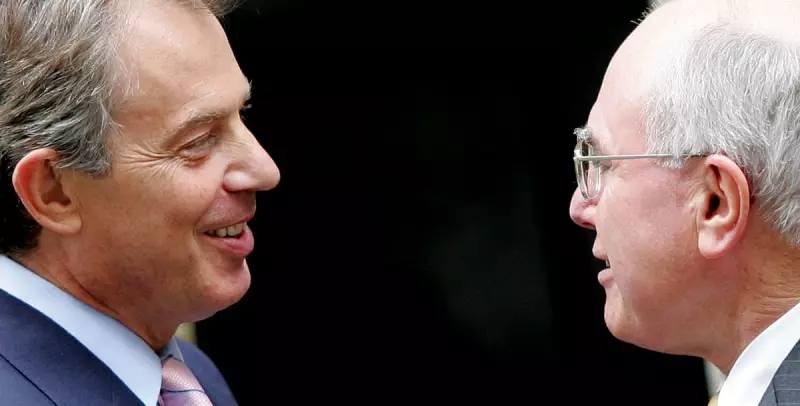
Confidential British government documents from 2005, released under the thirty-year rule, have cast a stark new light on former Prime Minister Tony Blair's private reflections on the Iraq War. The papers, detailing a high-level meeting with then-Australian Prime Minister John Howard, reveal Blair expressing significant doubts about the conflict's legal justification and its impact on his political legacy.
A Candid Exchange Between Allies
The historic meeting took place in London on the 18th of July, 2005, just weeks after the devastating 7/7 terrorist attacks in the city. The records show that during their private talks, Tony Blair admitted the decision to go to war in Iraq was "the most difficult" of his premiership. He went further, questioning whether the legal advice he received provided a sufficient basis for military action, a stark contrast to his unwavering public defence of the war.
Blair confided in Howard, a key coalition partner, that he feared history would judge him primarily through the lens of the Iraq conflict. "He was concerned that Iraq would come to define his time in office," the documents state, indicating a deep personal anxiety about his place in history. This private admission of doubt stands in sharp relief to the resolute stance he maintained in the public eye for years.

The Legal and Political Fallout
The released minutes highlight a crucial point of contention that has dogged Blair since the 2003 invasion. The legal authority for the war rested heavily on the interpretation of United Nations Security Council Resolution 1441. Blair told Howard that while he believed the resolution provided a legal foundation, he acknowledged the advice was "finely balanced" and that others, including the UK's Attorney General at the time, Lord Goldsmith, had experienced profound doubts before eventually offering cautious support.
This private grappling with the war's legitimacy underscores the immense political and ethical pressure Blair faced. The papers also reveal discussions on the broader "war on terror," with both leaders agreeing on the profound and long-term nature of the struggle against Islamist extremism following the London bombings.
A Legacy Defined by Conflict
The 2005 conversation reveals a leader acutely aware of the consequences of his most fateful decision. Blair's preoccupation with how Iraq would dominate his historical legacy has proven prescient. Despite his government's achievements in domestic policy and peace in Northern Ireland, his tenure remains inextricably linked to the controversial war and its aftermath, which resulted in significant loss of life and regional instability.
The release of these cabinet papers provides historians and the public with a critical new source, showing the human uncertainty behind a momentous geopolitical decision. They illustrate the private cost of public leadership during a period of global crisis and continue to fuel debate over accountability, intelligence, and the decision-making processes that led to the Iraq War.