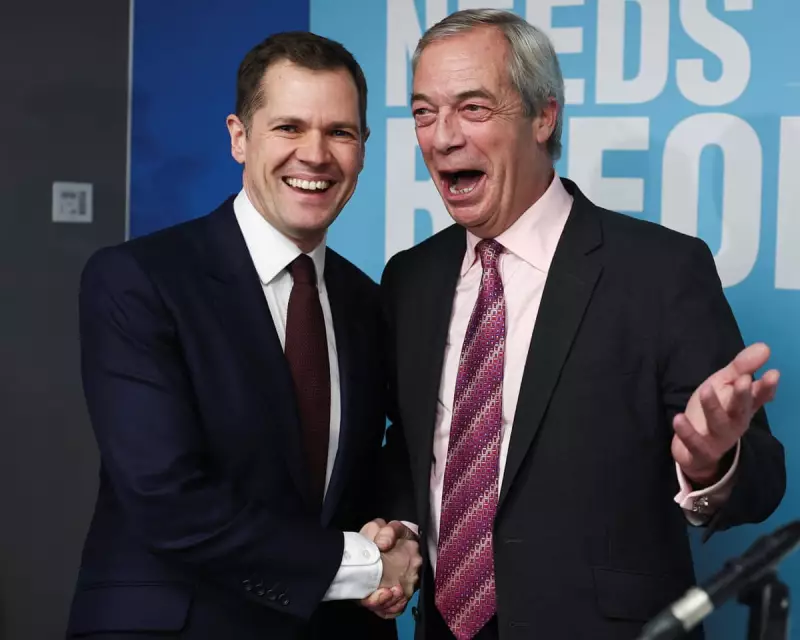
In a seismic shift for British politics, former Conservative minister Robert Jenrick has crossed the floor to join Nigel Farage's Reform UK. The defection was confirmed at a press conference in London on 15 January 2026, marking a significant coup for the insurgent right-wing party and a major blow to Prime Minister Kemi Badenoch's authority.
A Stage Shared, But For How Long?
The event at Westminster was rich with political theatre. Nigel Farage, beaming, welcomed Jenrick into the fold, explicitly thanking Conservative leader Kemi Badenoch for what he termed "the latest Christmas present" for his party. This followed intense speculation and a day of political manoeuvring, during which Farage had initially denied any imminent deal. The announcement was delayed, forcing Farage to fill time until Jenrick finally appeared to applause, sharing a stage with a man who had once labelled him "a fraud."
The alliance immediately raises questions about the future dynamics within Reform UK. While the defection bolsters the party's claim to be the new centre of right-wing gravity, it also risks tainting its outsider, anti-establishment brand. Jenrick follows other high-profile Conservative defectors like Nadhim Zahawi and Nadine Dorries, linking Reform to previous, often controversial, eras of Tory government.

Turmoil Within the Conservative Party
Jenrick's exit is the latest episode in the prolonged unravelling of the Conservative Party's hegemony, a process many argue began with the Brexit referendum of 2016. Farage seized on the moment to declare that "on 8 May, the Conservative party will cease to be a national party," framing the defection as an earthquake. However, the tremor has been building for years through dwindling membership, internal strife, and the dominance of populist and nativist voices.
Prime Minister Badenoch had moved first, expelling Jenrick from the party in what some saw as a savvy move to pre-empt Reform's press conference. Yet Farage's triumphant presentation turned the narrative on its head, showcasing his opportunism and deepening the sense of crisis for the Tories. The party once defined by unflappable, centre-right pragmatism now struggles to define its core identity or voter base.
Ideological Alignment Over Personal History
Despite past personal insults—including Farage's "fraud" jibe and Reform's former chair Zia Yusuf calling Jenrick a "Farage impersonator"—the ideological fit is clear. In recent years, Jenrick has firmly positioned himself on the party's right flank, employing rhetoric on immigration and cultural issues that aligns seamlessly with Reform UK's platform. His defection is less a dramatic shift in values and more a change of vehicle for his political ambitions.
This move underscores a broader realignment on the British right. Both Farage and Badenoch are vying for populist energy, each claiming to represent the true voice of right-wing voters. Jenrick, in becoming Reform's latest high-profile mascot, embodies what critics call a hollow marketing exercise, where yesterday's Conservative branding is repurposed for a new, more fractious political era.
The Farage/Jenrick show has now premiered, but its longevity and impact on the upcoming political battles remain the central questions for a UK political landscape in profound flux.