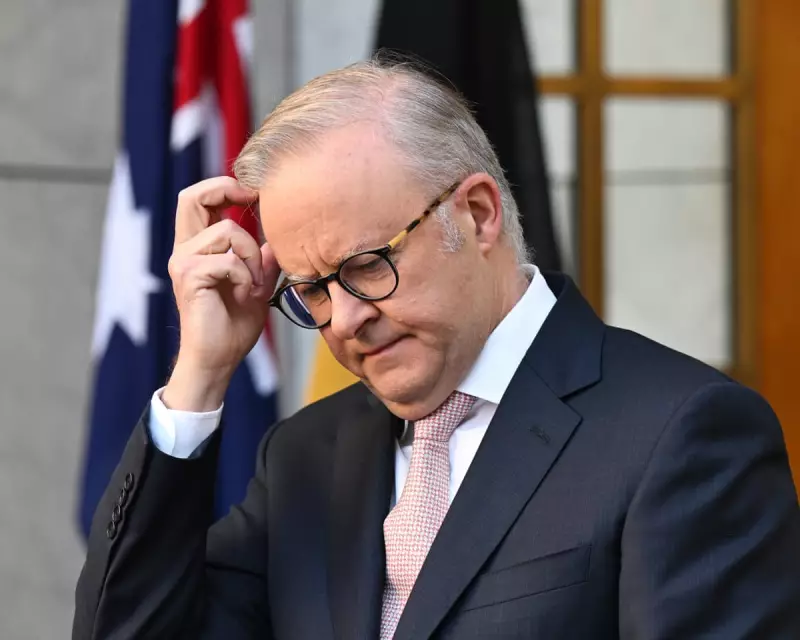
A contentious new bill proposed by Australian Prime Minister Anthony Albanese and the Labor Party, aimed at criminalising hate speech, is facing significant parliamentary hurdles and fierce criticism from free speech advocates.
Why the Bill is Facing Opposition
The government argues the legislation will strengthen national security and unity. However, its pathway through parliament looks increasingly difficult. The opposition Liberal Party has labelled the bill "pretty unsalvageable", while the Greens have stated they will not pass it "in its current form". Labor requires the support of either party to pass the bill through the Senate.
Greens deputy leader Mehreen Faruqi warned that the "legacy of the appalling violence at Bondi cannot be the undermining of civil and political rights", objecting to laws that could be weaponised against Australians.

Key Concerns Over Free Speech and Scope
Central to the debate are fears the bill could impose significant, unintended limits on free speech. The proposed racial vilification law would require a court to find an individual had "intent" to cause hatred and that their conduct would cause a "reasonable" person from the targeted group to fear for their safety.
Peter Kurti from the Centre for Independent Studies argued this "invites subjective or politicised judgments about emotional impact rather than objective harm". Human Rights Commissioner Lorraine Finlay echoed concerns, noting the introduction of concepts like "hatred" could introduce imprecision into criminal law.
Furthermore, the creation of a new "hate group" listing, which criminalises membership or support, has alarmed academics and journalists. Kurti warned the term "support" is so broad it could capture academic analysis or journalistic inquiry.
Criticism of a Rushed Process
A major point of contention is the limited time for scrutiny. The Australian Human Rights Commission, while supporting the criminalisation of hate speech, stated that allowing only three days to examine the bill was "insufficient".
Gemma Cafarella, President of Liberty Victoria, criticised the "rushed approach", warning that the "poorly considered and draconian measures" risked driving further division and could face a High Court challenge.
Despite the criticism, some, like the Executive Council of Australian Jewry's Peter Wertheim, have urged politicians not to "allow the perfect to be the enemy of the good", arguing the bill offers urgent new protections.
With the Coalition and Greens withholding support, the future of Labor's hate speech bill remains highly uncertain, leaving a major government policy in limbo amid a fierce national debate about the boundaries of free expression.