Trump's Olympic Ice Hockey Joke Reveals True Stance on Women's Sports
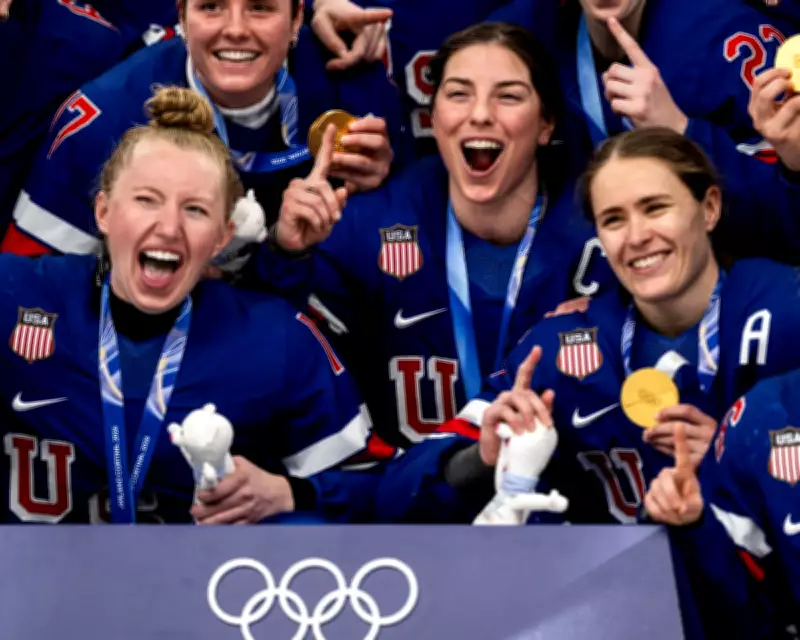
Following the United States women's ice hockey team's triumphant gold medal victory at the Winter Olympics, President Donald Trump faced what appeared to be a golden political opportunity. Instead of celebrating the female athletes' achievement, he chose to make them the butt of a joke during a locker room visit, exposing what critics argue is his administration's hollow commitment to women's sports.
A Missed Opportunity for Genuine Support
The US women's team's Olympic success presented Trump with a chance to demonstrate his frequently stated dedication to protecting opportunities for women and girls in sports. Last February, he positioned himself as a champion of women's sports, pledging to ensure safe and fair competition. However, when confronted with actual female athletic excellence, his response was dismissive humor rather than substantive support.
Trump extended invitations to the men's ice hockey team to attend the State of the Union address, offering military jet transportation to Washington DC. He then lamented that protocol would require him to invite the women's team as well, a comment that generated laughter among male athletes but highlighted his apparent reluctance to genuinely celebrate female achievement.

The Political Weaponization of Women's Sports
This incident underscores how the right-wing "Save Women's Sports" movement has transformed female athletics into political theater rather than focusing on meaningful advancement. Critics argue that Trump and his allies have never been genuinely interested in elevating women's sports, instead using female athletes as pawns in a broader culture war targeting transgender participation.
The movement's rhetoric creates the illusion of concern for women's sports while primarily advancing exclusionary policies. Rather than addressing critical issues like funding disparities, pay equity, or celebrating athletic accomplishments, this approach reduces women's empowerment to a narrow political project focused on who should be excluded from competition.
Revealing Underlying Gender Politics
Trump's locker room comments represent more than just an offhand remark—they reflect deeply ingrained gender attitudes within certain political circles. When faced with actual women's sports achievements that deviate from established ideological frameworks, these underlying beliefs surface, revealing a chauvinistic perspective that views female athletes as secondary to their male counterparts.
The incident demonstrates how political spectacles have weaponized sports while failing to meaningfully advance women's position within athletics. If Trump genuinely wanted to support female athletes, he could address the significant income gap between men's and women's ice hockey teams or examine why WNBA players are considering labor action to secure fair compensation.
The Reality Behind the Rhetoric
Trump's Olympic moment reveals the emptiness of political posturing that makes grand claims about women's empowerment while delivering little beyond exclusionary rhetoric. The right's approach to women's sports demands almost nothing beyond adherence to specific cultural positions, creating resonant but hollow discourse that ultimately keeps women in the shadow of men.
As the United States celebrates another Winter Olympics with gold medal performances from both men's and women's teams, the political response highlights how far the nation must still progress to achieve genuine equity in sports. The contrast between rhetorical support and actual treatment of female athletes remains stark, with Olympic champions becoming collateral damage in broader political conflicts rather than celebrated for their extraordinary achievements.