
US State Department Revokes Green Cards of Three Iranian Nationals Linked to Regime
In a significant move, United States federal agents have arrested three Iranian nationals after the US state department terminated their green cards, as announced on Saturday. The individuals had family connections to key figures in Iran's regime, including a revolutionary involved in the 1979 hostage crisis.
Details of the Arrests and Green Card Revocations
The state department revoked the green card status of Seyed Eissa Hashemi, whose mother was an Iranian revolutionary who served as the spokesperson for Iran's regime during the hostage crisis that defined the late Jimmy Carter's presidency. Officials referred to her as "Screaming Mary," noting her role as a propagandist for the Islamists behind the crisis. Hashemi entered the US in 2014 on a visa and gained lawful permanent resident status in 2016 through the diversity immigrant visa program, which the Trump administration has since ended.
Additionally, the green card statuses of Hashemi's wife and son were revoked. In a statement, the state department emphasized, "The Trump administration will never allow America to become a home for foreign nationals tied to anti-American terrorist regimes."
Broader Crackdown on Iranian Ties
This action is part of a series of green card terminations targeting individuals the state department deems connected to the current or former Iranian government, amid ongoing tensions between the US, Israel, and Iran since late February. Earlier in April, federal agents arrested Hamideh Soleimani Afshar, the niece of Qasem Soleimani, an Iranian military general assassinated by the US in 2020, along with her daughter. US officials accused her of supporting Iran and celebrating military strikes against US personnel while living a lavish lifestyle in Los Angeles.
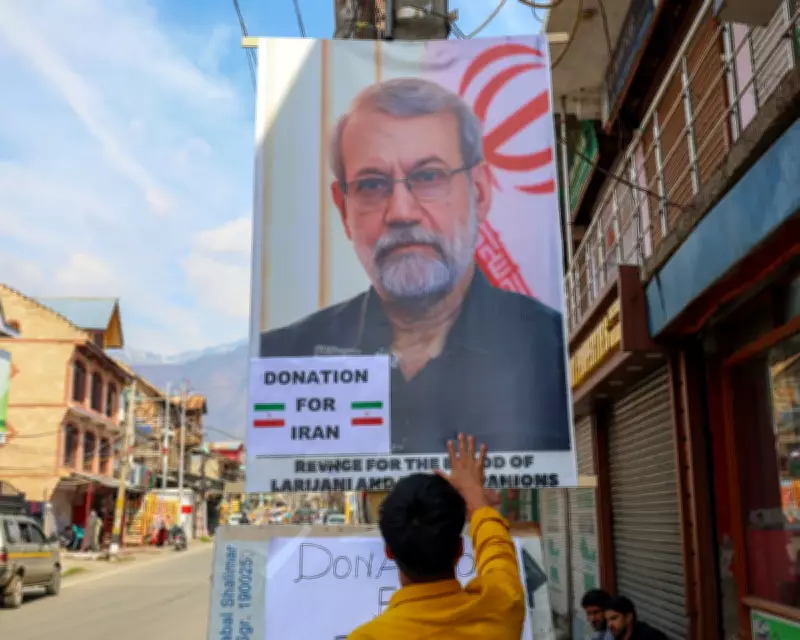
Furthermore, the state department recently revoked the green card status of Fatemeh Ardeshir-Larijani, daughter of former Iranian national security council secretary Ali Larijani, and her husband.
Regional Context and Diplomatic Efforts
These developments occur against a backdrop of regional strife. Washington DC and Tehran reached a two-week ceasefire agreement on Tuesday, though tensions persist. Iran said it would reopen the Strait of Hormuz, a critical passage for global oil supply, but Donald Trump accused the Iranian government of poorly managing oil flow, stating on social media, "That is not the agreement we have!"
In diplomatic efforts, US Vice-President JD Vance has been dispatched to Islamabad to broker peace talks over the weekend. However, Iranian leadership has refused to participate until Israel agrees to stop bombing Lebanon. On Friday, officials from Israel and Lebanon agreed to meet in Washington DC on Tuesday to discuss their own ceasefire, highlighting the complex geopolitical landscape.




