
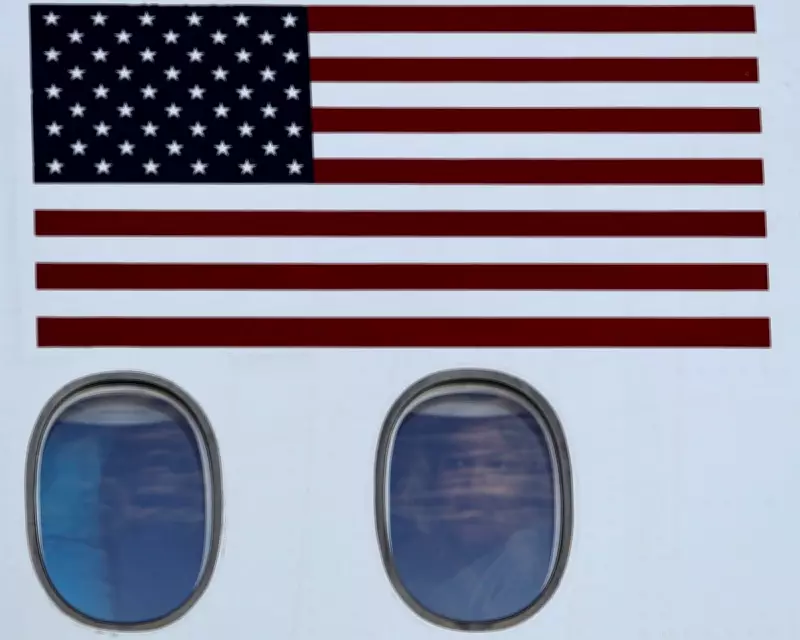
First US Deportation Flight Lands in Uganda Under Controversial Third-Country Deal
A flight carrying individuals deported from the United States has touched down in Uganda, signaling the initiation of a contentious third-country agreement signed in August. This development underscores the Trump administration's persistent strategy of expelling migrants to nations with which they have no prior connections, a policy that has sparked widespread condemnation and legal scrutiny.
Details of the Deportation and Ugandan Response
According to an unnamed senior Ugandan government official, the deported individuals will remain in Uganda as part of a transitional phase, potentially for onward transmission to other countries. The Uganda Law Society, which has vehemently opposed the arrivals, confirmed that twelve people were aboard this inaugural flight. However, specifics regarding the deportees, including their nationalities, remain undisclosed to the public.
Yasmeen Hibrawi, a public affairs counsellor at the US embassy in Kampala, asserted that all deportations are conducted in full cooperation with the Ugandan government. She emphasized that diplomatic communications and case particulars are private, citing privacy concerns. In August, Uganda clarified that the deal involves accepting individuals from third countries who might not qualify for asylum in the US but are reluctant to return to their homelands, excluding those with criminal records or unaccompanied minors.
Broader Context and Legal Challenges
The US has already deported dozens of people to various third countries across Africa, including Eswatini, Ghana, Rwanda, and South Sudan. These deportees originate from diverse regions such as Cuba, Jamaica, Yemen, Vietnam, Laos, and Myanmar. The Uganda Law Society plans to file legal challenges in both Ugandan and regional courts, denouncing the process as undignified, harrowing, and dehumanising, reducing individuals to mere chattel for private interests on both sides of the Atlantic.
Uganda, which already hosts nearly 2 million refugees and asylum seekers primarily from neighboring east African countries like the Democratic Republic of the Congo, Ethiopia, Eritrea, and Sudan, has not specified if the US is providing financial compensation for accepting these deportees. Notably, the US agreed to pay Eswatini $5.1 million to accommodate up to 160 third-country nationals, with previous deportations to that nation resulting in some individuals being held in maximum security prisons.
Administrative and Humanitarian Concerns
Oryem Okello, Uganda's minister of state for foreign affairs, suggested that the US might be optimizing costs by avoiding flights with only a few deportees, preferring planeloads for efficiency. Meanwhile, US Immigration and Customs Enforcement (ICE) data reveals that over 63,000 people were detained in the US as of mid-March, with reports highlighting the inclusion of toddlers and newborn babies among those held at detention centers, raising significant humanitarian alarms.
This deportation scheme continues to face intense scrutiny, with critics arguing it undermines human rights and international refugee protections, setting a precedent for similar agreements globally.




