
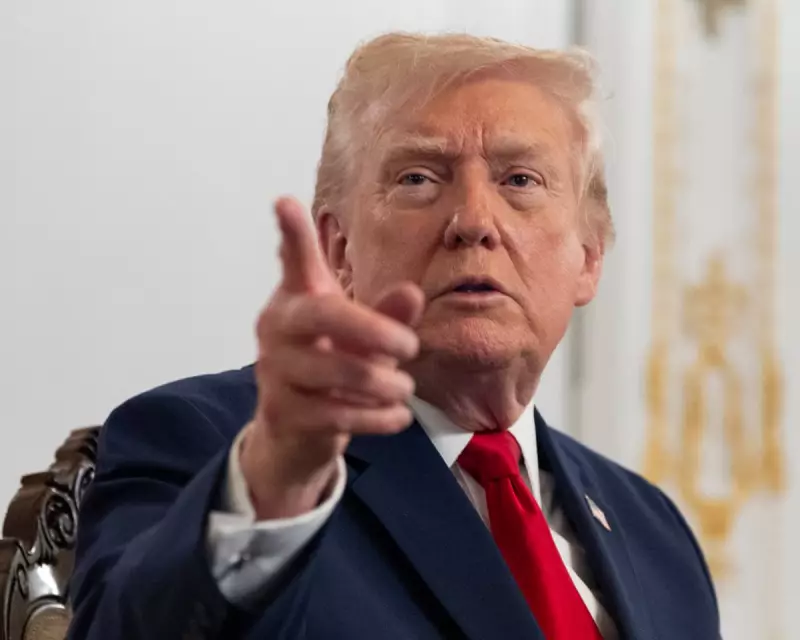
The Trump administration's sweeping new immigration restrictions, announced in the wake of a shooting in Washington DC, have thrown the lives of asylum seekers across the United States into turmoil and profound uncertainty.
A Flurry of Restrictive Policies
Following the shooting of two National Guard members by an Afghan national, former President Donald Trump vowed to "permanently pause" migration from what he termed "third world" countries. This pledge has rapidly translated into concrete policy actions that are now sending shockwaves through immigrant communities.
The United States Citizenship and Immigration Services (USCIS) has halted all asylum decisions indefinitely. Concurrently, the administration has paused visas for Afghans who assisted the US war effort and is initiating a review of green card applications from individuals hailing from countries officially designated as "of concern".
These far-reaching announcements, aimed at dramatically curtailing legal immigration pathways, have left lawyers and advocates scrambling to understand their full implementation. Nearly 1.5 million pending asylum cases with USCIS could be affected by the broader asylum pause alone.
"Devastating" Uncertainty for Afghan Allies and Refugees
For individuals like Reza Hussaini, a 23-year-old Afghan asylum seeker who arrived in the US in 2022, the news is crushing. "People say that fear travels faster than information. And that’s exactly what has happened," he said. Hussaini, who is still awaiting an initial interview on his case, now faces agonising questions about his future.
"It kind of puts me in a corner … Even more than fear, it’s uncertainty about what my status could be, what’s going to happen next," he explained. Having survived two terrorist attacks and detention by the Taliban for his work with non-profits advocating for education and women's rights, he fears deportation would make him an even greater target. "What if I get deported back to Afghanistan – back to a government that sees me as the enemy?"
Faisal Al-Juburi of the legal aid group Raíces, which has over 50 pending asylum cases, believes the policies are intentionally demoralising. "It’s leaving people in a limbo, creating a greater sense of unease, of opacity around people’s future," he stated.
Exacerbating a Crushing Backlog
USCIS Director Joseph B. Edlow confirmed the agency "has halted all asylum decisions until we can ensure that every alien is vetted and screened to the maximum degree possible." Immigration experts warn this will severely worsen an already massive backlog.
"For those people that have been waiting for eight years for their interviews, who thought they were finally going to get some resolution and some protection and some stability, it’s just going to prolong their wait," said Yliana Johansen-Méndez of the Immigrant Defenders Law Center.
Some, like volunteer Dave Meyer in Indiana, note the asylum process was already so slow that the new pause feels like a further extension of an endless wait. However, for those directly in the crosshairs, the anxiety is palpable.
Amir (a pseudonym), a Hazara Shia asylum seeker from Afghanistan facing a defensive asylum case in court next year, expressed the collective sentiment: "I don’t know what will happen. But I think it’s not fair to blame all immigrants for the actions of one person."
Legal challenges to the policies are widely anticipated. Advocates have condemned the measures targeting refugees and Afghan nationals following the DC shooting as a form of collective punishment. For now, as Hussaini summarises while grappling with the stress, the situation remains "hard" and ultimately "devastating" for thousands awaiting safety and a permanent home.




