
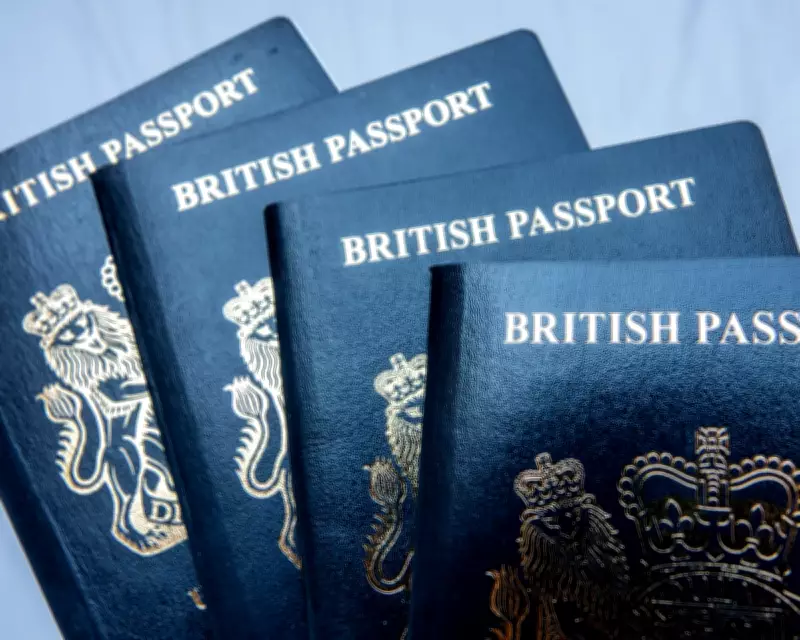
British Teen Stranded in Denmark After Flight Denial Under New Border Rules
A 16-year-old British schoolgirl from Sussex has been left stranded in Denmark for over two weeks after airline staff refused to allow her to board a return flight to London. The denial occurred due to recently implemented UK border regulations that specifically affect British dual nationals.
Weekend Visit Turns Into Extended Stay
Hanne, whose name has been changed for privacy, traveled to Copenhagen in early March to visit her British father, who is currently working at a university in the Danish capital. She made the journey with her Norwegian-born mother, expecting to return home after a brief weekend visit.
The family discovered the new requirements only when attempting to check in for their return flight on March 8. While her mother successfully checked in through the airline's mobile application, the system blocked Hanne's check-in attempt. The situation escalated at Copenhagen Airport when ground staff confirmed she would not be permitted to board the flight.
Critical Educational Impact
The timing could not be worse for the GCSE student, who faces important examinations in May. She has already missed two weeks of classroom instruction and risks falling further behind as the passport application process drags on.
"We are very worried about the GCSEs," said her mother, Ingrid. "She is missing school, missing her mother, her siblings and all the other things in her normal life. It will be a disaster if she cannot return home soon."
Hanne's school has formally intervened, writing to the Home Office to emphasize the educational consequences. The headteacher noted that she is "effectively prevented from re-entering the UK despite being a British citizen" with a permanent home and school placement in Britain.
Legal and Political Response
James MacCleary, the Liberal Democrat MP representing Hanne's constituency, has called for immediate government intervention. He described the situation as "a nail-biting wait" caused by "the government's mishandling" of the policy implementation.
"The Government's hopeless planning and communication of its changes to entry requirements for dual nationals has caused an untold amount of chaos and stress," MacCleary stated. "Too many dual nationals have found themselves stranded abroad in heartbreaking situations."
Immigration lawyer Zeena Luchowa of Laura Devine Immigration raised serious legal concerns, pointing to Section 55 of the Borders, Citizenship and Immigration Act 2009. This legislation requires the home secretary to "have regard to the need to safeguard and promote the welfare of children" when exercising immigration functions.
Luchowa questioned whether sufficient consideration had been given to the impact on children, noting that "British citizens have a statutory right to freely enter the UK" and that the refusal to board creates "disproportionate impact."
Passport Complications Compound Problems
Hanne had applied for a British passport before her trip, but was still awaiting its arrival when she traveled. In a particularly frustrating development, Passport Office officials informed her father that they would cancel her existing application because they now knew she was overseas.
The family must restart the application process from outside the country, potentially facing a six-week waiting period. Meanwhile, Hanne's mother had to return to Britain alone to collect school materials before returning to Copenhagen to provide homeschooling.
Broader Policy Context
The new rules, implemented on February 25, require British dual nationals to present either a valid British passport (new or expired) or a certificate of entitlement costing £589 when checking in for flights, ferry journeys, or train travel to Britain.
While the Home Office states that public information about these requirements has been available since October 2024, many families report being unaware of the changes until facing travel disruptions. Hanne represents at least the third child known to have been refused boarding since the rules took effect.
The Home Office maintains that acceptance of expired passports as proof of nationality remains at airline discretion, and recently updated guidance to clarify that EU citizens with settled status may continue using their EU passports for travel.
As the situation continues, Hanne's family joins growing numbers of dual nationals experiencing unexpected travel barriers under the new border regime, with children particularly vulnerable to the educational and emotional consequences of extended separation from their homes and schools.




