
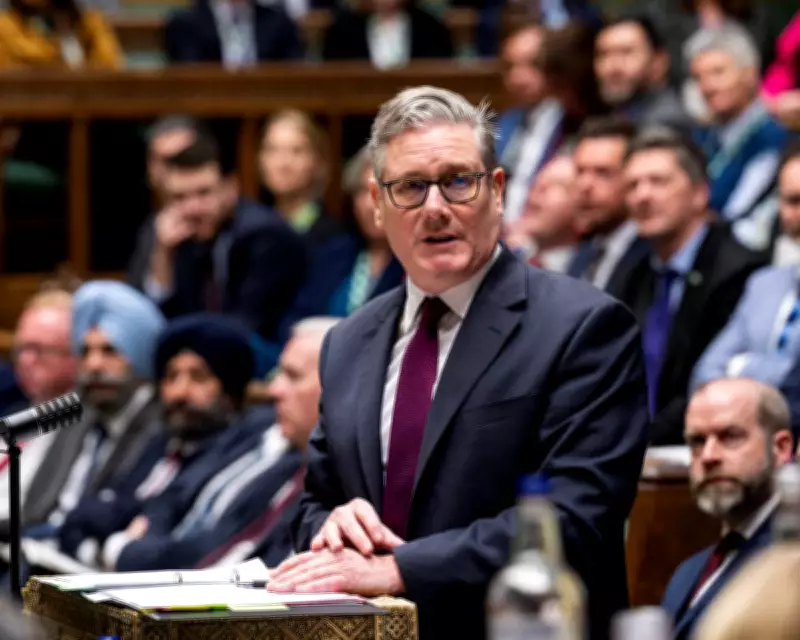
Starmer Retreats on Immigration Overhaul Following Internal Labour Rebellion
Prime Minister Keir Starmer is moving to mitigate the impact of his government's proposed immigration system changes after facing significant opposition from within his own party. The decision follows a powerful intervention from former deputy leader Angela Rayner, who publicly condemned the plans as fundamentally "un-British" for their perceived unfairness.
Exemptions Considered for Public Sector Workers and Long-Term Residents
Downing Street is now actively considering exempting substantial numbers of migrants from the controversial proposals, which would dramatically extend the waiting period for settled status in the United Kingdom. The original plan would require most individuals to wait ten years rather than the current five-year period to qualify for indefinite leave to remain.
Government consultations have suggested potential exemptions for migrants employed in the public sector and those already nearing settlement eligibility. However, ministers remain divided on the scope of these exemptions, with Downing Street confirming they will not apply universally to all existing residents as demanded by Rayner and other critics.
A spokesperson for the prime minister stated: "In the four years preceding the election, we witnessed record immigration levels. Our manifesto committed to establishing a fair and properly managed immigration system. We are currently reviewing responses to the Home Office consultation and will respond in alignment with our core principles and values."
Home Secretary's Controversial Proposals Spark Widespread Opposition
Home Secretary Shabana Mahmood introduced the comprehensive immigration package earlier this month, designed to significantly reduce immigration numbers. The measures include making refugee status temporary rather than permanent and doubling the qualification period for indefinite leave to remain in most circumstances.
Mahmood also announced a pilot scheme offering failed asylum seekers up to £40,000 to voluntarily leave the country, with forceful removal including potential handcuffing of children for those who refuse. The home secretary emphasized that changes to indefinite leave would apply retrospectively, affecting hundreds of thousands who entered during Boris Johnson's premiership.
In a recent speech, Mahmood defended the approach: "Between 2021 and the 2024 general election, the previous government oversaw net migration of 2.5 million. Without intervention, approximately 350,000 low-skilled workers and their dependents would qualify for settlement over the next five years, gaining access to welfare benefits, free healthcare, and social housing."
Labour MPs Mount Coordinated Resistance
The proposals have ignited substantial discontent within Labour ranks, with approximately one hundred MPs signing a letter opposing the measures. Critics argue the government faces equal threats from both political flanks, citing the Green party's recent byelection victory in Gorton and Denton as evidence of left-wing vulnerability.
The letter stated emphatically: "Public confidence in the asylum system cannot be restored by threatening to forcibly remove refugees who have lived here lawfully for fifteen or twenty years." Centre-left Tribune group leader Sarah Owen drew comparisons between the threatened use of force against children and Donald Trump's Immigration and Customs Enforcement practices.
Angela Rayner amplified these criticisms during a Tuesday night address to the Mainstream campaign group, declaring: "We cannot discuss earning settlement while continuously moving the goalposts. Such actions undermine our fundamental sense of fair play. It's simply un-British."
Consultation Reveals Tiered Approach to Settlement
Government documents reveal a proposed tiered system for settlement eligibility under the consultation. High earners maintaining £125,140 annual income for three consecutive years could qualify in just three years, while public sector workers would follow the current five-year pathway.
Conversely, individuals who have claimed benefits for less than one year would face a fifteen-year waiting period, extending to twenty years for those with more than one year of benefit claims. These disparities have further fueled criticism about the system's fairness and implementation.
Downing Street Meetings Address Growing Discontent
Prime Minister Starmer convened a meeting with black and minority ethnic Labour parliamentarians on Wednesday afternoon following mounting frustration over the indefinite leave policy. Justice Secretary David Lammy attended the session, which multiple sources described as tense and confrontational.
One participating MP reported "significant frustration" with senior leadership, noting: "There's a pervasive sense that the central party apparatus isn't truly listening to our concerns, whether expressed privately or publicly. This extends beyond policy substance to include tone and framing issues. Alienating our own MPs over such politically and personally sensitive matters serves no constructive purpose."
Another parliamentarian offered more direct criticism: "This has consistently been flawed policy from its inception. The fundamental approach contains serious deficiencies that require substantial revision."
Despite the growing rebellion, Downing Street maintains the proposals represent fair policy. Government officials confirm ministers are meticulously reviewing consultation responses to determine appropriate exemption parameters, signaling potential further modifications to the controversial immigration overhaul.




