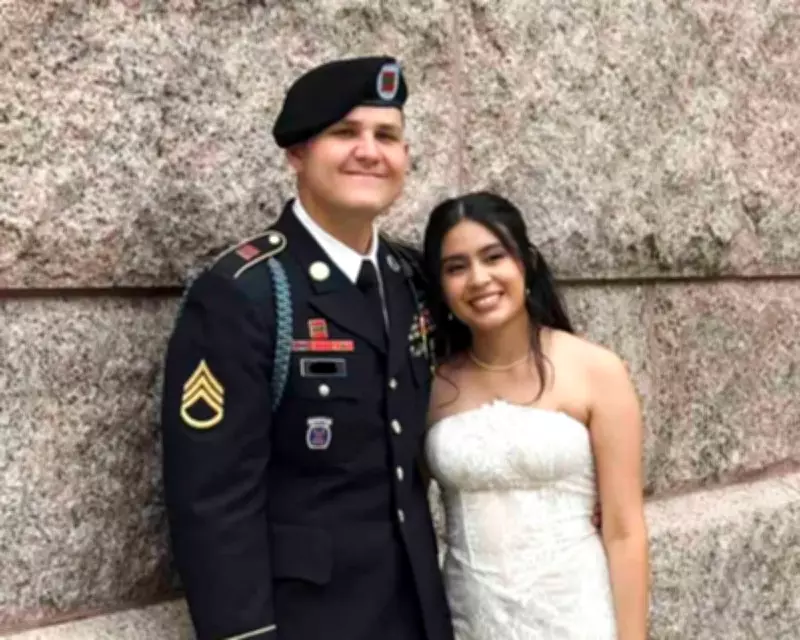
ICE Agents Detain Wife of US Soldier Shortly After Wedding in Louisiana
Immigration and Customs Enforcement (ICE) agents, operating under the Trump administration, have reportedly detained the wife of a US army staff sergeant at his military base in Louisiana as he prepared for deployment. The arrest of Annie Ramos, 22, occurred last Thursday, merely days after she married 23-year-old Matthew Blank, a soldier with over five years of service including deployments to the Middle East and Europe, according to a New York Times report published on Sunday.
Background of the Case and Legal Challenges
Ramos, a biochemistry student with no criminal history who also teaches Sunday school, had been subject to a deportation order issued in absentia in 2005 when she was an infant. This order resulted from her family missing an immigration court hearing. With pathways available for undocumented immigrants to obtain legal permanent residency through marriage, and eventually apply for citizenship, Ramos and Blank had already hired a lawyer to initiate the process before their wedding. "I knew she didn't have status," Blank told the New York Times. "But we were doing everything the right way."
In 2020, Ramos applied for Deferred Action for Childhood Arrivals (Daca), a federal program offering deportation protections to undocumented individuals who entered the US as children. However, her application was never processed after the administration during Donald Trump's first presidency halted acceptance of new applicants.
Incident at Fort Polk and Detention Details
Blank, stationed at Louisiana's Fort Polk and due to start deployment training soon, recounted the events: "Our plan was to drive over, bring her to the office to get her military ID and activate her military spouse benefits. She was going to move in after the Easter weekend. Instead, she got ripped away from me." On April 2, Blank and Ramos, along with his parents, visited the Fort Polk visitor center with her birth certificate, Honduran passport, their marriage license, and his military ID.
When asked if Ramos had a visa or green card, the family explained she did not but noted their lawyer had prepared the necessary paperwork. An attendant responded, "We'll figure it out," before making phone calls. A supervisor arrived, followed by an officer from the base's Criminal Investigation Division who contacted ICE and the Department of Homeland Security. Ramos was handcuffed, placed in a military police vehicle, and held in an interrogation room. Three ICE agents later arrived, with Blank's parents stating they were told the agents had no choice but to take her, appearing apologetic.
Broader Implications and Family Response
Ramos was transferred to a detention facility in Basile, Louisiana. When Blank's family visited, they were prohibited from bringing documents, preventing her from signing a completed green card application. Ramos expressed her distress: "I grew up here like any American. This is all I know. My husband and family are here." This case highlights instances contradicting Trump's claims that his immigration crackdown would prioritize dangerous criminals, affecting military families and veterans without regard for their service records.
ICE did not immediately respond to requests for comment from the Guardian. The situation underscores ongoing tensions in US immigration policy and its impact on service members and their loved ones.