
Faber-Castell Alleges Costa Rica Breached Contract by Using Donated Factory for Migrant Detention
The world's largest pencil maker, Faber-Castell, has publicly accused the Costa Rican government of misusing an old factory that was donated for humanitarian purposes. According to the German manufacturer, the facility, originally intended as a shelter for migrants, has been repurposed to detain asylum seekers deported from the United States under the Trump administration, a move that violates the terms of their agreement.
Background of the Donated Factory and Its Intended Use
Faber-Castell, which produces over two billion wooden pencils annually globally, operated a factory in southern Costa Rica near the Panama border until its closure in 2013 due to economic challenges. In 2018, the company gifted the property to Costa Rica through a contract with the ministry of public security. This contract explicitly stated that the premises should serve as a shelter to provide refuge and humanitarian assistance for migrants passing through the region, with no allowance for altering this purpose.
The donation was made in response to a surge in Nicaraguans fleeing to Costa Rica amid political unrest in their home country. Faber-Castell emphasised in the agreement that the property must remain dedicated to migrant care, ensuring it would not be converted into a detention facility.
Alleged Misuse and Detention of Deportees
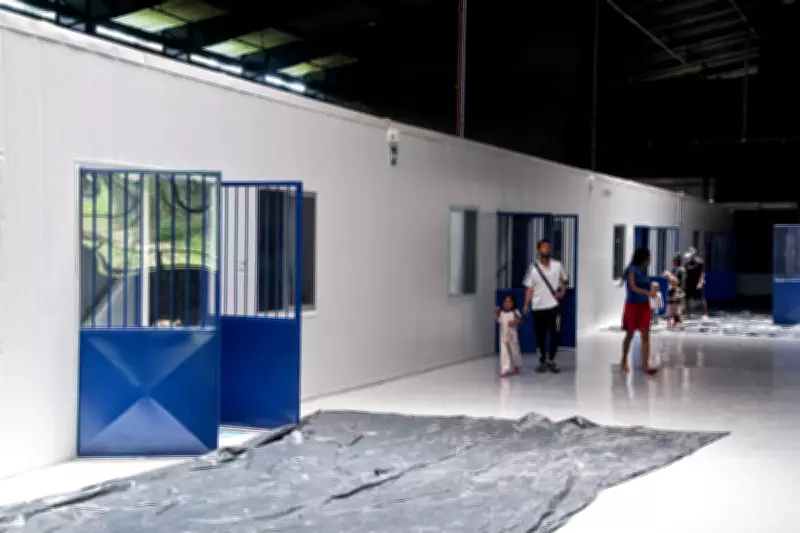
However, in late February 2025, following Donald Trump's return to the White House and his anti-immigration policies, Costa Rica agreed to accept 200 deportees from the US. These individuals, who hailed from diverse regions including Russia, Asia, and Africa, were not criminals but found themselves deported and flown in chains to Costa Rica. Upon arrival, they were escorted to the former factory, now named the Temporary Care Centre for Migrants (Catem) in Puntarenas province, about six hours south of San José.
Reports indicate that over 70 children were among those detained at Catem for at least two months. Faber-Castell claims it was unaware of this situation until contacted by the Guardian last month, expressing deep concern over the alleged misuse. The company stated in a release that the contract clearly prohibited using the building as a prison, highlighting a breach of trust.
Legal and Human Rights Implications
Costa Rica's constitutional branch of the supreme court later ruled that the deportees were deprived of their right to liberty, citing their detention in a centre not designed for such purposes and a lack of legal oversight. Human Rights Watch (HRW) supported these findings in a report, noting that migrants were held for months despite the facility being intended for short stays and that there was no legal basis for their detention.
In contrast, the Costa Rican ministry of public security has categorically denied any violation, arguing that the measures were taken on humanitarian grounds to protect vulnerable individuals from trafficking networks. They emphasised that the deportees, who required visas to enter Costa Rica, were granted temporary entry and care at Catem.
Personal Accounts and Court Rulings
Alexander, a 37-year-old Russian man who used a pseudonym for safety, shared his experience with the Guardian in December 2025. He and his family were deported to Costa Rica after their US asylum appointment was cancelled by Trump. Alexander described losing weight and falling ill while detained at Catem, where they were held without passports and prevented from leaving, leading him to label it a prison without any reason.
The court's decision in June 2025 ruled that the detention constituted a violation of fundamental human rights and ordered compensation for Alexander and other deportees. It also warned of risks such as enforced disappearance due to the arbitrary nature of the detention.
Current Status and Future Actions
As of January 2026, the Costa Rican government reported no migrants at the Catem facility, which has a capacity for 300 people. Faber-Castell has not disclosed whether it plans to take further action regarding the alleged contract breach. This case underscores ongoing tensions between humanitarian aid and immigration enforcement, raising critical questions about accountability and human rights in global migration policies.




