A Year of Detention and Defiance: A Palestinian Voice from Exile
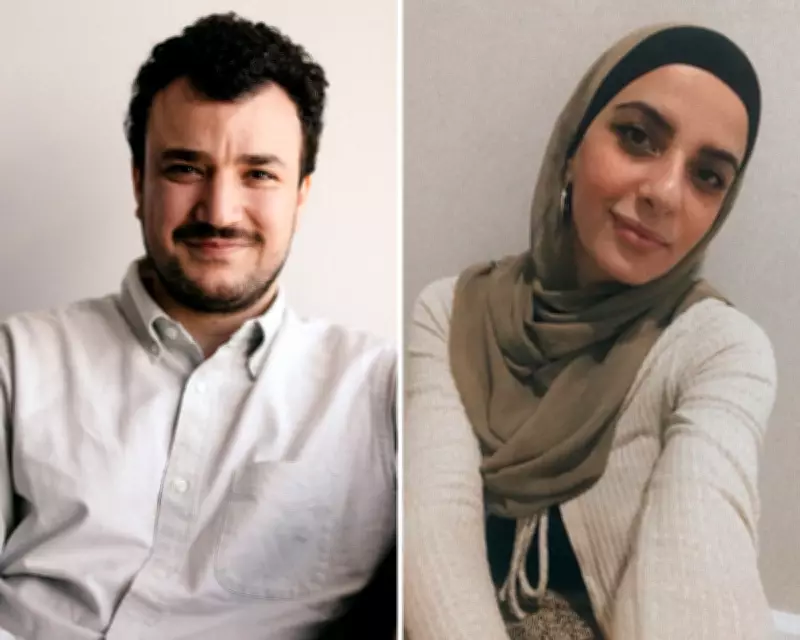
Sunday marked a somber anniversary for Mahmoud Khalil, a Palestinian activist and Columbia University graduate, who was arrested one year ago for his political advocacy. Below, he pens a heartfelt letter to Leqaa Kordia, a fellow Palestinian currently held in ICE detention in Texas. Khalil was released after over three months, but the Trump administration continues to pursue his deportation, while Kordia has been detained for nearly a year, highlighting ongoing struggles for justice.
Ramadan in Chains: Faith Denied and Dignity Stripped
Dear Leqaa, Ramadan Kareem. I utter these words with a heavy heart, knowing they reach you in a place that has tried to rob them of all meaning. It has now been one full year since that dreadful night, which sparked a brutal wave of arrests targeting protesters merely for speaking truth. Though we have never met in person, I have carried you with me every day since Noor called me while I was detained in Jena, Louisiana, to inform me you had been taken. I remember thinking: not again, not another one of us. From that moment, a piece of my heart has been irrevocably tied to your struggle.
Leqaa, this is your second Ramadan in detention. I state this plainly, not as a minor detail but as a stark measure of what has been stolen from you. Ramadan embodies the sound of your mother's voice calling you to iftar, the unique aroma of food prepared with love after a long fast, and the warmth of breaking bread with family, praying together, and being embraced by community during the holiest time of the year. Yet, they denied you halal food in that facility, stripping away the basic dignity of practicing your faith. Last Ramadan, you endured this injustice, and now another has arrived, finding you still caged, still waiting, still being told that your faith, like your grief, is something to be managed rather than honored.
The Shared Geography of Palestinian Dispossession
I often replay the experience of walking into those detention centers, an ordeal impossible to fully describe to anyone who hasn't lived it. An open room with 70 people breathing the same stale air, lights that never fully dim, and the strange intimacy of strangers forced to share space, each desperately carving out a fragment of dignity where none exists. I learned from fellow detainees, whose families are also in detention, that conditions in women's prisons are even harsher, amplifying the cruelty.
What we share, you and I, extends beyond detention centers in Louisiana and Texas, beyond protests against the genocide of our people or becoming targets for our existence as Palestinians. We are both refugees. You were born in Jerusalem, a city whose Palestinian history Israel has sought to erase long before either of us drew breath. I was born into a family driven from Tiberias, scattered across refugee camps in Syria. Between us, we carry the entire geography of Palestinian dispossession: the holy city they claim was never ours, Tiberias stolen and emptied of its people, the camps built to warehouse us, Ramallah where you grew up under occupation, Gaza where your mother lived and where you witnessed over 100 family members slaughtered, and the exile that has trailed Palestinians across every ocean and border for 77 years.
We carry not only the dust of these memories but their indelible mark on everything we are. Foreign powers promised our grandparents they could return, then told them to stop waiting, and finally to forget. We have done none of these things. We remember, we insist, we speak. And for this, we are punished.
The Palestine Exception: When Rules Do Not Apply
This is what Israel and its American patron cannot tolerate: Palestinians who remember, who refuse to perform gratitude for small mercies like aid corridors and fragile ceasefires granted by those who stole everything, who stand in public and name genocide for what it is. We are the living refutation of their narrative. Our very existence, loud and unapologetic, is the crime. This is the essence of the "Palestine exception"—the idea, practiced openly without shame, that when it comes to Palestinians, the rules do not apply. Due process is suspended, academic freedom shatters, constitutional protections evaporate, and the First Amendment, meant to shield all from government retaliation for speech, somehow excludes those who speak about Palestine.
Leqaa, I wish I could tell you the world has stood by you, but I refuse to lie. The truth is the world has failed you, and so have we. I cannot fathom that you remain, a full year later, thousands of miles from home, family, and the life you were building. And for what? For the crime that has haunted our people across continents and generations: being Palestinian and daring to speak our truth. We refuse to let the world forget us. We speak of our right to live, return, and exist, and for that, they try to silence us. Your detention, mine, and those of many others are all pieces of the same story—a story of a people displaced, erased, demonized, yet rising every time the world tells us to disappear.
The Lineage of Resilience: Palestinian Women as the Spine of Struggle
We were born into a struggle we never asked for, yet we carry it because our ancestors did, and because our children must not. Palestinian women have always known this in their bones. They organized communities when men were imprisoned or exiled, defended homes with little more than presence and persistence, and returned to olive groves the morning after soldiers and settlers ravaged them. They have always been the spine of this struggle. You are in that lineage, Leqaa, not as a symbol but as yourself.
I want to tell you what I couldn't tell myself when I was where you are: this will end. I know it doesn't feel that way. Inside, time loses meaning, days blur, the future becomes abstract, and the present is unbearable, so you learn to be half-present, half-elsewhere, to protect what must remain intact for when you get out. But it will end, Leqaa, not because the system will discover its conscience or those who put you there will realize their cruelty, but because people will force it to end.
Carrying the Weight: Freedom Incomplete While Others Are Caged
This is what I live with now. I am free, but not free. I carry the detention center in Jena with me, along with my fellow detainees—Alex, Ziyad, Marcel, Juan, and Mamuki—the cold, the fluorescent light, the night they came for me, the night I walked out, and every moment in between. I carry the knowledge that while I am here, others remain caged for the same reasons I was. So I carry you too, Leqaa, and I will carry you until you are free. Then, I will carry the memory of this year alongside you, bound by what has been done to us and what we refuse to let it make us become.
Your brother, Mahmoud. Mahmoud Khalil is a Palestinian writer and advocate, currently authoring a book about his detention experiences, family, and life as a refugee.