
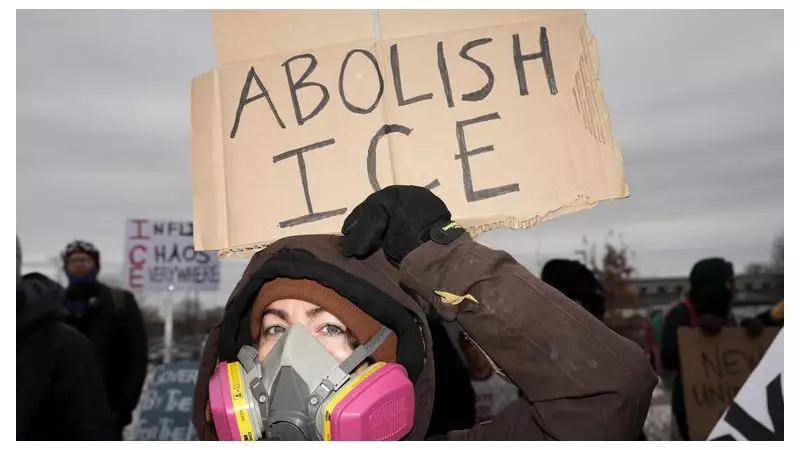
The streets of Minneapolis have been transformed into a battleground over immigration enforcement, as President Donald Trump's deployment of 3,000 federal agents meets fierce, organised resistance from local communities. The operation, which began in earnest this week, has seen a massive show of force by Immigration and Customs Enforcement (ICE) officers, who now outnumber local police by a ratio of five to one.
A Community Springs into Action
In the early hours of Friday, 16 January 2026, a typically quiet neighbourhood awoke not to silence, but to a deliberate cacophony. Car horns blared and whistles sounded as a network of activists mobilised to alert residents to the movement of ICE teams through the city. The tactic is simple: create enough noise to warn those who might be targets of the authorities' presence. From pavements, residents shouted "cowards!" at passing ICE vehicles, while others held placards demanding "ICE Out!".
At the heart of this resistance is a sophisticated alert system. Volunteers communicate via secure messaging devices, using a model similar to a police dispatch. When a suspicious vehicle is spotted, its licence plate is read out, and a central dispatcher confirms or denies if it belongs to ICE. This real-time intelligence allows the community to track and document the movements of federal officers.
"They're Snatching People": Allegations of Overreach
Among those patrolling the streets is a woman known as Seeker, a mother of two who runs a hair salon. She now spends hours each day monitoring ICE activity. "They're snatching people from bus stops, and they are brazenly going to schools and churches," she told Sky News. "Daycares and hospitals are also being hit right now. All these places traditionally would be sanctuary areas and now they're able to go in and take people."
Her claims are echoed by direct observations. Sky's team witnessed ICE vehicles suddenly pull over at a central Minneapolis bus stop this week. Around a dozen officers pursued a woman down a main road. She insisted she was an American citizen but was arrested when she could not immediately produce ID. She was later released. When asked, the officers provided no comment on whether they had a warrant or if she was a specific target.
The crackdown has also extended to workplaces. At a kitchen countertop business in an industrial area, operations manager Nesta Rodriguez described locking doors to deny entry to an ICE team. "They had no warrants, they were just coming here indiscriminately. Just your skin tone, your type of job, that's what they're targeting," said Rodriguez, a US veteran who compared the atmosphere to a combat zone. "This is America. When you're driving around looking over your shoulder constantly for threats..."
Mounting Legal Challenges and a City on Edge
The Trump administration now faces growing legal challenges over the operation, with serious allegations of racial profiling at its core. Many residents report being stopped solely based on their appearance and being forced to prove their citizenship. The scale of the agent deployment is unprecedented for the city, making their presence highly controversial. Polls indicate a majority of Minneapolis residents oppose the operation.
For activists like Seeker, their documentation efforts are protected under the First Amendment and are crucial for future legal battles. "There's nothing legitimate about what they're doing," she argues, contending that ICE lacks the jurisdiction for random street stops without specific warrants.
The situation has created a pervasive state of anxiety. Minneapolis is a community on high alert, where the sight of federal vehicles prompts immediate action. The standoff between a presidential immigration crackdown and a determined local resistance shows no sign of abating, leaving the city's streets tense and its residents mobilised for a prolonged period of confrontation.




