
Migrant Workers Flee Delhi as Iran War Fuel Crisis Sparks Hunger and Desperation
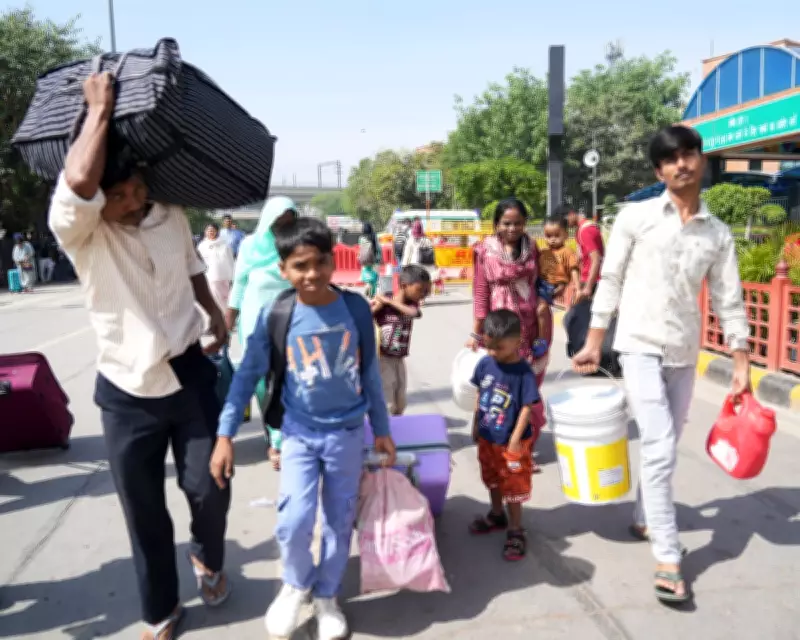
At Anand Vihar railway station in Delhi, a scene of urgency unfolds as thousands of migrant workers, including Raju Prasad and his family, pack their belongings to head back to their villages in Uttar Pradesh. Prasad, a 35-year-old ragpicker, moved to the capital nine months ago with hopes of building a better future, but now faces a stark reality: his family cannot afford to eat due to soaring food costs and a severe gas shortage exacerbated by the Middle East crisis.
"If we stay here even a few more days, our children might die of hunger. They don’t understand what this crisis is – we just see them crying for food," Prasad says, his voice filled with despair. His last gas cylinder ran out 15 days ago, and with savings depleted, the family is returning to their village to cook on a makeshift mud stove.
Reverse Migration Grips Delhi
Delhi, home to millions from states like Uttar Pradesh, Bihar, and Jharkhand, is witnessing a sudden reverse migration as its vast workforce evacuates to rural areas. The global fuel price surge, driven by supply disruptions from the US and Israel's war with Iran, has destabilized daily life. The city's dense network of dhabas, street vendors, and small eateries is collapsing without gas, leaving students, daily wage laborers, and low-income migrants without affordable food options.
Among those affected is Sarfaraz, a 25-year-old construction worker from Bihar, who waits at Anand Vihar station for money to buy a train ticket home. "I came here to support my family, but now I am asking them to send me money so I can return," he says sadly. Sarfaraz, a father of four, has not had proper food for days as black market gas cylinder prices have skyrocketed from 900 to 4,500 rupees, far beyond his means.
Government Response and Ongoing Struggles
Indian authorities claim that liquefied petroleum gas (LPG) shortages are being addressed, with online bookings delivering cylinders within days. However, migrant workers and students, ineligible for domestic gas consumer cards, report long waits and uncertainty. Praveen Shankar Kapoor, the BJP's Delhi spokesperson, acknowledges the crisis, stating, "Yes, the 5kg LPG category is facing more acute challenges at the moment, especially among migrant and low-income groups." He adds that efforts are underway to stabilize supply, but smaller cylinder users remain vulnerable.
Restaurant owners like Anil, who has run a business in Nehru Place for 30 years, are resorting to traditional open-fire cooking on chulhas to cope. "It is the first time in my life that the gas cylinder price on the black market has reached 4,500 rupees," he says, noting that he has increased prices and cut menu items, threatening his employees' livelihoods.
Impact on Students and Daily Life
The crisis extends to students, such as Farheen Naaz, a media student at Jamia Millia Islamia University from West Bengal, who has been without gas for 10 days. "I skip breakfast now, and many university canteens have closed," she explains, highlighting how rising costs are affecting health and studies. With induction hobs and electric cookers also surging in price, affordable alternatives are scarce.
As Sarfaraz checks his phone for ticket money, he hopes to soon board a train home, where village cooking fires still burn. This exodus underscores a deepening humanitarian issue in India's cities, driven by geopolitical tensions and economic instability.




