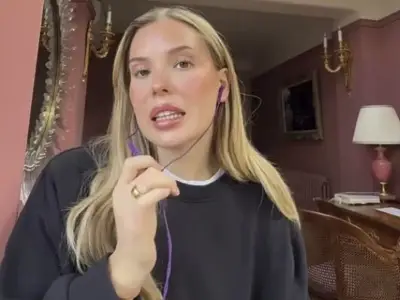
A London-born woman has been left stranded in Spain after being denied re-entry to the United Kingdom due to recent changes in border regulations implemented by the Home Office. Natasha Cochrane De La Rosa, a 26-year-old from Haringey, North London, was prevented from boarding her return flight from Amsterdam to Luton Airport on April 6, following a holiday with friends.
New Border Rules Create Travel Nightmare
The Home Office introduced new regulations on February 25, 2026, stating that dual nationals can no longer enter the UK using only a foreign passport. Instead, they must present either a valid British or Irish passport or possess a digital certificate of entitlement to prove their citizenship status.
Natasha, who was born and raised in Islington, North London, finds herself in what she describes as a "grey area" regarding her citizenship. With a British father and Spanish mother who were unmarried at the time of her birth in 1999, her father was unable to automatically pass on his British citizenship to her.
Documentation Dilemma and Financial Burden
To return home, Natasha now faces two difficult options: pay £589 for a digital certificate of entitlement or apply for a British passport. However, both paths present significant challenges. She must prove that her mother had free movement rights across the European Union when she was born, a requirement for which she says she never received official paperwork.
"I was born in Islington, I have paid taxes, I have voted," Natasha explained. "I am a dual national I do have British nationality but the government are saying none of that I have lived for 26 years matters anymore."
Airport Ordeal and Communication Failures
Natasha originally flew from Luton Airport on April 2 for her Amsterdam holiday. On her planned return four days later, she successfully checked in, passed through security and passport control, and reached her departure gate before being denied boarding.
"They called immigration on the phone basically were saying these new laws had come in," she recounted. "I was showing my birth certificate, my national insurance, my P45, my dad's birth certificate and was still denied boarding as I had not got the right documentation."
The client success manager criticized what she sees as poor communication from the government about these significant rule changes. "I feel the government have failed and they have a responsibility to dual nationals and the population of the UK that such dramatic and important law changes are effectively communicated," she stated.
Complex Citizenship Situation
Natasha's situation is further complicated by her family's circumstances. After Brexit in 2021, her mother applied for settlement papers, as did her younger sister who was born in Spain, with both applications being granted. However, Natasha says she was told she "didn't qualify" for similar documentation because she was already considered a British citizen.
Currently staying with a family friend in Sevilla, Natasha acknowledges her relative privilege while expressing concern for others who might face similar situations without her resources. "If I didn't have any ties to my country, didn't speak the language or have anywhere to stay I would have been left homeless in the Netherlands," she noted.
Lengthy Resolution Timeline
The resolution process promises to be lengthy and uncertain. Natasha cannot currently apply for the digital certificate of entitlement because she lacks the required documentation from her mother. She has been informed that the process could take anywhere from three to six months, or potentially up to a year, to resolve completely.
"It was 26 and a bit years ago so it's been a nightmare finding the documents," she said regarding the challenge of proving her mother's EU free movement status from decades earlier.
Home Office Response
A Home Office spokesperson defended the policy implementation, stating: "Since 25 February 2026, all dual British citizens need to present either a valid British passport or Certificate of Entitlement when travelling to the UK. To prove citizenship and enter the UK legally, individuals can apply for a British passport or Certificate of Entitlement from abroad."
The spokesperson added that public information about the documentation requirements has been available since October 2024, with a substantive communications campaign about the introduction of Electronic Travel Authorizations running since 2023. They noted that this approach mirrors policies in other countries including the United States, Canada, and Australia.
Despite these explanations, Natasha's experience highlights the real-world consequences of policy changes on individuals who fall through bureaucratic cracks. Her story has resonated on social media, with others commenting that they might have found themselves in similar circumstances without advance warning.
"Whilst I do take responsibility for not having checked, why would I check something that for 26 years of my life I've never had to do," she questioned. "The system is poorly designed and offers no support or understanding for citizens like myself who do not hit the check box but are still a British citizen."