
The death of a man held at a federal immigration detention camp in Texas is now being considered as a potential homicide, according to a report from the local medical examiner. The case has intensified scrutiny of detention conditions under the Trump administration's immigration crackdown.
Cause of Death Points to Asphyxia
Geraldo Lunas Campos, a 55-year-old Cuban national, died on January 3 while in the custody of Immigration and Customs Enforcement (ICE). He had been detained at Camp East Montana, a large tent facility located on the Fort Bliss military base in El Paso, Texas.
The El Paso County Medical Examiner's preliminary finding listed the cause of death as 'asphyxia due to neck and chest compression'. This finding has prompted authorities to consider opening a homicide investigation into the circumstances surrounding his death.
Lunas Campos was arrested by ICE in July of last year. The Department of Homeland Security had previously categorised him among the 'worst of the worst', a term used to highlight individuals targeted in mass deportation efforts. He had prior convictions for offences including child sexual abuse, firearm possession, and aggravated assault.
Contrasting Narratives and Growing Protests
ICE's initial statement on the death claimed Lunas Campos 'experienced medical distress' and stated the cause was under investigation. The agency has not yet commented on the medical examiner's report.
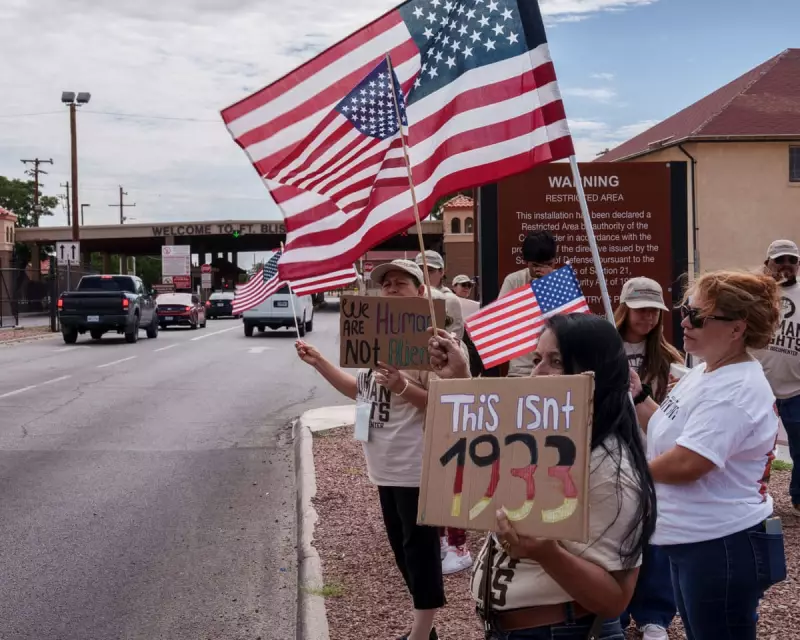
The news emerges amidst ongoing demonstrations against the administration's immigration policies. Protesters have gathered outside Fort Bliss, where Camp East Montana is situated, voicing opposition to the treatment of detainees and the broader enforcement campaign.
Broader Impacts on Vulnerable Groups
Separately, a report highlights how the Trump administration's restructuring of federal agencies has adversely affected critical research, including work on childhood cancer. Despite a pledge to 'end childhood cancer', budget cuts, delayed grants, and suspended clinical trials have created significant hurdles for families and researchers.
This disruption has left families of children with terminal diagnoses, such as diffuse intrinsic pontine glioma (DIPG), scrambling for alternative treatment options, compounding an already dire situation.
Other Key Developments
In related news:
- Venezuelan opposition leader María Corina Machado presented her Nobel Peace Prize medal to Donald Trump at the White House, thanking him for his commitment to Venezuela's 'freedom'. The Nobel organisation later stated that while a medal can change hands, the title of laureate cannot.
- Prominent Iranian film-maker Jafar Panahi, in an interview, predicted the collapse of the Khamenei regime following its violent suppression of recent economic protests, which have reportedly left over 2,500 dead.
- Figures linked to Trump's efforts to challenge the 2020 election are involved in seeking a major $200 million European gas pipeline contract intended to reduce Balkan reliance on Russian energy.
The death of Geraldo Lunas Campos and the potential homicide probe mark a critical moment, fuelling public debate over immigration enforcement and accountability within the US detention system.




