ICE Enforcement Actions Remove Vital Immigrant Truckers from US Highways
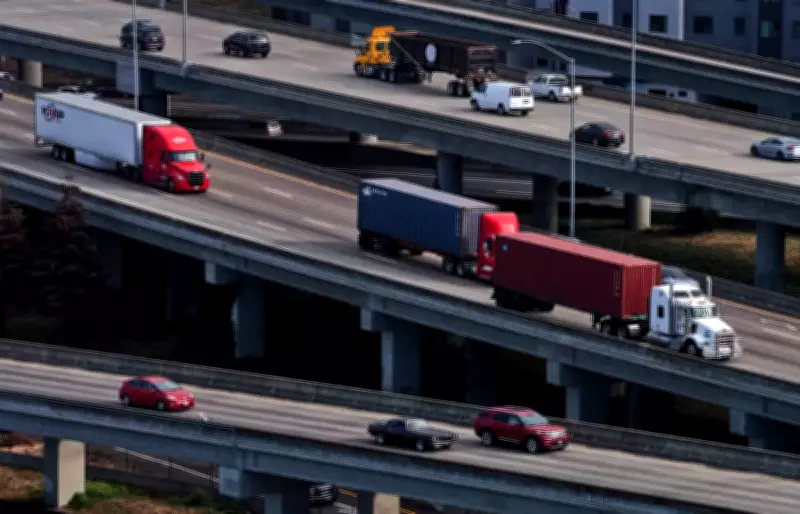
In a significant development impacting the American freight industry, thousands of immigrant truck drivers are being systematically removed from the nation's roads due to intensified Immigration and Customs Enforcement (ICE) crackdowns. The enforcement actions, which specifically target foreign-born commercial drivers for failing English language proficiency requirements, are creating severe labor shortages that threaten to disrupt supply chains and increase consumer costs across the country.
Generational Trucking Traditions Abruptly Ended
Ibragim Chakhalidze represents a poignant example of this trend. After his family emigrated from south-east Russia through a government refugee program and settled in Ohio in 2013, they established a trucking company near the crucial intersection of Interstate 70 and Interstate 75. For decades, trucking has been integral to their Ahiska Turk community, with dozens of businesses emerging in southwest Ohio's Dayton region despite economic challenges following the Great Recession.
"Trucking was part of what we did before we moved to the United States, so we continued that here," Chakhalidze explains. However, after thirteen years in the industry, he recently sold his truck and left the profession entirely. "It was getting tougher and tougher. I feel like most immigrants went to the hardest industry, which was truck driving. One reason I sold my truck was because I couldn't find a driver. Many people have sold their trucks."
Widespread Enforcement and Economic Consequences
ICE officers have been conducting targeted operations at truck stops, weigh stations, and directly on highways where immigrant truckers operate. Recent data indicates approximately 9,500 drivers have been removed from roads in recent months solely for failing English proficiency standards. This enforcement comes despite road freight handling 70% of all cargo by weight in the United States.
Industry analysts warn the crackdown is particularly affecting the Midwest, home to America's primary transport arteries connecting eastern, southern, and western regions. Last summer witnessed ICE agents utilizing highway weigh stations in Florida as enforcement checkpoints, with reports indicating companies have struggled to recover valuable freight and vehicles—sometimes worth millions per load—after driver detentions.
Transportation Secretary Sean Duffy recently announced the closure of 550 commercial driving schools as part of the enforcement measures. This decision comes despite statistics showing declining fatalities involving large trucks during 2023 and the first half of 2024.
Essential Workforce Under Pressure
Foreign-born individuals constitute an estimated 17% of commercial semi-truck drivers in the United States, with trucking proving especially attractive to immigrants from blue-collar backgrounds. Jennie Murray, president and CEO of the National Immigration Forum, emphasizes: "Safety and workforce stability must go hand in hand. Broad restrictions on immigrant drivers risk harmful profiling and deepening severe labor shortages. We should ensure rigorous training, vetting and compliance, not limit access to legally authorized drivers who are essential to our economy."
While isolated incidents involving undocumented immigrant truck drivers have occurred—including fatal accidents in Indiana and California last fall—advocates caution against generalizing these tragedies to all foreign-born drivers. Murray further notes: "Foreign-born drivers are essential to keeping US supply chains moving. Their contribution is especially important as the workforce ages (the average truck driver is now 47) and fewer younger workers enter the field. Without foreign-born truck drivers, delivery delays, higher freight costs and supply chain disruptions would worsen."
Regulatory Changes and Industry Response
On February 20, Secretary Duffy announced new requirements mandating that all commercial driving license applicants—whether for trucks or buses—must conduct their driving tests in English. "When we get on the road, we should expect that we should be safe," Duffy stated. "And that those who drive those 80,000-pound big rigs are well-trained, well-qualified, and going to be safe."
Raman Dhillon of the California-based North American Punjabi Trucking Association questions the logic of the enforcement: "It's chaos. The problem is these issues were manufactured by the government by loosening rules and regulations. These drivers who don't know how to speak English—they didn't get their license from somewhere else; they got it from DMVs. What do you expect?"
Dhillon highlights the crucial role immigrant drivers played during the COVID-19 pandemic: "Why was there an influx of immigrant drivers in 2020? Because nobody from here was willing to work during Covid. They got established and now the same drivers are becoming an issue just because everybody else wants to work."
Projected Impacts and Community Shifts
An analysis prepared for freight giant JB Hunt and published last autumn concluded that immigration control programs would increase costs for an industry already facing financial pressures. Dhillon's organization, representing hundreds of thousands of Sikh and Punjabi commercial drivers nationwide, estimates that up to 200,000 drivers lacking legal domicile or work permits could be removed from roads within five years.
"If we include English proficiency requirements, it's probably 600,000 drivers taken out," Dhillon projects. "That's going to start affecting prices; they're going to slap it on the commodity."
For Ohio's Ahiska Turk community, the multi-generational connection to trucking appears to be ending. Chakhalidze observes community members transitioning to different occupations: "I know many people who had five or six drivers and then suddenly had none. They sold their equipment because they had no other option to support their families." Increasingly, community members are opening cafes and restaurants as alternative employment sources.
The ongoing enforcement actions raise fundamental questions about balancing safety concerns with economic necessities, particularly as the United States faces persistent supply chain challenges and inflationary pressures affecting consumers nationwide.