
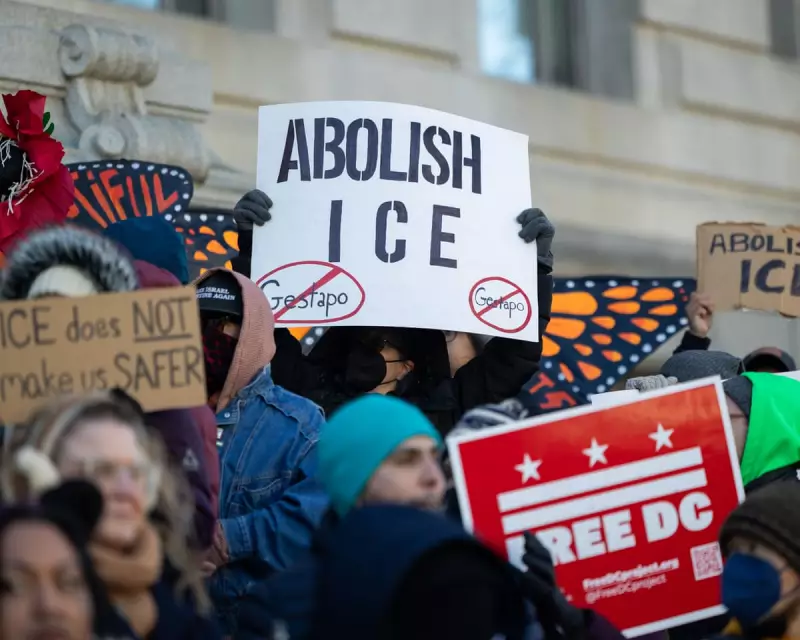
The fatal shooting of US citizen Renee Nicole Good by an Immigration and Customs Enforcement (ICE) agent on 7 January has triggered a powerful resurgence of the 'Abolish ICE' movement across the United States. Mass protests, echoing the outrage of the 2018 family separation crisis, have seen thousands march under the banner of dismantling the federal agency.
The Spark: A Shooting and a Surge in Public Support
The killing of Good, a mother of three in Minneapolis, acted as a catalyst for widespread anger. However, it compounded existing fury over a record 32 deaths in ICE custody during 2025, the agency's deadliest year in two decades. Concurrently, aggressive worksite raids in cities like Los Angeles, Portland, and Chicago led to mass arrests without due process, galvanising local communities to demand federal agents leave.
This public reckoning is now reflected in polling. For the first time, a new Economist/YouGov poll indicates more US adults support eliminating ICE than oppose it. The demand has been embraced by figures from progressive Representative Ayanna Pressley to conservative commentator Bill Kristol. Democratic Representative Shri Thanedar of Michigan plans to introduce the 'Abolish ICE Act', a bill to dismantle the agency and its enforcement authority.
Roots and Rise: From Grassroots to Mainstream
The movement's philosophical roots lie in the police and prison abolition advocacy of Black scholars like Angela Davis. However, the specific slogan 'Abolish ICE' entered the mainstream seemingly overnight in 2018 after a viral tweet by political strategist Sean McElwee. It became a rallying cry against the Trump administration's family separation policy.
As Juan Prieto of the Immigrant Legal Resource Centre notes, today's movement is a 'realisation' of groundwork laid by that first wave. "A lot of directly impacted advocates taught American citizens how to look out for immigrants," he said.
The agency itself was born from the post-9/11 security landscape, created in 2003 under the Department of Homeland Security. While its core mandate is locating and deporting undocumented immigrants, its actions during the Obama era—which saw record deportations under a 'felons, not families' policy—sowed deep seeds of discontent. Activist Amy Gottlieb argues this policy perpetuated a damaging narrative of 'good' versus 'bad' immigrants.
The summer of 2018 saw historic protests, with hundreds of thousands demonstrating at detention centres. The momentum propelled the cause into electoral politics, with figures like Alexandria Ocasio-Cortez championing it in her 2018 primary victory and legislators like Mark Pocan proposing abolition bills.
Setbacks and Strategic Lessons
The movement's momentum faltered after President Joe Biden took office. Activists like Silky Shah of Detention Watch Network argue the Biden administration failed to establish a strong pro-immigrant counter to Republicans, instead shying away from the issue. The focus shifted to the border crisis, and legislative efforts moved towards reviewing ICE rather than abolishing it.
Prieto points to a lack of 'political imagination' from the Democratic Party, which he says capitulated to rightward pressure rather than harnessing grassroots energy. This was exemplified by figures like Kamala Harris toughening her immigration stance and dozens of House Democrats voting with Republicans for stricter detention laws in 2025.
For veteran organisers, the goal extends beyond a single agency. "Abolishing ICE needs to be the floor, not the pinnacle," asserts Shah, warning that a return to a system with more local police collaboration is not the solution.
A Movement Reborn: Building a Lasting Vision
Despite past setbacks, organisers believe the 2018 campaign laid essential groundwork. It fostered 'know your rights' workshops, rapid-response networks, and successful efforts to close detention facilities. The shocking death of Renee Good has now reignited explicit calls for abolition, channelling a collective outrage reminiscent of 2018.
Jacinta González of MediaJustice notes the stakes are higher now, but the work continues. "This time around, we're building community and building a vision about what having a world without ICE can look like," she said.
The challenge for the movement and its political allies, according to Prieto, is to engage with the full demand: abolishing all interconnected systems of policing, detention, and enforcement. "Our opposition has a vision... I don't think our leaders have that level of progressive envisioning," he concludes, calling for the political courage to match the moment's urgency.




