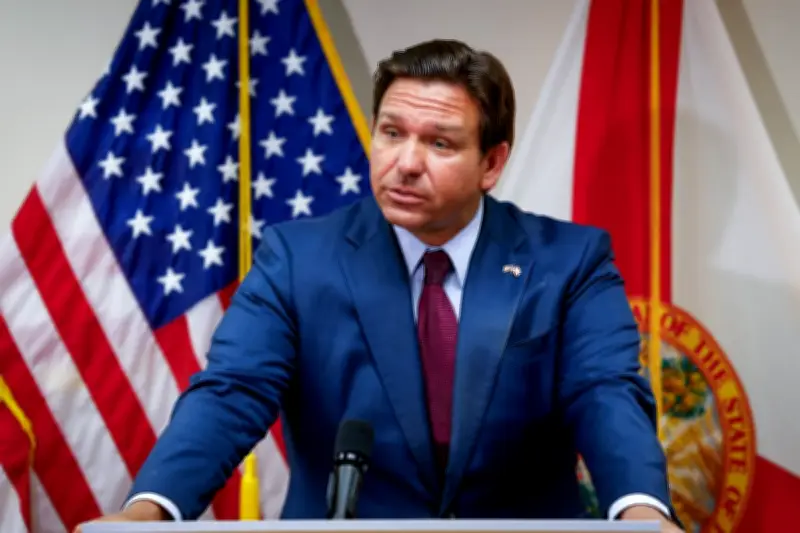
The Florida Board of Education voted on Tuesday to bar undocumented students from accessing the state's 28 public colleges and universities, a move that immigration advocates have denounced as cruel and harmful. The new rule restricts admission to U.S. citizens or individuals lawfully present in the country, building on last year's decision to eliminate in-state tuition discounts for certain immigrant students.
Economic and Legal Concerns
Opponents estimate the policy could cost Florida up to $15 million annually in lost tuition and fees. They also question its legality, noting the rule was approved by Governor Ron DeSantis's appointed board rather than the elected state legislature. Alexis Tsoukalas, senior analyst at the Florida Policy Institute, argued that the rule-making process is meant to implement existing laws, not create new policies. "That is exactly what the department is trying to do," she said during a press conference hosted by the Florida Immigrant Coalition.
Conflict with State Goals
The ban contradicts DeSantis's own "Sail to 60" initiative, a 2019 policy aiming to increase the share of Florida residents with high-value post-secondary education from below 50% to at least 60%. Tsoukalas noted that Florida's college system has faced declining enrollment for years, and the ban could worsen the trend. "It's not like there are students waiting in the wings to enroll when others are denied admission," she said. "Florida cannot reach its attainment goal if a shrinking share are enrolling."
Personal Impact on Students
Alexander Vallejos, a computer science student at the University of Central Florida and a Dreamer who came from South America as a one-year-old, described the ruling as cruel. "This ruling sends a painful message to young people who have done everything right," he said. "It tells them that their hard work isn't enough, and that their dreams are less because of something they have no control over." He emphasized that behind every policy are real students striving to succeed.
Luisa Santos, an elected member of the Miami-Dade school board who came to the U.S. from Colombia as a child, called the rule "cruel, harmful, and just unnecessary." She warned of "serious consequences," including the $15 million loss and the undermining of the Sail to 60 goal. "These rule changes took me back to the darkest days of high school," she said, recalling feeling opportunities slip away despite hard work.
Political Reactions
Republican state senator Don Gaetz defended the ban, stating that only citizens and documented immigrants should receive taxpayer-funded higher education. "The policy issue is: should illegal aliens receive taxpayer-funded higher education in Florida? And in my view, the answer to that question should be no," he told the Florida Phoenix. He added that he might file legislation to codify the board's decision into law.
Democratic state representative Anna Eskamani, who is running for Orlando mayor, spoke during the public comment section of the board meeting to denounce the policy. "The attempt to restrict a child's access to higher education based on the documentation status that is no fault of their own is un-American, it's unfaithful, and it's absolutely also constitutionally concerning because, obviously, we did not pass legislation on this matter," she said.