
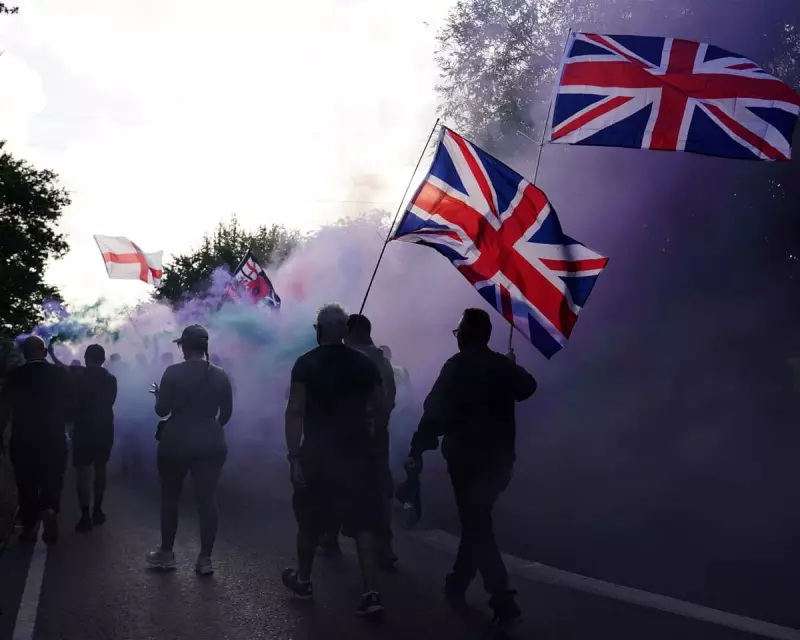
The fundamental question of what it means to be British has been thrust to the forefront of political discourse this week, ignited by a fierce row over the citizenship of the British-Egyptian activist Alaa Abd el-Fattah.
The Spark: A Controversial Case
Abd el-Fattah arrived in the UK last week after a decade as a political prisoner in Egypt. His release followed sustained campaigning by successive British governments, a consular effort that began in earnest in 2021 when he was granted UK citizenship through his British-born mother under the British Nationality Act 1981.
However, his arrival was swiftly overshadowed by the resurfacing of offensive tweets he posted 10 to 15 years ago, which included antisemitic remarks and calls for violence. Abd el-Fattah has since apologised for these statements.
This apology did not prevent figures from Reform UK and the Conservative party, including shadow home secretary Chris Philp, from calling for him to be stripped of his British citizenship. Critics argue this stance is primarily possible because Abd el-Fattah is a dual national from a minority ethnic background.
A Broader Shift in Public Sentiment
This political reaction reflects a significant shift in the national conversation about identity. A new report by the Institute for Public Policy Research (IPPR) reveals a marked change in public attitudes.
The study found that 36% of people now believe you must be born in the UK to be truly British, a figure that has nearly doubled from 19% just last year. This suggests a growing proportion of the electorate views Britishness as a matter of birthright, ethnicity, and ancestry, rather than a status attainable through shared values or legal process.
The cases of Nazanin Zaghari-Ratcliffe and Jimmy Lai, like Abd el-Fattah's, highlight the diverse routes to British citizenship—through marriage, naturalisation, or historical ties. For many, becoming British is rooted in obeying the law, working hard, and contributing to society.
Political Battle Lines and the 'Overton Window'
The debate places Keir Starmer's Labour government in a challenging position. While the Prime Minister has framed the next election as a battle between his "progressive patriotism" and Nigel Farage's "incendiary nationalist politics," some within his own party believe he has been too hesitant to robustly defend this vision during crises.
The IPPR warns that "animating an alternative vision of nation cannot be outsourced to a few speeches or policies." It requires a sustained narrative from the very top of government about what modern Britain stands for.
The controversy underscores how the Overton window—the range of policies politically acceptable to the mainstream—has moved on issues of national identity and cohesion. Both Reform UK and the Conservatives have recently faced criticism for advocating policies that could lead to the mass deportation of individuals living legally in the UK.
As Downing Street maintains that Abd el-Fattah, like any citizen, is entitled to consular support, the broader question remains unresolved. The nation is now grappling not just with the fate of one activist's passport, but with the very definition of its own collective identity.




