Australia Seeks New Powers to Restrict Temporary Visa Holders Amid Global Turmoil
In a significant move to tighten immigration controls, the Australian government has proposed urgent legislation that would grant the home affairs minister new authority to block temporary visa holders from certain regions from entering the country. This comes amid the ongoing conflict in the Middle East, with the law specifically designed to address concerns about visa overstays and protection applications.
Urgent Amendments Introduced to Address Changing Global Circumstances
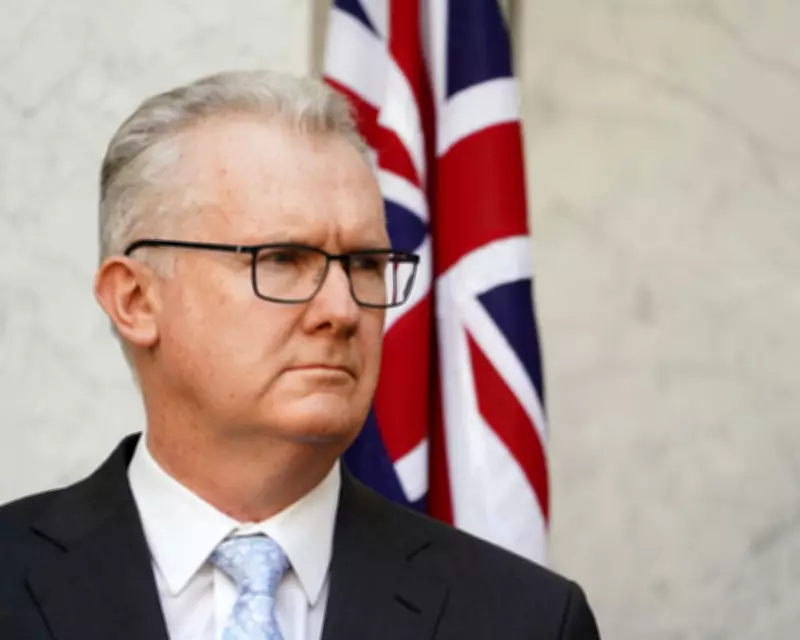
The assistant citizenship minister, Julian Hill, introduced the amendments on Tuesday, just hours after home affairs minister Tony Burke facilitated humanitarian visas for members of the Iranian women's soccer team. The proposed legislation would allow Burke to issue an "arrival control determination" to prevent temporary visa holders from specific regions from traveling to Australia when global events shift dramatically.
The primary objective is to protect the integrity and sustainability of Australia's immigration system by enabling the government to respond swiftly to international crises that might increase the risk of temporary visitors seeking to remain permanently.
Specific Focus on Middle East Situation
While the bill does not explicitly name any country, briefing documents circulated to parliamentarians reference the current situation in the Middle East. The legislation could potentially be used to prevent Iranian tourists from entering Australia if their visas were issued before recent escalations in the region, particularly if there are concerns they might overstay or apply for protection while in the country.
Labor has characterized these changes as closing loopholes in existing immigration laws, with built-in safeguards requiring the home affairs minister to obtain written agreement from both the prime minister and the immigration minister before making any arrival control determinations.
Government and Opposition Support for Strengthened Migration Controls
Julian Hill emphasized the necessity of these powers, stating: "At any point in time, there are many temporary visa holders outside Australia holding a temporary right of entry to Australia, granted to support travel for a genuinely temporary purpose, like a holiday or attending a conference."
He continued: "The current situation in the Middle East demonstrates how quickly circumstances can change that may impact whether those temporary visa holders could fulfil that temporary purpose in Australia, including whether they would leave Australia should they travel here."
The shadow foreign minister, Ted O'Brien, expressed the Coalition's support for the bill in principle, noting he saw "no major hurdles" to its passage through parliament. O'Brien stated: "This bill contains reasonable measures to strengthen the integrity of Australia's migration system. These powers are designed to protect the integrity and sustainability of Australia's migration system, particularly where international events increase the risk of visa overstays."
Humanitarian Exceptions and Political Objections
Despite the proposed restrictions, the government has demonstrated flexibility in humanitarian cases. Early Tuesday morning, Tony Burke confirmed that five asylum applications from members of the Iranian women's soccer team had been approved, with visas granted around 1:30 AM.
Burke declared: "They are welcome to stay in Australia. They are safe here, and they should feel at home here. I say to the other members of the team: the same opportunity is there. Australia has taken the Iranian women's soccer team into our hearts."
However, not all parliamentarians support the legislation. Independent member for Clark, Andrew Wilkie, requested that his objection to the bill be formally recorded in Hansard, indicating some political resistance to the expanded ministerial powers.
Balancing Immigration Control with Humanitarian Considerations
The proposed legislation represents Australia's attempt to balance robust immigration controls with appropriate humanitarian responses. While seeking to prevent potential abuse of temporary visa systems during international crises, the government has simultaneously demonstrated willingness to provide sanctuary to those facing genuine persecution.
The bill now faces a Senate inquiry, with both major parties expressing support for measures they believe will strengthen Australia's ability to manage migration flows during periods of global instability.