
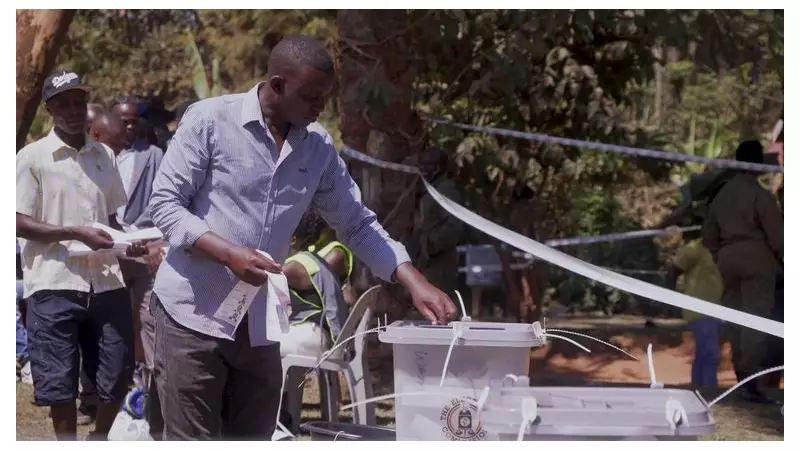
Ugandans are casting their votes in a high-stakes presidential election marked by a total internet shutdown and a heavy military presence on the streets of the capital, Kampala. The poll pits the long-ruling President Yoweri Museveni against his main challenger, the pop star-turned-politician Bobi Wine, for the second time.
A Climate of Fear and Intimidation
The atmosphere surrounding the election is one of severe tension. The military is fully deployed across Kampala, and authorities have imposed a nationwide internet blackout, severely restricting communication and information flow. Furthermore, the permits of at least nine local human rights organisations have been suspended in the lead-up to the vote.
At the heavily surveilled home of opposition leader Bobi Wine, whose real name is Robert Kyagulanyi, the monitoring is relentless. The scene outside his gate features constant patrols by security personnel on motorbikes and large riot trucks filled with masked police officers.
Speaking from his garden, Wine described a deteriorating situation since he first entered politics as a Member of Parliament in 2018. "What has changed is that it has gone from bad to worse. There is more impunity. There is more violence every day as people are being abducted and they go missing. Some have been missing for years," he told Sky News.
Crackdown on Opposition and Claims of Rigging
The crackdown on dissent has intensified significantly. Wine's National Unity Party reports that 300 of their supporters and party officials have been detained in the weeks before this election. This follows the violent 2021 election period, where security forces killed at least 54 people and caused hundreds to disappear.
"Even my deputy president in charge of western Uganda has been picked up, and I'm told she's being detained in a military barracks - so it is crazy what is happening," Wine stated. He alleges the election is being conducted "in the dark," with internet cuts and the detention of his party agents.
President Museveni, in power since 1986, firmly denies all allegations of election rigging. In an interview, he shifted the blame, stating, "it is the opposition that rigs the election." He dismissed the challenge from Wine, claiming, "They try but they can't overturn us. We are too popular."
Museveni's Rally and the Law-Breaking Allegation
At President Museveni's final rally in Kampala, thousands of supporters wearing bright yellow T-shirts bearing his image filled the Kololo airstrip. Foreign media were barred from filming inside the event, but a subtle show of dissent was visible as a young man turned a foam finger into a thumbs-down and yelled "Bobi!"
When asked why his government targets Wine so aggressively compared to other opposition figures, Museveni was unequivocal: "Bobi Wine breaks the law, that is why... if you take each case, you find that he is breaking the law."
Wine offered a stark rebuttal to this claim: "He says I break the law, but I'm not arrested. Why am I not arrested and charged? If I break the law, the only law that I break is to stand and challenge a 40-year-old dictatorship."
As voters decide the country's leadership for the next five years, the process unfolds under a shadow of restricted freedoms, military deployment, and deep mutual accusations of illegitimacy from both main contenders.




