UN General Assembly Adopts Landmark Resolution on Transatlantic Slavery
The United Nations General Assembly has adopted a historic resolution led by Ghana that formally declares the transatlantic trafficking and racialized chattel enslavement of Africans as "the gravest crime against humanity." The vote, which took place on March 25, saw 123 nations in favor, three opposed, and 52 abstentions, revealing significant geopolitical fault lines regarding historical accountability and reparatory justice.
Voting Patterns Reveal Deep Divisions
The resolution's passage was never in doubt, but the voting pattern proved particularly revealing. The United States, Israel, and Argentina cast the only opposing votes, while the United Kingdom and all European Union member states chose to abstain. This collective hesitation from former colonial powers underscores the ongoing discomfort with confronting the full historical and economic legacy of the slave trade.
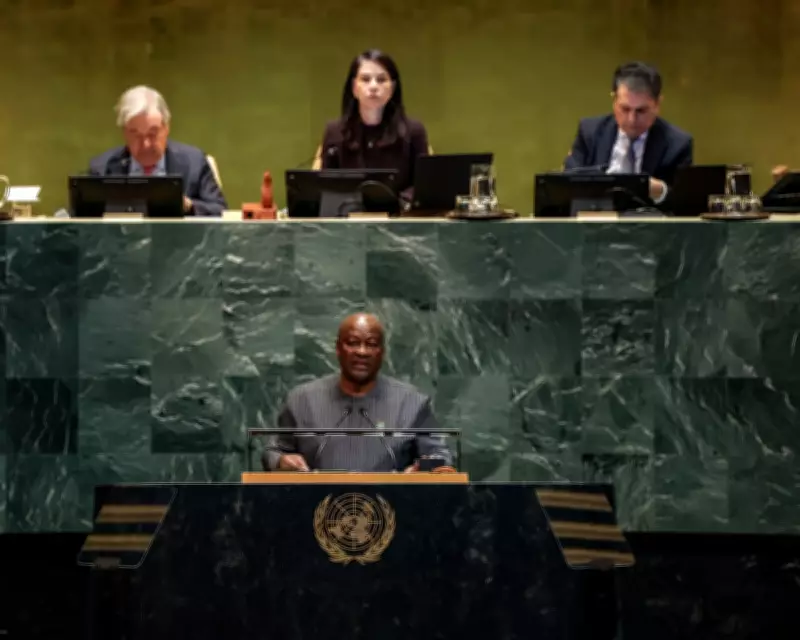
Ghanaian President John Dramani Mahama, who addressed the assembly ahead of the vote, framed the resolution as "a pathway to healing and reparative justice" and "a safeguard against forgetting." The measure urges concrete steps including formal apologies, reparatory justice frameworks, and the return of looted cultural property to African nations.
Western Objections and Legalistic Defenses
The abstaining nations, particularly the UK and Ireland, offered legalistic justifications for their positions. British representatives argued the resolution created an inappropriate "hierarchy of historical atrocities" and noted that the transatlantic slave trade was not prohibited by international law during its operation. Similar reasoning was echoed by other European nations.
These objections have been met with sharp criticism from advocates of reparatory justice. Critics argue that focusing on legal technicalities serves to obscure the fundamental moral and historical reality: that the transatlantic slave trade represented an unprecedented system of human theft, racial categorization, and economic extraction that fundamentally shaped the modern world order.
The Political Backlash and Reparations Debate
The resolution has ignited fierce political debate, particularly in the United Kingdom. Opposition leader Kemi Badenoch publicly stated Britain should have voted against the measure, characterizing it as a demand for "trillions" from contemporary taxpayers. Meanwhile, figures from the political right have proposed punitive measures, including visa restrictions against nations pursuing reparations claims.
This reaction exemplifies what scholars term "the politics of historical laundering"—the tendency to acknowledge historical wrongs while simultaneously distancing present institutions from responsibility and casting claims for justice as unreasonable or destabilizing.
Caricom's Framework and the Path Forward
The resolution gains practical significance when viewed alongside the Caribbean Community's (Caricom) decade-long advocacy for a comprehensive reparatory justice program. Caricom's ten-point plan moves far beyond financial compensation, linking formal apologies to concrete initiatives in public health, education, technology transfer, psychological rehabilitation, and debt cancellation for affected nations.
UN Secretary-General António Guterres used the resolution's adoption to call for renewed action against slavery's enduring legacies of racism and inequality, including advocating for fairer participation of African nations in global financial institutions.
A Moral and Political Turning Point
While the resolution itself does not create an enforceable reparations tribunal, it establishes crucial political and moral architecture. It shifts the reparations debate from the margins to the center of international discourse and provides African and Caribbean states with an authoritative platform from which to build future frameworks. The Caricom Reparations Commission has already hailed the vote as a "gamechanger."
The nervous reaction from abstaining nations suggests the resolution's power lies not in its immediate enforceability, but in the precedent it sets. By officially recognizing the foundational nature of this atrocity and its living consequences, the resolution makes it increasingly difficult to maintain historical narratives that minimize or sanitize the slave trade's role in creating global inequalities.
The March 25 vote represents a significant victory for truth-telling at the international level. As President Mahama reminded both Ghanaians and the diaspora, silence in the face of historical injustice is not sophistication—it is submission. The resolution has exposed which nations remain invested in maintaining what critics call "history's most profitable amnesia." The harder work—translating this moral recognition into structural change—now begins.