A new and intricate four-tier governance plan for Gaza has been detailed, aiming to address the territory's desperate need for stability after the recent conflict. The structure, confirmed on Saturday 17 January 2026, blends high-profile international figures with on-the-ground Palestinian leadership.
The Four Layers of Gaza's New Governance
The proposed framework is built on four distinct levels. At the apex is a Board of Peace, to be chaired by former US President Donald Trump. This top layer will consist of serving national leaders, with invitations expected for figures including UK Prime Minister Sir Keir Starmer, Italy's Giorgia Meloni, and German Chancellor Friedrich Merz. Turkey has confirmed that President Recep Tayyip Erdogan has been asked to join.
Beneath this sits an executive board, designed to operationalise the vision of the Board of Peace. This second layer features several prominent American figures, including Donald Trump's roaming negotiator Steve Witkoff, financier and Trump son-in-law Jared Kushner, and US Secretary of State Marco Rubio. World Bank head Ajay Banga and private equity billionaire Marc Rowan are also named.
The only non-American confirmed on this executive board is former UK Prime Minister Sir Tony Blair. His inclusion points to a significant role in the plan's implementation.
The Crucial Liaison Role and On-the-Ground Scrutiny
A critical linking role will be played by the newly appointed High Representative for Gaza, diplomat Nickolay Mladenov. The former UN Special Coordinator for the Middle East Peace Process will act as the conduit between the international boards and the Palestinian leaders on the ground.
Those Palestinian technocrats form the fourth and foundational layer of governance, having already held their first meeting in Cairo last week. Mladenov will liaise directly with this group.
Overseeing this on-the-ground work will be a third committee, tasked with scrutiny. This group has the widest international composition, including Sir Tony Blair, Jared Kushner, Steve Witkoff, and Marco Rubio, but also extending to Turkey's foreign minister, influential Qatari diplomat Ali Al Thawadi, Dubai's Minister Reem Al Hashimy—the only woman named so far—and the head of the Egyptian Intelligence Service.
Analysts suggest this committee may become a focal point for political tension, as it connects American influence with Palestinian realities and includes regional players less hesitant to challenge the Israeli government.
The Military Challenge and the Quest for Stability
Parallel to the political structure is a major security announcement. Major General Jasper Jeffers has been placed in charge of an international stabilisation force for Gaza. His monumental task is to create a secure environment, oversee demilitarisation, and ensure the safe delivery of humanitarian supplies.
However, key questions remain unanswered: where the troops for this force will come from, what their precise rules of engagement will be, and how command will be structured.
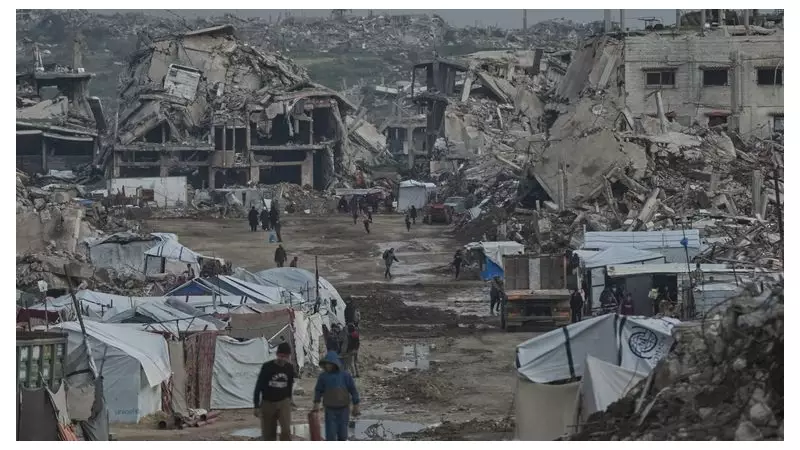
The entire governance plan faces towering demands, including the disarmament of Hamas, a full Israeli military withdrawal, the mammoth rebuilding of Gaza's infrastructure, and the restoration of safe, effective government. While the structure appears unwieldy and elaborate, for Gazans in dire need of a peaceful future, it currently stands as the most concrete option on the table.