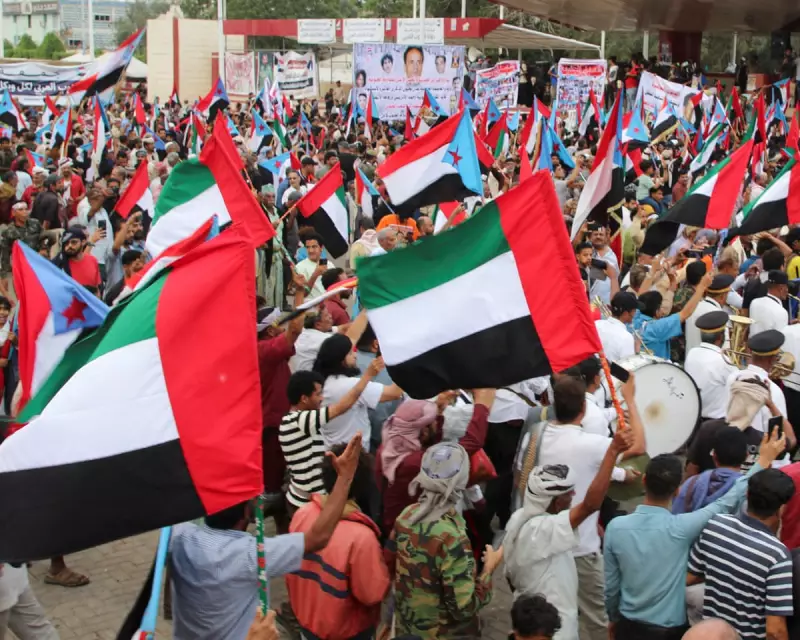
A dangerous rift between Saudi Arabia and the United Arab Emirates over the future of Yemen has reached a critical point, with Riyadh publicly accusing its Gulf ally of actions that threaten its national security. The dispute centres on the UAE-backed separatist Southern Transitional Council (STC), which has recently seized control of vast swathes of southern Yemen, moving the region closer to a new civil war and the potential declaration of an independent state.
A Sudden Land Grab and a Saudi Red Line
The immediate catalyst for the crisis was a series of swift military moves by the STC last month. The group's forces pushed into Hadramaut, Yemen's largest governorate, and subsequently took control of al Mahra, the most easterly region. This expansion gave the STC command over nearly all the territory of the former South Yemen, including key oilfields.
This bold manoeuvre was a severe shock to Saudi Arabia, which views Yemen as within its sphere of influence. Riyadh's response was forceful. It launched airstrikes on vehicles docking at the Yemeni port of Mukalla on 30 December, stating they were destined for the STC and had originated from an Emirati port. The Saudi government issued a stark warning: "The Kingdom stresses that any threat to its national security is a red line, and the Kingdom will not hesitate to take all necessary steps and measures to confront and neutralise any such threat."
Divergent Visions for Yemen's Future
The confrontation exposes fundamental differences in how the two wealthy Gulf states approach Yemen. Saudi Arabia has long pursued a strategy focused on defeating the Iran-backed Houthi rebels in the north and preserving Yemen as a unitary state, albeit under a coalition government known as the Presidential Leadership Council (PLC).
The UAE, however, has pursued a more interventionist and experimental path. For years, it has cultivated the STC, tapping into genuine popular sentiment in the south which yearns for the independence lost after unification with the north in 1990. While the STC was granted seats on the PLC in 2019, gaining its leader Aidarous al-Zubaidi international recognition, it has never been content with a federal solution.
Analyst Farea al-Muslimi of Chatham House notes the gravity of the shift: "After years of indirect competition through local proxies, the dispute now appears to be moving toward a more direct confrontation." He warns the situation evokes parallels with the 2017 Gulf crisis that isolated Qatar.
Regional Ripples and Western Dilemmas
The fallout extends far beyond Yemen's borders. The Saudi-UAE rivalry risks spilling over into other conflict zones where they back opposing sides, such as Sudan and the Horn of Africa. Furthermore, the Houthi rebels are likely to benefit from watching their former adversaries turn on each other.
Western governments, particularly the United States, face a dilemma. Their sympathies lie with Saudi Arabia's aim of maintaining a unified Yemeni state, yet they have been reluctant to publicly criticise the UAE. Meanwhile, the UAE shows no sign of backing down. Emirati political scientist Abdulkhaleq Abdulla has framed support for the STC as a test of national character, asserting the UAE does not abandon its allies.
With diplomatic pressure intensifying but no withdrawal in sight, Yemen is poised to become the primary theatre for a historic power struggle between two of the Middle East's most influential nations, with devastating consequences for its war-weary population.