Pakistan Achieves Major Diplomatic Breakthrough in US-Iran Conflict
Pakistan has secured what analysts are calling its "biggest diplomatic win in years" by brokering a fragile ceasefire between the United States and Iran, averting potential catastrophe in the Middle East through intense behind-the-scenes negotiations.
Desperate Hours Before the Breakthrough
As tensions escalated dramatically in the Middle East conflict, Pakistani leaders faced their worst nightmare scenario. During a Tuesday cabinet meeting, Prime Minister Shehbaz Sharif expressed profound pessimism, telling ministers: "We should brace ourselves for the impact of the war. The situation has really become very bleak. The chance of peace has become dim."
The situation appeared increasingly dire with Israeli strikes devastating an Iranian gas plant and Iranian attacks hitting a critical Saudi Arabian petrochemical complex. Pakistan's military leadership issued an unusually strong public statement against Tehran, accusing Iran of "spoiling" peace efforts amid what they termed a "dangerous escalation."

Meanwhile in Washington, former President Donald Trump's rhetoric reached new heights of intensity as he threatened that Iran's "whole civilisation will die tonight" if they didn't agree to ceasefire demands by day's end.
Pakistan's High-Stakes Involvement
For Pakistan's government and military establishment, mediating an end to the conflict represented far more than diplomatic prestige. The country's economy, national security, defense arrangements, and sectarian harmony all depended on preventing further escalation. A recently signed defense pact with Saudi Arabia meant Pakistan could be dragged into the conflict if Riyadh chose to enter the fighting.
"We were in a very fragile situation and desperate for negotiations to begin," revealed one Pakistani official involved in the process.
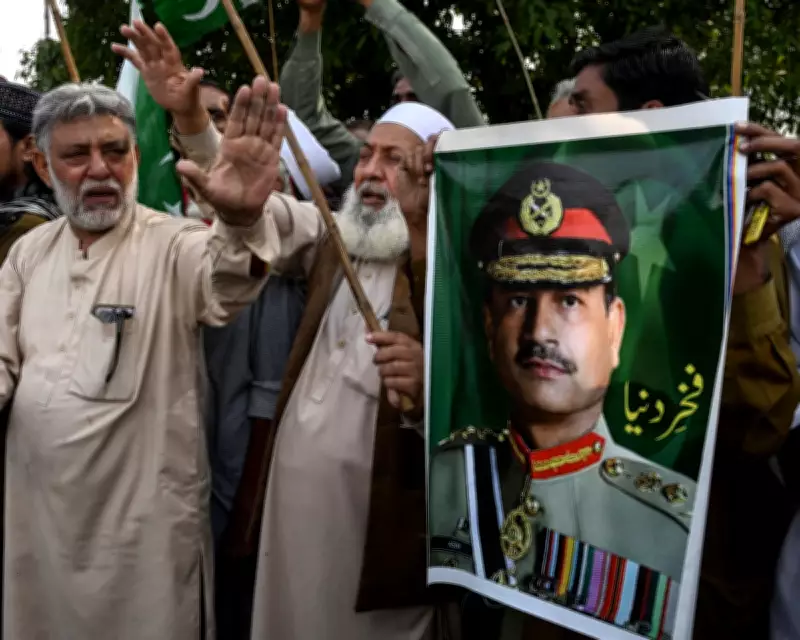
Behind the scenes, Pakistan's powerful army chief Asim Munir and national security adviser Asim Malik worked tirelessly through phone diplomacy. Munir occupied a uniquely advantageous position as peace broker, maintaining both strong personal rapport with Donald Trump and longstanding relationships with Iran's Revolutionary Guards.
The Crucial Chinese Intervention
According to Pakistani officials, a pivotal development occurred when China, previously reluctant to become entangled in the conflict, shifted its position as the war's economic toll grew. Just over a week earlier, Pakistan's Foreign Minister Ishaq Dar had flown to Beijing to discuss peace efforts and request greater Chinese involvement.
"Pakistan had to involve China to convince Iran to go for a ceasefire," explained one official. "The main role was played by China. They became a guarantor of the ceasefire and pledged that the US would standby the agreement and that talks would go smoothly in Islamabad."
China reportedly offered crucial assurances to Iran, including guarantees that Iranian leaders would not face assassination if they traveled for negotiations. This intervention proved decisive in overcoming Tehran's reluctance to commit to any ceasefire agreement.
Breakthrough and Aftermath
By 4 a.m. in Islamabad on Wednesday, the seemingly impossible had been achieved: a temporary, fragile ceasefire agreement between the United States and Iran. Michael Kugelman, South Asia fellow at the Atlantic Council, described the achievement as Pakistan's "biggest diplomatic win in years."
Prime Minister Sharif hailed the ceasefire as a "shining moment" in Pakistan's history and a "first step" toward lasting peace. Preparations began immediately for peace talks scheduled at Islamabad's Serena Hotel on Friday, with Iran confirming it would send parliamentary speaker Mohammad Bagher Ghalibaf and foreign minister Abbas Araghchi as negotiators.
Despite the breakthrough, Pakistani officials privately expressed concerns that Israel and the United Arab Emirates could still attempt to "sabotage" the peace process. Israel has notably stated that Lebanon remains outside the ceasefire agreement, and trade through the Strait of Hormuz continues to face significant disruption.

Kugelman emphasized the significance of Pakistan's achievement, noting the country had "defied many skeptics and naysayers that didn't think it had the capacity to pull off such a complex, high-stakes feat." He added: "What matters the most is it helped avert a potential catastrophe in Iran."
The successful mediation represents a remarkable diplomatic accomplishment for Pakistan, demonstrating its growing influence in regional conflict resolution despite the numerous challenges facing its own government and economy.