European Union leaders have issued a stark warning that Donald Trump's threat to impose new tariffs on eight European nations over their stance on Greenland risks triggering a "dangerous downward spiral" in transatlantic relations. The warning follows a surprise announcement from the former US president targeting countries opposing his ambitions to acquire the autonomous Danish territory.
A Unified Front Against 'Intimidation'
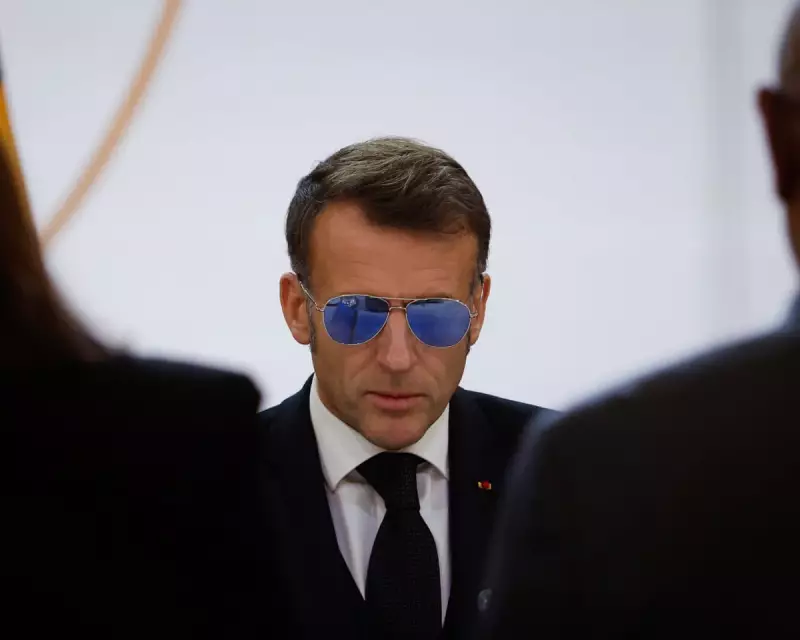
French President Emmanuel Macron led the forceful European response, declaring that "no amount of intimidation" would alter the course of EU nations regarding Greenland. He labelled the tariff threats as "unacceptable," particularly in a context where Europe is supporting Denmark, a fellow EU and NATO member state.
"France is committed to the sovereignty and independence of nations, in Europe and elsewhere," Macron stated, linking the principle to broader European security commitments in Ukraine and the Arctic. "We stand by this decision, not least because it concerns security in the Arctic and at the borders of Europe," he added, referring to France's participation in military exercises in Greenland.
Swedish Prime Minister Ulf Kristersson echoed this defiant tone, asserting that the EU would not be "blackmailed" by the US president. "Only Denmark and Greenland decide on issues concerning Denmark and Greenland," Kristersson affirmed.
The Tariff Threat and European Reaction
On Saturday, Trump announced on his Truth Social platform that he would levy a 10% tariff on eight countries from 1 February, followed by a further 25% tariff from 1 June. The nations targeted—Denmark, Norway, Sweden, France, Germany, the UK, the Netherlands, and Finland—are those that have been most vocal in criticising Trump's designs on Greenland.
The European Council President and European Commission President issued a joint statement, emphasising that "dialogue remains essential" and that tariffs would severely undermine the crucial transatlantic partnership. They stressed Europe's unity and commitment to upholding its sovereignty in the face of such pressure.
Political and Trade Fallout
The move has immediate political repercussions within Europe. Bernd Lange, a German MEP who chairs the European Parliament's influential foreign affairs committee, indicated that MEPs were likely to suspend progress on ratifying a recent EU-US tariff deal agreed last August. "I cannot imagine that we will continue business as usual," Lange stated.
Analysts viewed the tariff threat as a blunt negotiating tactic. Mikkel Runge Olesen, a senior researcher at the Danish Institute for International Studies, noted the correlation between the targeted countries and those sending troops to Greenland exercises. "This is a reaction to the European troops going to Greenland," he told Sky News, dismissing the prospect of actual American military action on the island.
The strong, coordinated response from European capitals, delivered while leaders were in Paraguay to sign a major trade deal with South America's Mercosur bloc, signals a prepared and resolute stance against what is perceived as economic coercion over a matter of national sovereignty and strategic Arctic policy.