US Military to Enforce Blockade on Iranian Ports in Strait of Hormuz
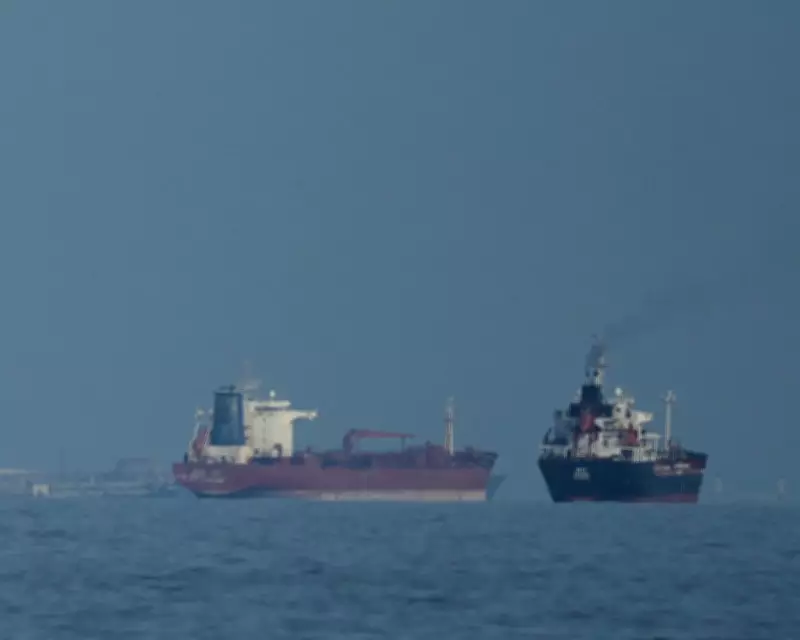
The United States military has declared it will implement a blockade targeting all Iranian ports within the strategic Strait of Hormuz, effective from Monday. This announcement follows the breakdown of ceasefire negotiations between the US and Iran over the weekend, intensifying the ongoing conflict that began six weeks ago with US-Israeli attacks aimed at curbing Tehran's nuclear ambitions. The strait, a critical maritime chokepoint, has become Iran's primary weapon in its asymmetric warfare, effectively shutting down a waterway that previously facilitated approximately 20% of global oil and gas shipments.
Economic Fallout and Market Instability
The closure of the Strait of Hormuz has precipitated a severe global economic crisis, characterized by a sharp rise in oil prices that stokes fears of rampant inflation. Additionally, the collapse of exports for essential goods, such as fertilizers crucial for food production, has exacerbated supply chain disruptions. In response to the escalating situation, former President Donald Trump has threatened to impose his own blockade, plunging global markets into further uncertainty. On Sunday, Trump asserted via social media that the US Navy would blockade "any and all" ships in the strait, accusing Iran of "world extortion" and warning of severe consequences for any attacks on US vessels.
Contradictions and International Reactions
Trump's sweeping declaration was later contradicted by the US Central Command (Centcom), which clarified that the blockade would specifically target vessels transiting through Iranian ports, while permitting passage to ports of US allies in the Gulf. Centcom specified that the enforcement would commence at 10am ET, covering the Gulf and Gulf of Oman, connected by the narrow Strait of Hormuz. Further confusion arose when the US military indicated the blockade might only apply to waters east of the strait. Internationally, key allies have expressed reluctance to support the operation. British Prime Minister Keir Starmer stated that London would not back the blockade, resisting pressure to be drawn into the conflict, while Australian and Spanish leaders similarly distanced themselves from the US initiative.
Strategic Implications and Feasibility of the Blockade
Reports suggest that control over the strait was a major point of contention in the failed negotiations, with Iran proposing to charge fees for passage post-conflict, an idea rejected by world leaders as an infringement on freedom of navigation. Experts analyze that the US blockade, if enforced, is unlikely to involve direct missile strikes on tankers due to environmental risks. Instead, the US Navy may employ threats to divert vessels or deploy armed boarding parties to seize control. Dana Stroul, a former Pentagon official, noted that such a mission is challenging to execute alone and may not be sustainable long-term, with US forces facing potential attacks near Iranian waters.
Impact on Oil Prices and Global Markets
The blockade threatens to drive oil prices even higher, depending on its scope and implementation. Kevin Book of ClearView Energy Partners explained that reduced shipping volumes typically lead to tighter markets and increased prices, with potential Iranian or Houthi retaliations against alternative routes further exacerbating the situation. Since the conflict's onset, about 100 tankers, mostly carrying Iranian oil to China and India, have transited the strait, with the US previously easing sanctions to alleviate supply pressures. Following Trump's announcement, US crude prices surged 8% to $104.24 per barrel, and Brent crude rose 7% to $102.29, marking a significant increase from pre-war levels around $70 per barrel.
Future of Ceasefire and Escalation Risks
Iran's Revolutionary Guards have warned that any warships approaching the strait to enforce the blockade will be considered in violation of the ceasefire and met with strong resistance, asserting continued Iranian control over the waterway. Trump has hinted at possible resumption of US strikes inside Iran, targeting facilities like missile factories, indicating that the conflict may escalate further. This development leaves the global economy and diplomatic efforts in a precarious state, with ongoing uncertainty over how the blockade will be enforced and its broader implications for international stability.