Residents of Caracas were jolted from their sleep in the early hours of Saturday by a series of thunderous explosions, initially mistaken for storms or fireworks, which marked the beginning of a major US military operation against Venezuela.
Dawn Raid Sends Shockwaves Through Capital
The pre-dawn assault, confirmed by both former US President Donald Trump and Venezuelan authorities, saw missiles target key military installations across the capital and surrounding region. Key sites included the La Carlota airbase in the heart of the city and the heavily fortified Fuerte Tiuna military complex.
Carlos Hurtado, a resident of the 23 de Enero neighbourhood, described being woken by the mysterious rumblings. "I thought it might be fireworks," he recalled. However, as plumes of smoke rose and air raid sirens sounded, the reality became clear.
Ricardo Sans, an engineer living in the mountains around Caracas, reported seeing four to six helicopters flying over his home in the darkness, with smoke billowing from near the Cuartel de La Montaña barracks—the resting place of former leader Hugo Chávez.
Maduro Captured in Dramatic Operation
As daylight broke, the situation escalated dramatically. Donald Trump announced that Venezuelan President Nicolás Maduro and his wife, Cilia Flores, had been "captured" during the raid and taken to a US naval vessel in the Caribbean.
"They got taken out in a matter of seconds. I’ve never seen anything like it," Trump told Fox News. Former US Attorney General Pam Bondi accused the couple of being "international narco traffickers," stating they would face American justice.
US media reports, citing officials, suggested the operation involved the elite Delta Force unit, with speculation of support from the Night Stalkers helicopter regiment.
A City on Edge and a Regime in Crisis
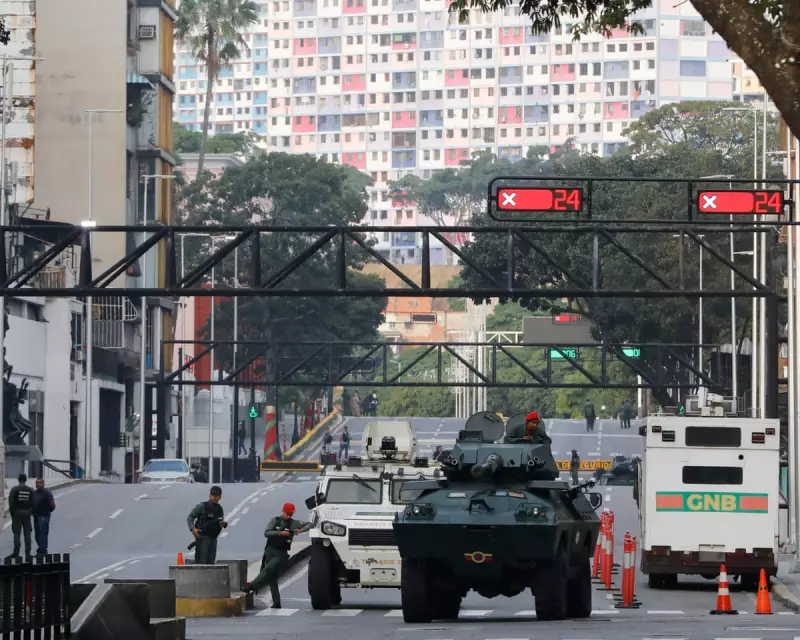
Following the attacks, the streets of Caracas fell into an eerie silence, broken only by the calls of native macaws. One resident compared the atmosphere to a pandemic lockdown, noting, "You can’t hear a single car."
Maduro's allies vehemently denounced the US action. Defence Minister Gen Vladimir Padrino López and Interior Minister Diosdado Cabello labelled it an "invasion" and called for armed resistance. Caracas Mayor Carmen Meléndez urged citizens to rally around their "valiant … great helmsman."
Vice President Delcy Rodríguez, reportedly speaking from Moscow, demanded proof of life for Maduro and Flores and called for public resistance.
Uncertain Future After the Blitz
While US officials celebrated a "new dawn for Venezuela," analysts on the ground expressed deep scepticism. Phil Gunson of Crisis Group warned, "This was an operation to remove Maduro from power – but it’s not regime change. The regime remains in power."
He suggested the US action might precipitate an armed uprising or simply lead to another hardliner from Maduro's movement taking control, potentially deepening the country's crisis. "Venezuelans could end up being worse off, ironically, after the departure of Maduro," Gunson stated.
There was no immediate sign that Edmundo González, the apparent winner of the disputed 2024 election, or his ally, Nobel laureate María Corina Machado, would return to power. Machado said Venezuela was entering "decisive hours" and she was preparing to take control.
In the aftermath, reports emerged of pro-regime paramilitary groups, known as "colectivos," patrolling neighbourhoods in commando gear, further heightening tensions. The full consequences of the dramatic US blitz on Venezuela remain frighteningly unclear.