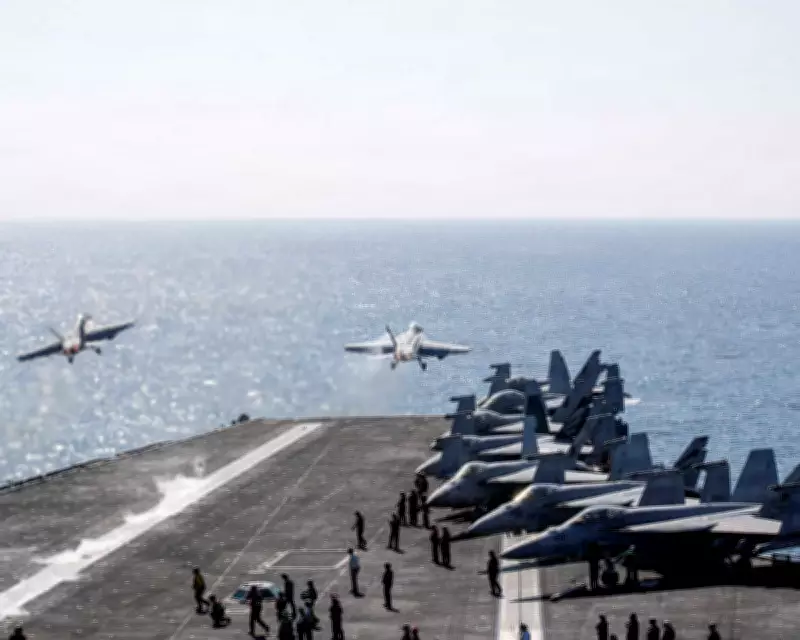
US Navy Imposes Blockade on Strait of Hormuz, Sending Oil Prices Soaring
The United States Central Command has announced a decisive naval blockade of the strategic Strait of Hormuz, set to commence at 10am Eastern Time. This move effectively grants the US military control over all maritime traffic through this crucial waterway, which handles approximately one-fifth of the world's oil shipments. The timing corresponds to 5:30pm in Iran and 3pm in the United Kingdom, marking a significant escalation in regional tensions.
Oil Markets React Sharply to Geopolitical Tensions
Following the breakdown of weekend peace talks between the United States and Iran, global oil prices have surged dramatically, breaching the psychologically important $100 per barrel threshold. Brent crude oil experienced a substantial 6.9% increase, reaching $101.74 per barrel, while US crude oil rose by 7.2% to $103.55 per barrel. This dramatic price movement reverses the temporary relief seen during a brief two-week ceasefire that had previously driven energy prices downward.
The blockade specifically targets Iranian vessels and any ships that have paid tolls to Iran for passage through the strait, representing a direct attempt to restrict the flow of Iranian oil exports. President Donald Trump reinforced the severity of the situation with a stark warning on his Truth Social platform, stating that any vessels approaching the blockade would be "eliminated" using the same methods employed against drug trafficking boats at sea.
Global Financial Markets Experience Widespread Disruption
Financial markets worldwide have responded negatively to the escalating tensions. Asian stock markets generally declined, with Japan's Nikkei index falling 0.7% and Hong Kong's Hang Seng index dropping 1%. European markets followed suit, with London's FTSE 100 losing 0.4%, Germany's Dax declining 0.9%, and France's Cac 40 decreasing by 0.75%. Airline stocks were particularly hard hit, with companies like Lufthansa, Wizz Air, easyJet, and British Airways parent IAG leading the downward trend.
Conversely, energy companies benefited from the rising oil prices, with BP and Shell both seeing their share prices increase by 1.2%. Natural gas prices also surged dramatically, with the British wholesale gas contract for May initially soaring nearly 12% before settling at a 7.25% increase to 117.57 pence per therm.
Economic Consequences and Expert Analysis
Financial analysts have expressed serious concerns about the broader economic implications of sustained high oil prices. Russ Mould, investment director at AJ Bell, noted that "oil above $100 per barrel is no surprise" given the current geopolitical climate, but warned that prolonged elevation at this level would inflict significant damage on the global economy. The term "stagflation" has reemerged in economic discussions, describing a scenario where geopolitical turmoil simultaneously stifles international growth and exacerbates inflationary pressures.
Priyanka Sachdeva, senior market analyst at Phillip Nova, emphasized that "every barrel of risk added to oil markets carries an inflation price tag for the global economy." This sentiment is reflected in shifting interest rate expectations, with investors now anticipating an 84% probability of two rate increases from the Bank of England this year to combat rising inflation, up substantially from 60% just days earlier.
OPEC Adjusts Forecasts Amid Regional Conflict
The Organization of the Petroleum Exporting Countries (OPEC) has responded to the deteriorating situation by revising its global oil demand forecasts downward. The cartel now expects second-quarter demand to average 105.07 million barrels per day, a reduction of 500,000 barrels from its previous projection of 105.57 million barrels. This adjustment directly cites the ongoing conflict in the Middle East as the primary cause for reduced demand expectations.
Meanwhile, a United Nations Development Programme report released on Monday paints a grim picture of the human cost, suggesting that more than 32 million people worldwide could be plunged into poverty due to the economic fallout from the Iran conflict, with developing nations expected to bear the brunt of this impact.
Despite the dramatic developments, some market observers maintain a measured perspective. Michael Brown, senior research strategist at Pepperstone, suggested that "the overall market reaction to the weekend news of a US Navy blockade of the Strait of Hormuz has been relatively contained, as participants view the move largely as a negotiating gambit from President Trump." This perspective highlights the complex interplay between military action, economic consequences, and diplomatic strategy in this volatile situation.