
US Treasury Announces 30-Day Waiver for Indian Refiners to Purchase Russian Oil
In a significant policy reversal, US Treasury Secretary Scott Bessent has issued a 30-day waiver permitting Indian refiners to buy Russian oil. This move comes amidst escalating tensions in the Middle East, where the US-Israeli conflict with Iran continues to intensify, causing global market concerns over a prolonged resolution.
Bessent emphasized that this short-term measure is designed to address immediate energy needs without substantially benefiting the Russian government. He stated, "This deliberately short-term measure will not provide significant financial benefit to the Russian government as it only authorizes transactions involving oil already stranded at sea." He described the waiver as a "stop-gap measure" in response to what he termed "Iran's attempt to take global energy hostage."
Israeli Military Actions and Evacuations in Beirut
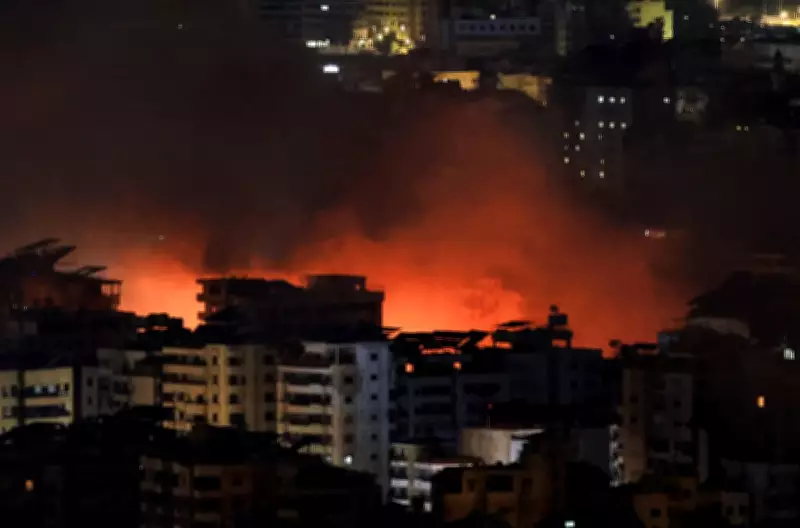
Meanwhile, the Israeli Defense Forces (IDF) have initiated strikes on what they identify as Hezbollah infrastructure in densely populated commercial and residential areas of Beirut's southern suburbs. Prior to these attacks, the IDF issued forced evacuation orders for approximately 500,000 residents, leading to widespread panic and massive traffic jams as people attempted to flee.
This military action occurs despite appeals from world leaders, including French President Emmanuel Macron, urging Israel to avoid expanding the war into Lebanon. According to the Lebanese health ministry, Israeli strikes have resulted in at least 123 fatalities and 683 injuries in Lebanon since Monday.
Trump's Statements on Iran's Military Capabilities
US President Donald Trump has made bold claims regarding Iran's military strength, asserting without evidence that Iran's air force and navy are effectively "gone." During a White House event, Trump declared, "We're destroying more of Iran's missile and drone capability every single hour – knocking them out." He added, "So [Iran] have no air force, they have no air defence. All of their airplanes are gone, their communications are gone. Other than that, they're doing quite well. Their navy is gone, [they lost] 24 ships in three days, that's a lot of ships," along with alleging the destruction of 60% of Iran's missiles and 64% of its missile launchers.
Trump also reiterated his involvement in leadership transitions, stating he must "be involved in the appointment" of Iran's next leader, similar to his role in Venezuela, and dismissed the possibility of Mojtaba Khamenei succeeding his father as supreme leader as "unacceptable."
International Reactions and Escalating Conflict
The conflict has expanded to involve 14 additional countries across the Middle East and beyond. Recent developments include Azerbaijan accusing Iran of drone attacks, which Tehran denied, and the US House of Representatives voting down a Democratic-backed measure to halt hostilities, allowing Trump to continue the war despite criticism over unclear objectives.
In other international responses, UK Defence Secretary John Healey did not rule out Britain joining US-Israeli strikes on Iran. Canada's top military official, General Jennie Carignan, confirmed that allies are discussing potential support for Persian Gulf States' defense, with a meeting scheduled for Friday to evaluate proposals, though Canada is not participating in US bombing campaigns.
Ukrainian President Volodymyr Zelenskyy announced that the US requested specific support in countering Iran's Shahed attack drones, leveraging Ukraine's expertise from conflicts with Russia. Zelenskyy stated on social media, "I gave instructions to provide the necessary means and ensure the presence of Ukrainian specialists who can guarantee the required security," highlighting mutual aid among allies.
This waiver marks a notable shift from Trump's previous claims that India had agreed to stop purchasing Russian oil to help end the war in Ukraine. As the Middle East crisis deepens, global leaders grapple with the implications of these rapid developments and their impact on regional stability.




