Academic and Public Outcry Over Iran Military Action
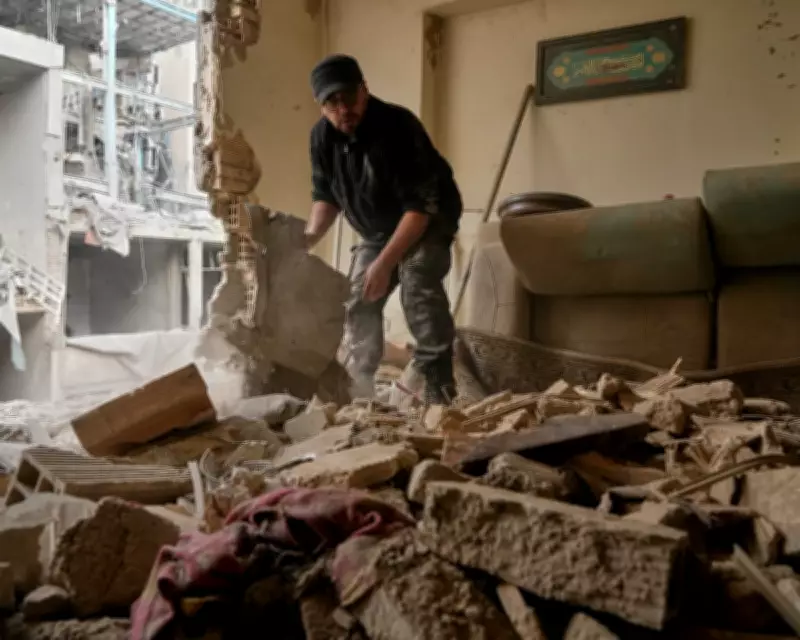
In the aftermath of devastating airstrikes on Tehran, a disturbing picture emerges of civilian suffering and geopolitical recklessness. Photographs from March 15, 2026, show residents clearing debris from destroyed apartments, their lives shattered by explosions that have ignited international condemnation. This visual evidence underscores what experts now describe as a military campaign with even weaker justification than the 2003 Iraq invasion.
The Humanitarian Rhetoric Versus Reality
United States politicians have employed humanitarian language to justify joint military operations with Israel against Iran, claiming these actions will liberate Iranians from oppression. According to Professor James Pattison of the University of Manchester, these arguments dangerously echo pre-Iraq war justifications but lack even the minimal coherence of that earlier conflict.
"During the Iraq war buildup, there was at least a clear objective: regime change," Pattison notes. "With Iran, bombing alone cannot achieve this, yet no alternative strategy exists." Early reports reveal catastrophic civilian harm, including an elementary school strike that killed 168 people, predominantly young girls.
The Missing "Pottery Barn Rule"
Professor Pattison highlights a crucial distinction between the two conflicts. The Iraq invasion, while disastrous, at least operated under what Colin Powell called the "Pottery Barn rule" – the principle that if you break something, you own responsibility for fixing it. This concept implied some duty toward post-conflict reconstruction.
"In Iran's case," Pattison argues, "there appears to be no commitment to repair damage – only breaking and walking away. This makes the current war even worse than the quintessential unjust war of recent decades."
International Law in Crisis
From Berlin, aspiring international lawyer Ivette Félix Padilla observes a troubling pattern of selective enforcement. "European leaders refuse to name this aggression for what it is," she writes, "their silence echoing their inaction on Gaza and Venezuela." This creates dangerous precedents where violations matter only when they affect Western interests directly.
Chris Lake from Derbyshire emphasizes the human cost, noting that ordinary civilians – particularly the poor, elderly, women and children – bear war's brunt. "Where is accountability for this blatant disregard of international law?" he demands, pointing to evacuation orders affecting hundreds of thousands in Beirut.
Environmental Catastrophe Compounding Crisis
Diana Francis of Bath adds another dimension to the tragedy: environmental devastation. Beyond human suffering and economic damage from bombed oil wells, she warns of catastrophic carbon emissions as oil burns uncontrollably. "This represents an environmental disaster surpassing even the most aggressive drilling policies," Francis states.
The collective voices from academics, activists and concerned citizens paint a picture of a military campaign lacking ethical foundation, legal justification or strategic coherence. As civilian casualties mount and environmental damage spreads, the absence of any clear plan for reconstruction or accountability suggests this conflict may establish new benchmarks for unjust warfare in the 21st century.