
Experts Warn US-Israel Assassination Strategy May Backfire in Iran
The recent decision by Israel to authorize military strikes against senior Iranian officials has ignited intense debate among Middle East analysts and former officials. Many are questioning whether this so-called "decapitation strategy" will achieve its intended goal of destabilizing Iran's regime or instead harden resistance within the country.
Doubts About Regime Change Through Targeted Strikes
Even before the outbreak of full-scale hostilities, Iran experts expressed skepticism that targeted assassinations could topple Iran's clerical establishment. The strategy has already claimed several high-profile victims, including Supreme Leader Ali Khamenei, Security Chief Ali Larijani, and Intelligence Minister Esmail Khatib. However, analysts argue that Iran's political structure possesses significant institutional resilience.
"This isn't a personalized regime," explained Sanam Vakil, an Iran specialist at Chatham House. "There are institutional layers under every individual, and I suspect the response to decapitation strikes would be to simply promote from within."
Vakil noted that while this approach risks elevating untested individuals, it also creates a dangerous dynamic where those moving up have witnessed their mentors and family members killed. "It is not an approach that produces Jeffersonian democrats but hardened resistance fighters," she warned. "It breeds more resistance."
Historical Precedents Suggest Limited Success
Israel's extensive history of targeted assassinations provides little evidence that such tactics achieve lasting political change. Over decades, Israeli operations have eliminated numerous senior leaders in Hamas and Hezbollah, including spiritual leader Sheik Ahmed Yassin in 2004 and general secretary Hassan Nasrallah. While these campaigns temporarily diminished both organizations, each eventually rebounded with renewed strength.
Jon B. Alterman of the Center for Strategic and International Studies in Washington expressed similar skepticism, citing Hamas as an example of a political movement that "absorbed its martyrs and lives to fight another day."
"The track record for advancing ambitious political goals through a limited military effort is poor," Alterman wrote in a recent analysis. He distinguished between targeting non-state actors like al-Qaeda and attempting to decapitate an established state, calling the latter approach "unprecedented."
Potential Unintended Consequences
Several experts warned that the assassination strategy might produce outcomes opposite to those intended. Rather than creating space for democratic reformers, the approach could eliminate figures with credibility among hardline elements, leaving no one with influence to moderate their behavior.
"If you eliminate the people who have credibility with the nasty guys, there is nobody with influence to make the nasty guys stop," Alterman told the Guardian. "The resilience of the regime is being underestimated."
Alterman suggested the most likely outcome would be "an internally unstable Iran" more inclined to conduct violence beyond its borders through cyberwarfare, proxy forces, or terrorism.
Alternative Scenarios for Iranian Instability
Complicating the strategic calculus is the reality that successful popular uprising represents only one possible outcome of regime destabilization. In a January essay for Foreign Affairs, Middle East expert Afshon Ostovar predicted that any coup would more likely originate within the Islamic Revolutionary Guard Corps, aimed at preserving existing institutions rather than overthrowing them.
Steven Simon, a security expert at Dartmouth College and former U.S. National Security Council staffer, wrote that insufficient attention has been paid to the scenario of "Iranian persistence; wounded, revanchist, and ungovernable by the tools that won the war."
Vakil raised ethical concerns about the approach, noting that "there is no agency or choice or justice for Iranians in this process." The strategy assumes external actors can engineer political change without meaningful participation from the Iranian people themselves.
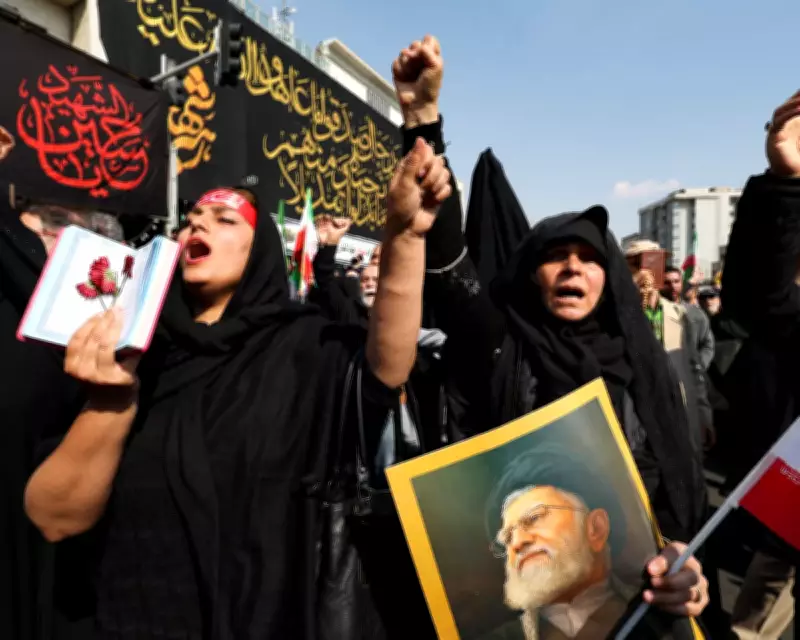
As mourners gathered for Ali Larijani's funeral in Tehran, the broader question remains whether eliminating senior figures will weaken Iran's regime or simply create martyrs who strengthen its resolve against external pressure.




