
Regional Conflict Escalates as US Embassy Targeted and Israeli Forces Enter Lebanon
The Middle East conflict dramatically expanded on Tuesday as Iranian drones struck the US embassy in Riyadh, Saudi Arabia, while Israeli troops began ground operations in southern Lebanon. This marks the fourth day of a rapidly spreading regional war that now involves at least nine countries and multiple armed groups.
Diplomatic Compounds Under Fire
Iran continued its retaliatory campaign against American interests with drone attacks targeting US diplomatic missions across the Gulf region. The strike on the Riyadh embassy caused a minor fire, prompting the diplomatic mission to warn American citizens to avoid the compound area. This followed an earlier Iranian drone attack on the US embassy in Kuwait as Tehran systematically targets US bases, facilities, and personnel throughout Arab Gulf states.
Israeli Ground Campaign Begins
In a significant escalation, Israeli Defense Minister Israel Katz announced he had instructed soldiers to "hold and advance" into areas of southern Lebanon to prevent further Hezbollah attacks on northern Israel. This represents the first official acknowledgment that Israel's campaign against the Iran-backed group would involve ground troops, not just aerial operations.
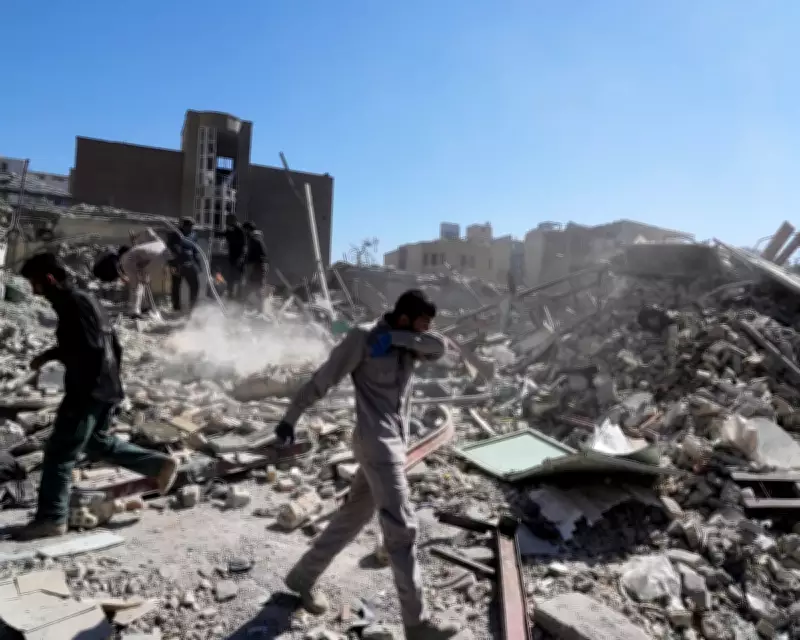
The Israeli military has been issuing evacuation orders for villages in south Lebanon, effectively emptying the region south of the Litani River and turning Beirut's southern suburbs into ghost towns. Israeli airstrikes have reportedly killed 52 people and displaced at least 29,000 in Lebanon since the conflict began.
Hezbollah Continues Attacks
The pro-Iran group Hezbollah maintained its offensive against Israel, launching two missile salvoes overnight targeting military bases in northern Israel. The group also claimed responsibility for striking Ramat David and Meron airbases with one-way drones and targeting a Golan Heights base with rockets.
Israel has responded by targeting Hezbollah's leadership and infrastructure, including killing senior leaders like intelligence chief Hussein Makled and striking facilities belonging to the group's media channel al-Manar. Lebanon's government took the unprecedented step of banning Hezbollah's military activities and instructing the judiciary to arrest those responsible for firing rockets at Israel.
Conflicting War Objectives
US and Israeli officials offered varying justifications for the ongoing conflict. US Secretary of State Marco Rubio claimed America's hand was forced by knowledge of impending Israeli action against Iran, stating: "We knew that there was going to be an Israeli action. We knew that that would precipitate an attack against American forces."
President Donald Trump has alternated between stating goals of regime change in Iran and preventing the country from obtaining nuclear weapons. Israeli Prime Minister Benjamin Netanyahu was more direct, saying the US and Israel were "creating the conditions" for the Iranian people to overthrow their government.
Human and Economic Toll Mounts
The conflict has resulted in significant casualties on multiple fronts. Estimates of people killed in US-Israeli strikes on Iran range from 555 to 1,500, including 165 people in a strike on a girls' elementary school in southern Iran. In Israel, 11 people have been killed by Iranian missiles that penetrated the country's defense systems, while the US acknowledged six soldier deaths in Kuwait.
The economic impact has been severe, with Iran's attacks on Gulf energy infrastructure paralyzing oil-rich states. Qatar halted operations at its largest liquid natural gas production facility, while Saudi Arabia ceased operations at the Ras Tanura oil refinery. Global energy prices spiked further after Iran closed the Strait of Hormuz, a critical global chokepoint for hydrocarbon transport.
Long-Term Conflict Expected
Both US and Israeli leaders indicated the conflict could extend for some time. Netanyahu told Fox News the war "could take some time" though not years, while Trump suggested it might last "far longer" than the initially planned month. US Defense Secretary Pete Hegseth publicly discussed the possibility of US troops entering Iran, though analysts noted Iran's vast, mountainous geography would present significant obstacles.
As explosions continued to be heard across Iran overnight, particularly in the capital Tehran, and with new fronts opening daily, what began as a conflict between Iran and the US-Israel alliance has transformed into a complex regional war with implications for global stability and energy markets.




